
This guide is for UK kitchens where counter space is precious, since a bulky coffee machine can eat up 40 cm or more of your worktop. It matches you with a machine that fits your space and the way you actually drink coffee, from a compact travel brewer to a fully automatic bean-to-cup machine.
What to look for
01Footprint and worktop depth
Most UK kitchens have worktops around 600 mm deep, which sounds generous until you factor in a toaster, a kettle, and a fruit bowl. A compact bean-to-cup machine typically runs 230 to 280 mm deep, leaving you room to work. Fully automatic machines like the De'Longhi Magnifica range tend to be taller and narrower than pod machines, which can help if you have low overhead cupboards. Before you buy, measure the gap between your worktop edge and the underside of your wall units. Many machines need at least 150 mm of clearance above the bean hopper for refilling. Width matters too: aim for under 250 mm if you are fitting the machine between two appliances.
02Wattage and UK mains compatibility
All machines in this guide run on the UK's standard 240V mains supply, so there is no adaptor faff. A typical bean-to-cup machine draws around 1,450W, well below the 3,000W of a kettle, while some Sage models push past 1,600W and reach brewing temperature faster as a result. Wattage affects how quickly the machine heats up and, to a lesser extent, your electricity bill. If you are on a prepayment meter or watching energy costs, factor in daily usage: a machine used twice a day for five minutes adds roughly 2 to 3 kWh per week.
03Grinder type and noise
Bean-to-cup machines with built-in grinders are the most convenient option, but grinder quality varies significantly. Ceramic burr grinders, as found in the Philips 3300 Series, run cooler and are quieter than steel burrs, which matters in open-plan flats or if you make coffee before the rest of the household is awake. The Philips 3300 is marketed as 40% quieter than its predecessor, a meaningful claim if noise is a concern. Conical steel burrs, used in the Sage Barista Express, give you more grind-size control and suit espresso enthusiasts who want to dial in their shot. If you live in a hard-water area (much of southern England and the Midlands), choose a machine with a water hardness setting and a descaling alert, as limescale build-up is the number one cause of grinder and boiler failure.
04Milk frothing: automatic versus manual
If you drink flat whites, lattes, or cappuccinos daily, an automatic milk frother saves time and produces consistent results: the De'Longhi Magnifica Evo Next and the Rivelia both use automatic LatteCrema systems that froth and dispense milk with one touch. Manual steam wands, as on the Sage Barista Express and Breville Barista Max, give you more control and produce barista-quality microfoam, but there is a learning curve. For black coffee drinkers or those who rarely want milk drinks, a machine without a frother (or with a simple nozzle) keeps the footprint smaller and the price lower. The AeroPress Go skips milk frothing entirely and is aimed squarely at filter-style and espresso-adjacent brewing on the go.
05Price and 90-day value
Coffee machine prices on Amazon UK swing considerably across this guide, from the compact AeroPress Go to bean-to-cup machines from Sage, Philips and De'Longhi, so compare each pick's current price with its 90-day range on its product page before you buy. Black Friday and the January sales regularly bring significant discounts on Sage, De'Longhi and Philips machines, so if you are not in a hurry, those are the months to watch.
Our top picks
Best for coffee drinkers with almost no counter spaceAeropress Go Portable Travel Coffee Press
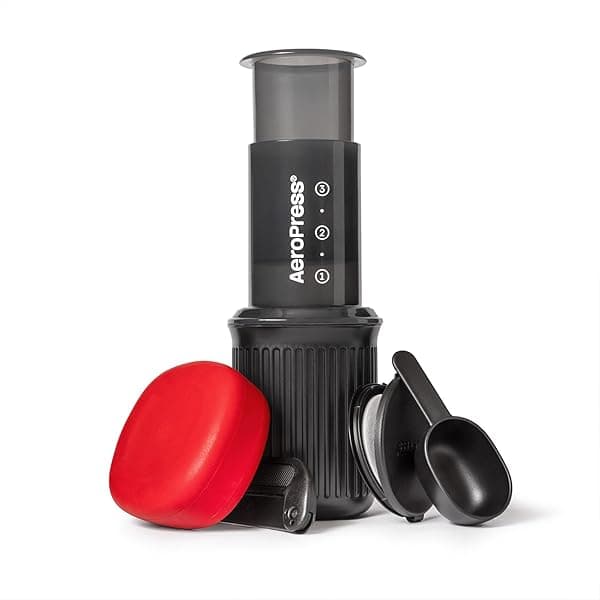
The AeroPress Go costs £36.90, its 90-day low is £35.90, so the price is as stable as it gets. It needs zero counter space because it lives in a mug-sized travel case. Brewing takes around two minutes and produces a smooth, low-bitterness cup that sits somewhere between espresso-style and filter.
Best for espresso enthusiasts who want barista controlSage Barista Express
The Sage Barista Express pairs a conical burr grinder with a manual steam wand, giving you genuine control over grind size, dose, and milk texture. It currently sits at £499.00, which is its 90-day high, so patience may be rewarded. The brushed stainless steel build is robust and the 2-year manufacturer warranty adds peace of mind. This is the machine for someone who has graduated from pods and wants to learn proper espresso technique without buying a separate grinder.
Best for quiet mornings and easy cleaningPHILIPS 3300 Series Bean to Cup
The Philips 3300 Series at £349.00 features a ceramic burr grinder that runs noticeably quieter than steel alternatives, a real advantage in open-plan UK flats. The LatteGo milk system disassembles into just two parts for rinsing, which is the most straightforward clean-up of any automatic frother in this group. It covers six hot and iced drinks and its current price is well below its 90-day high of £475.00, representing solid value for a fully automatic machine with a ceramic grinder.
Best for one-touch milk drinks without the premium priceDe'Longhi Magnifica Evo Next ECAM312.80.TB
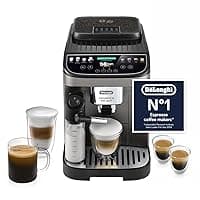
The De'Longhi Magnifica Evo Next at £399.00 (down from a 90-day high of £499.99) brings an automatic milk frother and an intuitive touch display to the Magnifica family at a price that undercuts the Rivelia by £300.00. The black and titanium finish is compact enough for a 600 mm worktop and the automatic LatteCrema system means you get consistent cappuccinos without any manual steaming skill. A practical step up for households where more than one person wants milk-based drinks daily.
Frequently asked
What size coffee machine fits on a standard UK worktop?
Standard UK worktops are 600 mm deep. A safe rule is to look for machines no deeper than 350 mm, leaving 250 mm between the back of the machine and the front edge. Width is often the tighter constraint: if you are fitting the machine between a kettle and a toaster, aim for under 250 mm wide. Always check the height against your wall-unit clearance, as bean hoppers on automatic machines typically need 150 mm of space above them for refilling.
Is a bean-to-cup machine worth it compared to a pod machine?
For most UK households that drink two or more coffees a day, a bean-to-cup machine works out cheaper per cup over time. A 250 g bag of fresh beans produces around 30 espresso shots, working out to 33p to 66p per shot. Pod costs typically run from 25p to 50p per pod for supermarket pods, rising to 70p or more for branded capsules. The bean-to-cup machine also gives you fresher flavour and more variety. The trade-off is a higher upfront cost and slightly more cleaning.
How often do I need to descale a coffee machine in the UK?
In hard-water areas, which covers most of southern England, the East Midlands, and East Anglia, you may need to descale every 4 to 8 weeks depending on usage. In soft-water areas such as Scotland and Wales, every 3 to 6 months is more typical. Most modern machines have a hardness-setting option and a descaling alert. Use a manufacturer-approved descaler rather than vinegar, as vinegar can damage internal seals. Ignoring descaling is the single most common cause of machine failure and voids most warranties.
Can I use any coffee beans in a bean-to-cup machine?
Yes, any whole roasted coffee bean works in a bean-to-cup machine. For espresso-style drinks, a medium to dark roast with low chaff content tends to give the cleanest results and puts less strain on the grinder. Avoid flavoured beans, as the coatings can clog burrs over time. Oily, very dark roasts (sometimes labelled espresso roast) can also gum up steel burr grinders with repeated use. If you live in a hard-water area, filtered water in the tank will noticeably improve flavour and reduce descaling frequency.
What is the difference between 15 bar and 19 bar on a coffee machine?
Bar refers to the pump pressure used to push water through the coffee puck. Most espresso is extracted at 9 bar of actual brewing pressure. Machines advertised as 15 bar or 19 bar are quoting the pump's maximum pressure, not the pressure at the group head. A 15-bar Italian pump, as in the Breville Barista Max, is perfectly adequate for quality espresso. Higher bar figures in marketing are largely irrelevant to cup quality. What matters more is temperature stability, grind consistency, and tamping pressure.