
Food processors on the UK market span from £13.99 to £179.99, and the gap is not random. Wattage, bowl capacity, included attachments, and build quality each add a measurable chunk to the price tag. Understanding which of those factors actually matters for your cooking style will save you from overspending or, just as costly, buying something underpowered.
What to look for
01Wattage and motor power
On the UK 240V mains supply, food processor motors typically run between 260W and 1,000W. Budget mini choppers sit at 260W to 300W, which is perfectly adequate for garlic, onions, and soft herbs. Step up to 500W to 700W and you can handle raw meat, hard root vegetables, and short pastry without the motor straining. Above 700W, you are paying for sustained, continuous use: think large batches of bread dough or nut butters where the motor runs for several minutes at a stretch. For most home cooks preparing meals for two to four people, 400W to 600W is the sweet spot. Going higher adds cost without adding practical benefit unless you cook in large volumes regularly.
02Bowl capacity and household size
Bowl size is one of the clearest price drivers. Mini choppers with 500ml to 600ml bowls cost between roughly £14 and £26. Move to a 1.4L to 1.5L bowl and prices jump to the £27 to £75 range. Larger full-size bowls of 2L and above push costs toward £85 and beyond. For a single person or couple, a 500ml to 800ml bowl handles most prep tasks. Families of four or more will find a sub-litre bowl frustrating because they must process ingredients in multiple batches. UK kitchens also tend to have limited worktop space, so a compact footprint matters: many mini choppers measure under 20cm tall and tuck into a 600mm-wide cupboard easily, while full-size processors can be 35cm or taller.
03Attachments and versatility
A basic mini chopper ships with a single chopping blade. That is fine for garlic, nuts, and baby food purees. The price rises noticeably when manufacturers add a reversible slicing and shredding disc, a dough hook, a creaming disc, or a blending jug. Each additional attachment requires its own tooling and quality-control process, which feeds directly into the retail price. If you genuinely need to slice courgettes, shred cabbage, and knead dough in the same machine, paying more for a multi-attachment model makes sense. If you only chop onions twice a week, those extras are dead weight. Check the box contents carefully before assuming a higher price means better chopping performance: sometimes you are simply paying for attachments you will never use.
04Build quality and blade materials
Stainless steel blades outlast plastic ones and resist the dulling effect of hard vegetables and acidic ingredients. In hard-water areas across much of England and the Midlands, limescale deposits can accelerate wear on cheaper plastic components around the blade housing. Stainless steel bowls, found on mid-range and premium models, are more durable than polycarbonate and do not stain after processing beetroot or turmeric. The body casing material also matters: ABS plastic housings are lighter but flex under pressure, while reinforced or rubberised bases grip the worktop more securely during heavy chopping. These material upgrades account for a significant portion of the price difference between a £20 mini chopper and a £85 full-size processor.
05Brand premium and after-sales support
Established UK and European brands such as Kenwood, Bosch, Russell Hobbs, and Braun carry a price premium that reflects longer warranty periods, readily available spare parts, and UK-based customer service. A Kenwood or Bosch model at £40 to £85 will typically come with a two-year guarantee and replacement blades you can order directly. Lesser-known brands at £14 to £27 may offer only a 12-month warranty with returns handled via a third-party seller. That is not necessarily a dealbreaker for a low-cost mini chopper you expect to replace in a few years, but for a machine you plan to use daily, the after-sales difference is worth factoring into the true cost of ownership.
06Discounts and price timing
The average discount across the 30 food processors tracked for this guide is 13. 4% off the 90-day high price. That means buying at the right moment can save a meaningful amount, particularly on mid-range and premium models where the absolute saving in pounds is larger. The biggest current discount tracked is 40% off, saving £40 on a specialist baby food steamer-blender. Budget mini choppers fluctuate less in absolute terms but can still drop by £5 to £8 from their peak. Checking the 90-day price history before purchasing is a straightforward way to avoid paying the top of the range. The typical price across all tracked models is £52.66, which gives a useful benchmark: anything significantly above that should offer a clear, tangible reason for the premium.
Our top picks
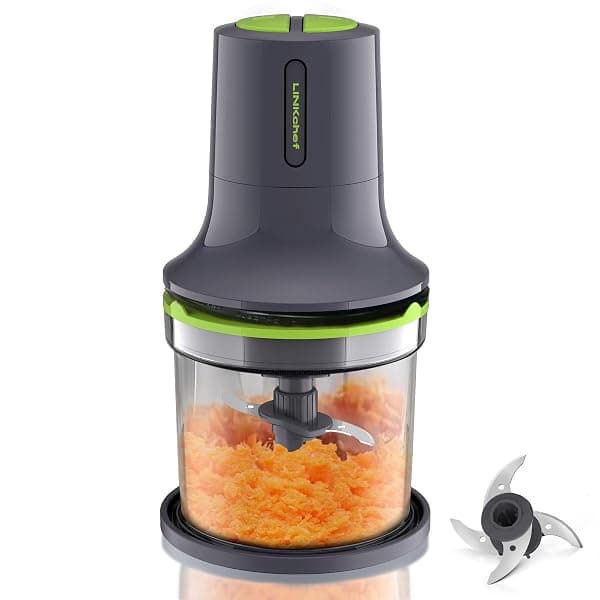
Best for everyday chopping on a tight budgetLINKChef Food Processor
At £25.99 (with a 90-day low of £20.54), the LINKChef 260W mini chopper offers a 500ml bowl and four bi-level blades for a price that is hard to argue with. It handles meat, onions, garlic, and baby food without fuss. The built-in power cord storage is a small but genuinely useful detail in a compact UK kitchen where cable clutter is a constant irritation.
Best for reliable performance from a trusted UK brandKenwood Compact Food Processor
The Kenwood FP120 runs at 400W and includes a 1.4L bowl, a shredder disc, and an emulsifying blade. Currently £39.99, it has dropped as low as £20.00 in the past 90 days, making it exceptional value when caught on offer. Kenwood's UK parts availability and two-year warranty make this a sensible long-term buy rather than a throwaway appliance.
Best for home cooks who want full processor versatilityRussell Hobbs Desire Electric Food Processor
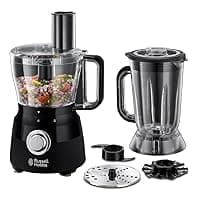
Russell Hobbs' Desire runs at 600W with a 1.5L usable bowl and ships with a reversible slicing and shredding disc, a dough hook, and a creaming disc. At £73.30, it sits above the £52.66 category average, but the attachment count justifies the gap. Its 90-day low of £44.00 shows it does go on sale, so it rewards patient shoppers.
Best for frequent, heavy-duty food prepBosch MultiTalent 3 MCM3100WGB Compact 700
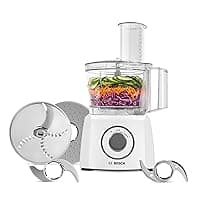
The Bosch MultiTalent 3 MCM3100WGB delivers 700W of continuous power, enough to handle sustained dough kneading and large batches of raw vegetables without the motor overheating. At £84.50, it is at the top of the mid-range bracket, but the Bosch build quality and European engineering mean the stainless steel components will outlast cheaper alternatives considerably.
Best for occasional use at the lowest entry priceSensio Home Mini Food Chopper Processor
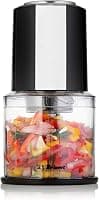
The Sensio Home mini chopper costs £20.40 today, down from a 90-day high of £23.99, and packs four stainless steel blades into a 600ml bowl at 300W. It is not built for daily heavy chopping, but for someone who processes garlic, nuts, or fruit a couple of times a week, it does the job without taking up much worktop space or budget.
Frequently asked
What is a good wattage for a food processor in the UK?
For light tasks such as chopping garlic, herbs, and soft vegetables, 260W to 300W is sufficient. For raw meat, hard vegetables, and pastry, aim for 400W to 600W. If you plan to knead dough or run the machine continuously for several minutes, 700W or above is worth the extra cost. All UK food processors run on the standard 240V mains supply, so wattage is the key variable to compare.
Are cheap food processors worth buying?
Yes, for limited tasks. Mini choppers priced between £13.99 and £27 handle garlic, onions, nuts, and baby food purees competently. The trade-offs are smaller bowl capacity (typically 500ml to 600ml), shorter warranty periods, and plastic components that may wear faster, particularly in hard-water areas where limescale can affect seals. If you chop occasionally rather than daily, a budget model is a sensible choice.
How much should I spend on a food processor?
The average price across 30 tracked UK models is £52.66. For a single person or couple doing basic prep, £20 to £30 covers a capable mini chopper. Families of four or more who want slicing discs, a dough hook, and a larger bowl should budget £60 to £85. Spending above £85 makes sense only if you need sustained high-wattage performance or a premium brand warranty.
When is the best time to buy a food processor in the UK?
Prices fluctuate regularly. The average discount tracked across current UK food processor listings is 13.4% off the 90-day high, and individual models have shown drops of up to 40%. Checking the 90-day price history before buying is the most reliable approach. Prices often dip during Amazon sale events, January clearance periods, and around Black Friday, but good deals appear throughout the year on mid-range models.
What is the difference between a mini chopper and a full food processor?
A mini chopper typically has a 500ml to 800ml bowl, one or two blade options, and costs under £30. It is compact enough to store in a 600mm kitchen cupboard and suits quick, small-batch tasks. A full food processor has a 1.4L bowl or larger, multiple attachments including slicing and shredding discs, a dough hook, and sometimes a blending jug. It costs more and takes up more worktop space, but handles a much wider range of cooking tasks in a single machine.