
The right food storage containers make batch cooking genuinely practical: you need sizes that fit a standard 60 cm fridge shelf, lids that seal without leaking, and materials that go straight from freezer to microwave. This guide covers eight containers across plastic and glass, from compact 370 ml portions to generous 1050 ml family-sized boxes, so you can stock your fridge on Sunday and eat well all week.
What to look for
01Capacity: matching container size to portion type
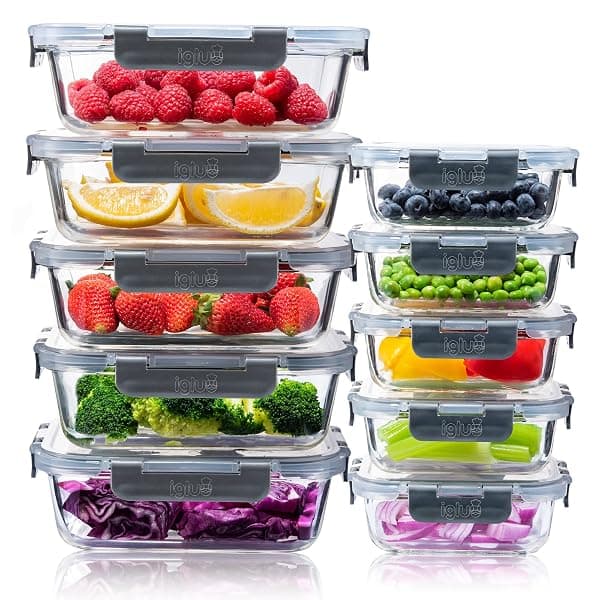
Capacity is the first thing to pin down before you buy. A 370 ml container suits a single portion of soup or overnight oats; 650 ml handles a generous pasta or rice dish; 850 ml to 1050 ml covers a full meal with sides or a family portion. The Igluu set is clever here because it includes both 370 ml and 1050 ml containers in one 10-pack, so you are not locked into one size. If you batch-cook a single recipe in large volumes, a uniform size such as the Zuvo 650 ml 50-pack keeps stacking tidy. For dry goods like cereal or flour, tall cylindrical containers (the nuovva 4-piece set is designed for exactly this) keep better than squat boxes because they minimise the air gap above the contents. Always measure your fridge shelf depth before ordering: most UK fridge shelves run 35–45 cm deep, and a 1050 ml rectangular box typically measures around 22 cm long, so two sit side by side with room to spare.
02Material: glass versus plastic for batch cooking
Glass and plastic each have a clear role in a meal-prep kitchen. Glass containers, such as the Igluu and GOOD FOR YOU ranges, are non-porous, so they do not absorb tomato sauce or curry stains and they do not hold odours after washing. They go from freezer to oven (check the lid: most lids are microwave-safe but not oven-safe) and last for years without clouding. The trade-off is weight: a 1050 ml glass box is noticeably heavier to carry to work than a plastic equivalent. BPA-free plastic containers, such as the GUANFU 10-pack (28 oz, roughly 830 ml) and the Sistema KLIP IT PLUS 2.2 L, are lighter and survive being dropped on a tiled kitchen floor. Look for containers labelled microwave-safe, freezer-safe, and dishwasher-safe: the GUANFU and Sistema both carry all three. Avoid any plastic that feels thin or flexible around the rim, as the seal degrades quickly in a dishwasher running at 65 °C, which is standard for UK machines.
03Lid design and leak resistance
A lid that fails in your bag ruins the whole point of meal prep. The two mechanisms you will encounter are clip locks and press-on lids. Clip locks, as used on the Sistema KLIP IT PLUS, create a mechanical seal on all four sides and are reliably leakproof for liquids such as soups and sauces. Press-on lids are faster to open and close but vary in quality: look for a silicone gasket around the inner rim, which is what makes the Igluu and GOOD FOR YOU glass containers genuinely airtight rather than just snug. The Vtopmart 24-piece set uses a push-button top that releases the seal, which is convenient for dry goods but less suited to liquid-heavy meals. If you are packing lunches to take on public transport, a clip-lock or gasket lid is worth the slight extra cost. Also check whether lids are sold separately: if a lid cracks, a container without a replacement lid programme becomes landfill.
04Stackability and fridge organisation
A fridge full of mismatched containers wastes space and makes it hard to see what you have. Flat-bottomed rectangular containers stack most efficiently: the GUANFU 10-pack and the GOOD FOR YOU 10-pack are both designed to nest when empty and stack when full, which is the ideal combination. Round containers, common in the Zuvo 50-pack, waste the corners of a rectangular shelf but are easier to fill and scrape clean. The Vtopmart 24-piece set includes multiple sizes that are designed to stack within the same footprint, which helps if you have a single 60 cm wide fridge shelf to work with. For a larder or pantry, the nuovva cereal dispensers are tall and narrow, fitting neatly into a 30 cm deep shelf while keeping dry goods fresh with an airtight seal. Measure your available shelf space in centimetres before committing to a large set.
05Dishwasher and microwave compatibility
In a busy household, hand-washing 10 containers every evening is not realistic. Confirm that both the container and the lid are top-rack dishwasher-safe: the top rack runs cooler (around 55 °C versus 65 °C at the bottom), which extends the life of plastic and silicone gaskets. The GUANFU, Sistema, and Zuvo containers are all listed as dishwasher-safe. For microwave use, glass containers are generally more reliable: plastic can warp if food is heated at full power for several minutes, especially in a 900 W UK microwave. Remove lids before microwaving unless the manufacturer explicitly states the lid is microwave-safe with the valve open. The GUANFU plastic containers are listed as microwave-safe, which makes them a practical choice for reheating at the office where a microwave is the only option.
Our top picks
Best for glass meal prep with mixed portion sizesIgluu Meal Prep Glass Containers with
The Igluu 10-pack includes both 370 ml and 1050 ml glass containers, giving you a ready-made system for single portions and larger batch-cooked dishes in one purchase. The borosilicate-style glass is non-porous, so curries and tomato sauces do not stain or linger. Lids are airtight with a silicone gasket and are listed as microwave-safe. Ten containers cover a full week of lunches and dinners without running short.
Best budget plastic containers for office lunchesGUANFU Meal Prep Containers 1 Compartment
At 28 oz (roughly 830 ml) per box, the GUANFU 10-pack is a practical single-portion size for a main meal. The BPA-free plastic is rated microwave-safe, freezer-safe, and dishwasher-safe, covering the three essentials for a weekday lunch routine. The single-compartment design stacks flat in the fridge, and 10 containers in one pack means you can prep the entire working week without washing up mid-week.
Best leakproof container for soups and saucesSistema KLIP IT PLUS Leakproof Food
The Sistema KLIP IT PLUS uses a four-sided clip-lock mechanism that creates a genuine mechanical seal, making it one of the more reliable options for liquid-heavy meals. Each container holds 2.2 L, which suits a large batch of soup or stew portioned straight from the pot. The set of three is stackable and nestable when empty, and both container and lid are listed as dishwasher-safe for easy cleaning after a week of use.
Best all-in-one set for organising a full kitchenVtopmart 24 Pcs Airtight Food Storage
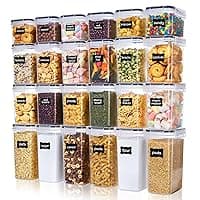
Twenty-four containers across multiple sizes means you can cover dry goods, leftovers, and prepped ingredients without buying separate sets. The Vtopmart set uses a push-button airtight seal on each lid, which is quick to operate daily. Multiple sizes within a shared footprint stack efficiently on a standard 60 cm fridge shelf or in a larder cupboard, making this a practical choice if you are setting up a kitchen from scratch or reorganising an existing one.
Best for storing dry goods and cerealsnuovva Cereal Storage Containers
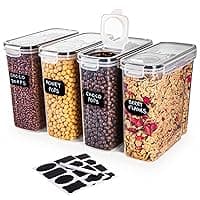
The nuovva 4-piece set is designed specifically for dry goods: the tall, cylindrical shape minimises the air gap above cereal, flour, or pasta, which slows staleness. The BPA-free plastic is food-grade and the airtight seal keeps contents dry even in a humid UK kitchen. Four containers in a matching set line up neatly on a 30 cm deep pantry shelf, and the dispenser-style opening makes pouring cornflakes or oats straightforward without tipping the whole container.
Best bulk pack for batch-cooking householdsZuvo Plastic Food Containers 650 ml
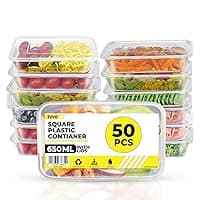
Fifty 650 ml containers in one pack means you will not run out mid-prep even when cooking for a large household or freezing multiple portions. Each 650 ml box is a practical size for a single main-course portion. The uniform size means every container stacks identically, which keeps a chest freezer or large fridge organised. Reusable construction means this is a more sustainable choice than single-use takeaway boxes for long-term batch cooking.
Best glass containers for a smaller householdGOOD FOR YOU Glass Containers with
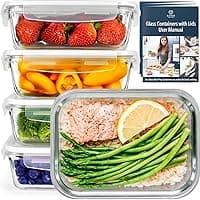
Five 850 ml glass containers is the right quantity for a one- or two-person household prepping lunches for the working week. The 850 ml capacity fits a full meal with a side, and the glass construction means no staining from bolognese or tikka masala. Lids include a silicone gasket for an airtight seal, and the containers are listed as oven-safe (lid off), microwave-safe, and dishwasher-safe, covering every reheating scenario a home cook is likely to need.
Best glass set for a full week of meal prepGOOD FOR YOU Glass Containers with

Ten glass containers in one pack covers five days of lunches and dinners without repeating a wash cycle mid-week. The GOOD FOR YOU 10-pack uses the same airtight lid design as the 5-pack, with a silicone gasket seal, and the glass is listed as oven-safe (lid removed), microwave-safe, and dishwasher-safe. Uniform sizing means the full set stacks neatly on two fridge shelves, keeping a week's worth of prepped meals visible and accessible.
Frequently asked
Are glass or plastic food storage containers better for meal prep?
Both work well, but they suit different priorities. Glass containers are non-porous, so they do not absorb stains or odours from strong-smelling meals like curry or bolognese, and they typically last longer before needing replacement. They are heavier to carry and more fragile if dropped on a tiled floor. BPA-free plastic containers are lighter, cheaper per unit, and survive daily commuting better. For home fridge storage, glass is the more durable long-term choice. For packed lunches carried in a bag, a robust plastic container with a clip-lock lid is more practical.
What size food storage containers do I need for meal prep?
Portion size is the key variable. A single main-course portion of rice, pasta, or a grain bowl typically fits in 600–850 ml. Soups and stews need at least 650 ml per portion, more if you are generous. Snacks and sides fit in 370 ml. For dry goods like cereal or flour, a tall 1–2 L container minimises the air gap above the contents and keeps them fresher. If you batch-cook for two people, 850 ml to 1050 ml containers are the most versatile single size to standardise on.
Can I put food storage containers in the microwave?
It depends on the material and the specific product. Glass containers are generally microwave-safe with the lid removed, and many are also oven-safe up to around 200 °C. Plastic containers vary: look for an explicit microwave-safe label on the product listing. Always remove or vent the lid before microwaving, even if the lid is listed as microwave-safe, to prevent pressure build-up. In a standard UK 800–900 W microwave, heating times are the same as for any container of that size.
How do I stop food storage containers smelling after washing?
Plastic absorbs odours over time, particularly from oily or spiced foods. Three approaches help. First, rinse containers immediately after use rather than leaving food residue to dry. Second, wash at 60 °C in a dishwasher if the container is rated for it, as higher temperatures break down odour-causing compounds more effectively than hand-washing. Third, if a smell persists, fill the container with a solution of one part white vinegar to three parts water, leave for 30 minutes, then rinse. Glass containers do not absorb odours and are the better long-term choice if smell retention is a concern.
Are airtight food storage containers worth it for dry goods?
Yes, particularly in a UK kitchen where humidity can be high. An airtight seal keeps cereal, flour, oats, and pasta dry and prevents them going stale or clumping. Standard cupboard packaging (paper bags, cardboard boxes) is not airtight and allows moisture in once opened. A dedicated airtight container, such as a tall cylindrical cereal dispenser, also makes it easier to see how much you have left at a glance, which reduces food waste. For hard-water areas, where condensation on surfaces is more common, airtight containers are especially useful for keeping dry goods in good condition.
How many food storage containers do I need for weekly meal prep?
A practical starting point: five containers covers one lunch per working day. Add five more if you also prep dinners. If you cook for two people, double those numbers. A 10-pack of uniform containers is therefore the most common starting point for a single person doing full weekly prep. If you also want to store batch-cooked sauces or soups in the freezer alongside fridge meals, a larger set of 20 or more containers gives you the flexibility to keep both fridge and freezer stocked simultaneously without running short.