
Most UK home ovens reach 250°C, but not every piece of bakeware is rated to cope with that. Carbon steel, stainless steel, and silicone all behave differently under high heat, and choosing the wrong material can warp trays, leach coatings, or ruin a Sunday roast. This guide cuts through the specs so you can buy with confidence.
What to look for
01Maximum oven temperature and material safety
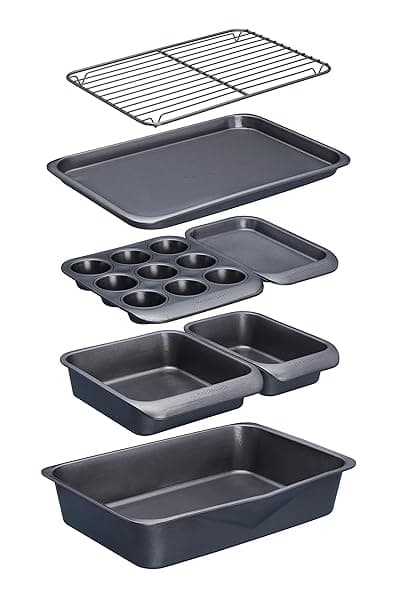
The single most important number on any bakeware is its maximum safe temperature. Carbon steel (like the MasterClass Smart Space set) typically handles 230-240°C comfortably. Silicone bakeware, like the Acidea 7-piece set, is usually rated to around 230°C and is flexible enough to pop out cakes cleanly, but it can feel flimsy under heavy roasting loads. Always check the manufacturer's stated limit before sliding anything under the grill, which can spike well above 250°C in seconds. PFAS-free and PTFE-free labelling, seen on the MasterClass and Dawsons Living sets, is worth prioritising if you cook at high temperatures regularly, as older non-stick coatings can degrade above 220°C.
02Coating type: non-stick versus uncoated
Non-stick coatings make release and washing-up easier, but they come with temperature ceilings and scratch risks. The Kitcheneur 4-pack trays and Homealexa silicone mats both rely on non-stick surfaces, which work brilliantly for biscuits and sheet-pan dinners but should not be used with metal utensils. Uncoated stainless steel, as on the TEAMFAR round cake tins, has no coating to degrade and is dishwasher safe without reservation. It does require greasing or lining with baking paper, which adds a step but removes any worry about flaking. For hard-water areas across the Midlands and South East, stainless steel also resists the limescale spotting that can dull darker non-stick finishes over time. If you want the convenience of non-stick, look for PFAS-free labelling and avoid preheating an empty tray above 200°C.
03Size and fit for UK kitchen cupboards
Standard UK base cupboards are 600mm deep, which means a 40cm baking mat or a 38cm tray will sit flush without overhanging. The Homealexa mats come in two sizes: 40cm diameter rounds and 36x42cm rectangles, both sized to line common UK oven shelves. The Kitcheneur 4-pack includes trays at 38cm, 35cm, and 28cm, giving you a graduated set that stacks neatly. Stacking matters if storage is tight: the MasterClass Smart Space 7-piece set is specifically engineered to nest together, reducing the cupboard footprint to roughly the size of a single roasting tin. If you have a compact oven, measure your internal shelf width before buying, as some larger trays will not fit a 60cm freestanding cooker's narrower cavity.
04Dishwasher safety and long-term care
Several sets in this guide claim dishwasher safety, but the detail matters. The TEAMFAR stainless steel tins and Kitcheneur trays are both listed as dishwasher safe, which is a genuine convenience for busy households. Non-stick carbon steel, however, benefits from hand washing: repeated dishwasher cycles can erode the coating faster, especially in machines using harsh UK dishwasher tablets. Silicone mats and moulds are almost universally top-rack dishwasher safe and are among the easiest bakeware to keep clean. The Dawsons Living roasting trays are described as easy clean and dishwasher safe, and at a flat £14.99 they are priced low enough that replacement is not a major concern if the coating does eventually wear.
Our top picks
Best for building a complete bakeware kit on a budgetMasterClass Smart Space 7 Piece Stacking
Currently £39.20 (down from a 90-day high of £45.56), the MasterClass Smart Space 7-piece set includes roasting pans, cake tins, and baking trays in one stackable carbon steel bundle. The stacking design is genuinely useful if your cupboard space is limited to a standard 600mm base unit.
Best for layer cakes and celebration bakingTEAMFAR 6 Inch Cake Tin
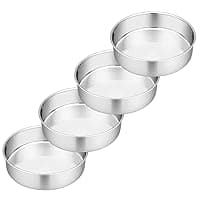
The TEAMFAR set of four 6-inch (15cm) stainless steel round cake tins costs £14.99 and brings genuine material advantages: no coating to scratch or flake, dishwasher safe without caveats, and sturdy enough to stack in the freezer for chilling sponge layers. Stainless steel is inert with acidic batters such as lemon or red velvet, which can react with some coated tins.
Best PFAS-free roasting trays for Sunday dinnersSet of 3 Premium Non-Stick Deep
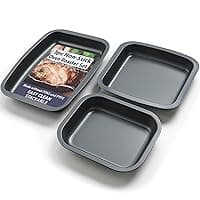
Dawsons Living's set of three deep roasting trays has held a steady £14.99 for the full 90-day period, so there is no price-drop game to play here. What you get is a lead-free, PFAS-free, PTFE-free non-stick surface on stackable deep trays, which is reassuring if you roast at high temperatures regularly. The deep sides contain splatter and make basting easier, and the set is dishwasher safe.
Best silicone set for flexible, fuss-free bakingAcidea Nonstick Silicone Bakeware Set
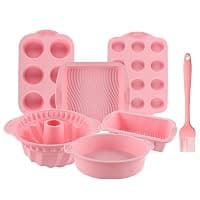
The Acidea 7-piece silicone set at £22.99 covers loaf, muffin, pizza, and cake shapes in BPA-free silicone rated to around 230°C, which matches most UK fan oven maximums. Silicone flexes to release bakes cleanly without greasing, and the included silicone brush is a practical addition. It is lighter and quieter to store than metal sets.
Frequently asked
What temperature can non-stick bakeware go in the oven?
Most non-stick bakeware is rated to between 200°C and 240°C, depending on the coating. Older PTFE-based coatings can begin to degrade above 220°C and should never be used under a grill. Newer PFAS-free coatings, such as those on the MasterClass and Dawsons Living sets in this guide, are generally safer at higher temperatures but still carry a manufacturer's stated limit. Always check the packaging, and avoid preheating an empty non-stick tray, as the surface temperature can spike rapidly without food absorbing the heat.
Is stainless steel or carbon steel better for baking?
Both work well, but they suit different tasks. Stainless steel, as used in the TEAMFAR cake tins, has no coating, tolerates higher temperatures, and is fully dishwasher safe without degradation risk. It conducts heat slightly less evenly than carbon steel, so sponge cakes may need a little longer. Carbon steel, used in the MasterClass set, heats up faster and browns bases more effectively, making it better for roasting and bread. Carbon steel requires more careful drying to prevent rust, particularly in hard-water areas where mineral deposits can accelerate surface corrosion.
Can silicone bakeware go in a fan oven?
Yes. Silicone bakeware is safe in a fan oven up to approximately 230°C, which covers the full range of most UK domestic fan ovens. It does not conduct heat as efficiently as metal, so baking times may need extending by 5 to 10 minutes, and bases tend to colour less than they would in a metal tin. Silicone is best placed on a solid baking tray for support when moving in and out of the oven, as a full silicone mould filled with batter can flex and spill without a firm base underneath it.
How do I stop baking trays warping in the oven?
Warping is caused by rapid, uneven temperature changes. To reduce the risk: 1. Avoid placing a cold tray directly into a very hot oven. 2. Do not run a hot tray under cold water immediately after use. 3. Choose heavier-gauge trays, as thinner metal buckles more easily. 4. Avoid preheating an empty tray at maximum temperature. The Dawsons Living deep roasting trays and MasterClass carbon steel set are both described as stackable and sturdy, which generally indicates a heavier gauge construction less prone to warping under normal UK oven use.
What does PFAS-free mean on bakeware?
PFAS stands for per- and polyfluoroalkyl substances, a broad group of synthetic chemicals historically used in non-stick coatings, including PTFE (commonly known as Teflon). PFAS-free labelling means the coating does not contain these compounds, which have raised environmental and health concerns at very high temperatures. The MasterClass Smart Space set and Dawsons Living roasting trays both carry PFAS-free claims. It is worth noting that PFAS-free bakeware still requires care: scratching the surface with metal utensils can still damage the coating and reduce its lifespan.