
Choosing the right coffee machine can transform your daily routine, turning that rushed morning cuppa into a proper café-quality experience without leaving home. Whether you're a dedicated espresso enthusiast or simply tired of instant coffee, the UK market offers an impressive range of machines to suit every skill level and kitchen counter. The decision isn't just about brewing coffee, it's about finding the right balance between convenience, quality, and the features that matter most to you.
The landscape of home coffee machines has evolved dramatically in recent years. Bean-to-cup machines now offer professional-grade results with minimal fuss, whilst manual espresso makers give you complete control over every variable. Some models feature integrated grinders and milk frothers, effectively replacing your local coffee shop, whilst others focus on simplicity and speed. Understanding these differences is crucial, as the wrong choice could leave you with an expensive appliance that doesn't match your lifestyle.
In this comprehensive guide, we'll walk you through everything you need to know when selecting a coffee machine for your UK home. From understanding pump pressure and grinder types to deciding between automatic and manual operation, we'll help you navigate the technical jargon and focus on what truly matters. Our recommendations are based on extensive research, customer feedback, and real-world performance, ensuring you can make an informed decision that delivers delicious coffee for years to come.
What to look for
01Type of Coffee Machine
The first decision you'll face is choosing between bean-to-cup, traditional espresso, and capsule machines. Bean-to-cup models grind fresh beans for each cup, offering superior flavour and the full coffee shop experience at home. They're ideal if you drink multiple cups daily and value freshness above all else. Traditional espresso machines with portafilters give you barista-level control, allowing you to adjust grind size, tamping pressure, and extraction time, perfect for enthusiasts who enjoy the ritual. Manual machines require more skill but reward you with deeply satisfying results. Automatic bean-to-cup machines handle everything at the touch of a button, making them brilliant for busy households. Consider how much time you're willing to invest in the coffee-making process and whether you prefer convenience or hands-on control. Your choice here fundamentally shapes your daily coffee experience.
02Grinder Quality and Type
If you're considering a bean-to-cup machine, the grinder quality is absolutely critical, it's arguably more important than the brewing mechanism itself. Burr grinders are the gold standard, crushing beans between two abrasive surfaces to produce uniform particle sizes essential for balanced extraction. Ceramic burr grinders stay cooler during operation, preserving delicate coffee oils and aromas, whilst stainless steel burrs are incredibly durable. Look for machines with adjustable grind settings, typically ranging from fine (for espresso) to coarse (for filter coffee). The number of grind settings indicates versatility, with premium machines offering fifteen or more increments. Blade grinders, found in budget models, chop rather than grind, producing inconsistent results that lead to over-extraction and bitterness. A quality grinder ensures each shot pulls consistently, with proper crema formation and balanced flavour notes. This component significantly impacts your long-term satisfaction, so it's worth prioritising in your decision.
03Pump Pressure and Temperature Control
Authentic espresso requires nine bars of pressure to extract the complex flavours and oils from ground coffee. Many machines advertise fifteen or eighteen bar pumps, but what matters is the pressure at the brew head during extraction. Higher numbers mainly serve marketing purposes, professional baristas work at nine bars, and that's the sweet spot you're after. Equally important is temperature stability. The ideal brewing temperature sits between 90-96°C, and maintaining this consistently is what separates mediocre from exceptional machines. Look for models with PID (Proportional-Integral-Derivative) temperature control, which maintains precise heat regulation throughout the brewing process. Some advanced machines also offer temperature profiling for different coffee beans. Thermocoil or thermoblock heating systems heat water on-demand, whilst traditional boilers take longer to warm up but offer superior stability. These technical specifications directly impact extraction quality, crema formation, and whether your espresso tastes balanced or harsh. Temperature fluctuations of just a few degrees can ruin an otherwise perfect shot.
04Milk Frothing Capabilities
If you enjoy cappuccinos, lattes, or flat whites, the milk frothing system deserves careful consideration. Steam wands offer the most control and produce professional-quality microfoam when you master the technique. They require practice, positioning the wand correctly, achieving the right temperature, and creating that silky texture takes time to learn. Automatic milk frothers, whether integrated or separate, handle everything for you, delivering consistent results without the learning curve. Some machines feature adjustable milk texture and temperature settings, allowing you to customise foam density for different drinks. Panarello wands, common on entry-level machines, inject air to create froth but can't achieve the same microfoam quality as proper steam wands. Consider whether you're willing to develop frothing skills or prefer push-button simplicity. Also think about cleaning, automatic systems often require daily rinsing and weekly deep cleaning, whilst steam wands need purging after each use. The quality of your milk-based drinks depends heavily on this component, so match the system to both your skill level and maintenance willingness.
05Capacity, Size, and Maintenance
Practical considerations often determine whether you'll love or regret your coffee machine. Water tank capacity matters enormously, a two-litre reservoir means fewer refills for multi-cup households, whilst smaller tanks suit occasional users. Bean hopper size follows similar logic; larger hoppers reduce how often you'll need to top up beans. Measure your counter space carefully, as bean-to-cup machines can be substantial. Height matters too, especially if you're placing the machine under kitchen cabinets, you'll need clearance to fill the water tank and bean hopper. Consider ease of cleaning, as this determines whether you'll actually maintain the machine properly. Removable brew groups that you can rinse under the tap are far more convenient than fixed units requiring cleaning tablets. Some machines feature automatic cleaning cycles, reminding you when descaling or cleaning is needed. Drip trays should be large enough to accommodate your usage and easy to remove. The best machine is one you'll actually enjoy using daily, so don't underestimate these practical factors. A slightly less sophisticated machine that fits your space and routine beats a feature-packed model that becomes a chore to maintain.
Our top picks
Also GreatSage
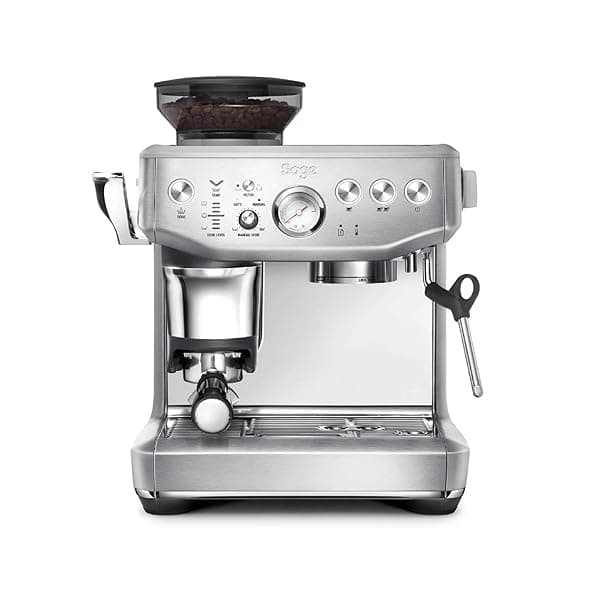
The Barista Express Impress stands out with its precise PID temperature control and assisted tamping system, making barista-quality espresso achievable even if you're still developing your technique. With 87 customer reviews backing its performance, this machine strikes an excellent balance between manual control and helpful automation, whilst the included milk jug and robust stainless steel construction signal Sage's commitment to quality that lasts.
Premium PickPhilips 2200 Series Bean to Cup
Backed by over 2,000 customer reviews, the Philips 2200 Series has earned its reputation through reliable, no-nonsense performance and genuinely easy maintenance. The ceramic grinder ensures consistent results whilst staying quiet, and the quick-clean system means this fully automatic machine won't become a chore to maintain, crucial for busy households who want quality coffee without the barista commitment.
Budget pickAeropress Go Portable Travel Coffee Press
A strong option in the coffee machines category. Links to our product detail page for full price history before you decide.
Frequently asked
What's the difference between a 9 bar and 15 bar coffee machine?
Professional espresso extraction occurs at 9 bars of pressure, which is the optimal level for extracting flavour compounds and oils from ground coffee. Machines advertising 15 or 18 bars typically refer to the pump's maximum capability, but internal regulators reduce this to approximately 9 bars at the brew head during actual extraction. Higher bar ratings are largely marketing figures, focus instead on whether the machine maintains consistent pressure throughout the brewing process, as stability matters more than maximum numbers.
Do I need a built-in grinder or can I buy a separate one?
Separate grinders offer more flexibility and typically superior grinding quality, as dedicated grinders aren't compromised by space constraints or shared components. However, integrated grinders in bean-to-cup machines provide undeniable convenience, you'll use them more consistently because they're right there, and the whole process remains streamlined. If counter space is limited or you value simplicity, an integrated grinder makes sense. Coffee enthusiasts who want to experiment with different grind profiles or multiple brewing methods benefit from investing in a standalone burr grinder alongside a simpler espresso machine.
How often do coffee machines need descaling and cleaning?
Descaling frequency depends on your water hardness and usage patterns, but most manufacturers recommend descaling every two to three months in hard water areas or every three to six months with soft water. Daily cleaning involves rinsing removable parts like drip trays, used coffee containers, and purging steam wands after milk frothing. Weekly maintenance typically includes deeper cleaning of milk systems and brew groups. Many modern machines feature automatic cleaning cycles and indicator lights that remind you when maintenance is due, making the process far more manageable than it sounds.
Are bean-to-cup machines worth it compared to pod machines?
Bean-to-cup machines require higher initial investment but deliver superior coffee quality and lower running costs over time. Fresh-ground beans produce more complex flavours and aromas that pre-ground pods simply cannot match. Cost per cup drops significantly, typically less than half that of branded pods, whilst you gain freedom to choose any coffee beans you prefer. The trade-off is maintenance time and counter space. Pod machines suit those prioritising speed and simplicity, whilst bean-to-cup appeals to coffee lovers willing to invest slightly more effort for substantially better results and long-term savings.
What size water tank do I need for a coffee machine?
A 1.5 to 2-litre water tank suits most households, providing enough capacity for roughly eight to twelve espresso-based drinks before refilling. Smaller tanks around one litre work fine for individuals or couples who drink just a few cups daily. Larger households or offices benefit from two-litre-plus capacities to minimise interruptions. Consider also whether the tank is removable and easy to access, a generous but awkwardly positioned tank becomes frustrating quickly. The ideal size balances your daily consumption against available counter space and how often you're willing to perform the simple task of refilling.