
The humble kettle remains one of the most-used appliances in British kitchens, with the average household boiling water multiple times daily for tea, coffee, cooking, and more. Yet despite its ubiquity, choosing the right kettle involves more considerations than you might expect. From capacity and boiling speed to energy efficiency and longevity, the differences between models can significantly impact your daily routine and electricity bills.
Modern kettles have evolved considerably beyond simple on-off switches. Today's models offer rapid-boil technology, precision temperature controls, noise reduction features, and materials ranging from traditional plastic to brushed stainless steel and even glass. Whether you're upgrading a tired old kettle, furnishing a new home, or seeking a compact travel companion, understanding what features genuinely improve your experience versus marketing gimmicks will help you make an informed choice.
This guide examines the key factors that separate excellent kettles from mediocre ones, drawing on thousands of user experiences and expert testing. We'll help you navigate capacity considerations, material choices, safety features, and design elements that affect everything from pouring precision to descaling convenience. By understanding these fundamentals, you'll be equipped to select a kettle that matches your household's needs and delivers reliable performance for years to come.
What to look for
01Capacity and Size
Kettle capacity typically ranges from compact travel models around 0. 5-0.8 litres to full-sized family kettles holding 1.7 litres. Standard 1.7-litre kettles suit most households, providing enough water for multiple cups whilst remaining manageable to lift when full. However, capacity should match your actual usage patterns. Singles or couples who primarily make one or two drinks at a time might prefer a smaller 1-litre model that boils faster and consumes less energy per use. Conversely, larger households or frequent entertainers benefit from maximum capacity. Consider your kitchen space too, compact kettles fit better in smaller kitchens, caravans, or offices. Travel kettles typically include dual voltage for international use, making them ideal for holidays abroad. Look for clear water level windows or gauges that help you fill only what you need, reducing energy waste and limescale buildup from repeatedly boiling excess water.
02Power and Boiling Speed
Wattage directly impacts boiling speed, with most UK kettles ranging from 1000W for travel models to 3000W for rapid-boil versions. A 3000W kettle typically boils a full 1.7-litre capacity in approximately three to four minutes, whilst 2000-2400W models take slightly longer. For frequent tea drinkers or busy mornings, rapid-boil capability genuinely improves convenience. However, higher wattage doesn't always mean better value, if you typically boil smaller quantities, a powerful element simply reaches temperature faster rather than saving significant energy overall. Consider your household's boiling patterns: families making multiple drinks simultaneously benefit from quick recovery time, whilst individuals might prioritise other features over sheer speed. It's worth noting that all modern kettles must meet UK safety standards, so even budget models deliver reasonable performance. The key is matching power to your patience level and typical usage volumes.
03Materials and Build Quality
Kettles predominantly feature plastic, stainless steel, or glass construction, each with distinct advantages. Plastic kettles remain popular for their lightweight design, affordability, and resistance to showing fingerprints or watermarks. However, quality varies enormously, premium plastics resist staining and retain their appearance, whilst cheaper versions may yellow over time or impart subtle tastes. Stainless steel offers durability and a premium aesthetic but shows fingerprints readily and can develop watermarks in hard water areas. Glass kettles provide visual appeal, allowing you to watch water boil, though they're heavier and require more cleaning to maintain clarity. Regardless of material, examine build quality indicators: sturdy handle attachment, smooth-operating lids that won't jam, and solid base connections. The spout design matters enormously for practical use, a well-engineered spout delivers controlled pouring without drips or splashing. Check for features like concealed heating elements that reduce limescale accumulation and removable, washable filters that trap scale particles before they reach your cup.
04Safety and Convenience Features
Essential safety features include automatic shut-off when water boils and boil-dry protection that prevents operation when empty, potentially saving you from fire hazards and damaged elements. Cordless designs with 360-degree bases offer superior convenience, particularly for left-handed users or shared kitchens. The base should feel stable and substantial enough that the kettle doesn't wobble when full. Lid mechanisms vary considerably: push-button lids offer one-handed operation, whilst flip-top designs require both hands but typically seal more securely. Consider how wide the opening is for filling and cleaning, narrow openings make descaling and wiping the interior challenging. An illuminated power indicator helps you verify the kettle is actually heating, particularly useful for quieter models. Some kettles feature keep-warm functions or temperature controls for different beverages, though these add complexity and cost. Cord storage keeps your worktop tidy, whilst external water windows (rather than internal-only markings) let you check levels without opening the lid.
05Maintenance and Longevity
Your kettle's lifespan depends heavily on water hardness in your area and maintenance habits. In hard water regions, limescale accumulation is inevitable and will eventually impact performance and taste. Removable, washable limescale filters are essential, they're far more effective than non-removable mesh and can be cleaned under a tap in seconds. Choose kettles with wide openings that allow easy access for descaling with vinegar or commercial descaling solutions. The heating element design matters: concealed elements are easier to clean and less prone to scale buildup than exposed coils, though they cost slightly more. Warranty length indicates manufacturer confidence, look for at least two years. User reviews often reveal longevity issues that aren't apparent from specifications alone, such as lid mechanisms that fail, switches that stick, or handles that loosen. Consider the availability and cost of replacement parts like filters. Some premium manufacturers offer better customer service and spare part availability, potentially extending your kettle's useful life significantly beyond cheaper alternatives that must be fully replaced when any component fails.
Our top picks
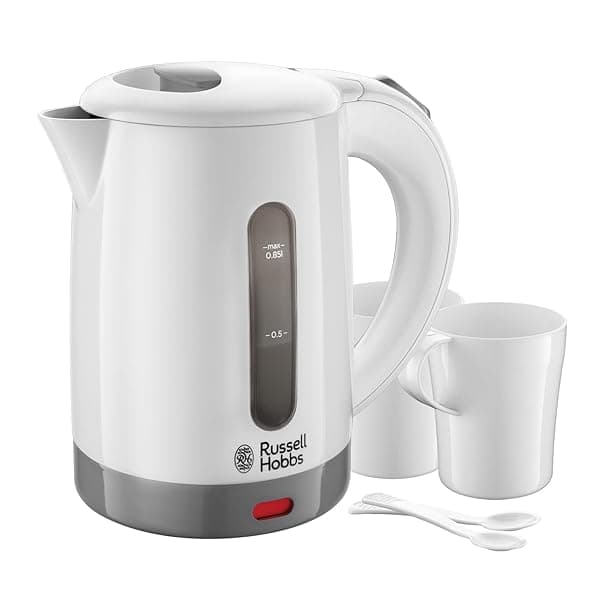
Best OverallRussell Hobbs Electric 0.85L Travel Kettle
This compact travel kettle excels at its intended purpose, offering genuine dual-voltage capability for international use alongside thoughtful inclusions like cups and spoons. The removable filter and water windows add convenience rarely found in travel kettles, whilst the 0.85-litre capacity strikes an ideal balance between portability and usefulness for two people.
Runner UpRussell Hobbs Honeycomb Electric 1.7L Cordless
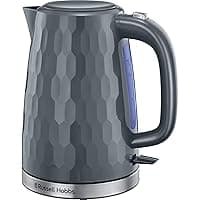
The Honeycomb range delivers impressive value with its 3000W rapid-boil element and premium textured finish that resists fingerprints better than glossy alternatives. The perfect pour spout genuinely reduces drips, whilst the push-button lid offers convenient one-handed operation that users consistently praise in reviews.
Also GreatRussell Hobbs Electric Kettle (Hot Water
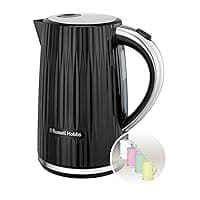
The Eden model elevates everyday functionality with chrome accents and an illuminated switch that adds visual appeal beyond basic kettles. The perfect pour spout technology and full 1.7-litre capacity make it practical for families, whilst the 3000W element ensures you're never waiting long for your morning brew.
Worth ConsideringSwan SK14611BLK Windsor Rapid Boil Kettle
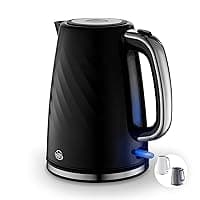
Swan's Windsor kettle offers excellent value with its 3000W rapid-boil capability and thoughtful touches like hidden cord storage that keeps worktops tidy. The boil-dry protection and removable filter provide essential safety and maintenance features, making it a solid all-rounder for households prioritising practical performance.
Frequently asked
What size kettle do I need for my household?
For most households, a 1.7-litre kettle provides optimal capacity, allowing you to make four to six cups of tea in one boil. Singles or couples might prefer 1-litre models that boil faster and waste less energy, whilst compact 0.5-0.85-litre travel kettles suit caravans, offices, or hotel rooms. Consider your peak usage, if you regularly entertain or have a large family making multiple drinks simultaneously, maximum capacity becomes more valuable than faster boiling times for smaller quantities.
How much power does a kettle need for fast boiling?
UK kettles typically range from 1000W to 3000W, with rapid-boil models at 3000W boiling a full 1.7-litre kettle in approximately three to four minutes. A 2200-2400W kettle takes around four to five minutes for the same volume. Whilst higher wattage means faster boiling, it doesn't necessarily use more electricity overall if you're boiling the same amount of water, it simply reaches temperature quicker. For busy households or impatient tea drinkers, 3000W models offer genuinely noticeable convenience.
Are expensive kettles worth the extra money?
Premium kettles often justify their cost through superior build quality, longer warranties, better-engineered spouts that pour without dripping, and materials that maintain their appearance over years of use. However, many mid-range kettles deliver excellent performance and longevity, particularly from established brands with good customer service. The key is identifying which features you'll actually use, temperature controls or keep-warm functions suit tea enthusiasts, whilst basic models suffice for households simply needing boiled water quickly. Read reviews focusing on longevity rather than initial impressions.
How do I prevent limescale buildup in my kettle?
Limescale prevention requires regular maintenance, particularly in hard water areas. Use a removable, washable limescale filter and clean it weekly under running water. Descale your kettle monthly using equal parts white vinegar and water, boil the solution, let it sit for an hour, then rinse thoroughly. Some households prefer commercial descaling products formulated for kettles. Boiling only the water you need reduces scale accumulation, and choosing a kettle with a concealed heating element makes cleaning easier than models with exposed coils that trap deposits.
What's the difference between plastic and stainless steel kettles?
Plastic kettles are lightweight, affordable, and don't show fingerprints, making them practical for busy households, though quality varies significantly between premium and budget plastics. Stainless steel offers superior durability and a premium appearance but requires more cleaning to remove fingerprints and watermarks, particularly in hard water areas. Both materials are safe when manufactured to UK standards, and neither affects water taste in quality models. Your choice should prioritise aesthetics, weight preferences, and maintenance tolerance rather than performance differences, which are minimal between comparable models.