
Choosing the right cookware set is one of the most important decisions you'll make for your kitchen. Quality pots and pans can last decades with proper care, whilst poor choices might need replacing within months. The right set will make cooking more enjoyable, produce better results, and potentially save you money in the long run by eliminating the need to buy individual pieces separately.
The UK cookware market has evolved dramatically in recent years, with manufacturers offering everything from budget-friendly non-stick sets to premium stainless steel collections. Understanding what separates a good investment from a false economy isn't always straightforward. Factors like hob compatibility, material construction, and coating technology all play crucial roles in performance and longevity.
This guide cuts through the marketing claims to help you find the best cookware set for your needs. Whether you're setting up your first kitchen, upgrading worn-out pans, or investing in professional-quality equipment, we've evaluated the top options available to UK consumers in 2026. We'll explain what really matters when choosing cookware, which features justify premium pricing, and where you can safely economise without compromising on quality.
What to look for
01Material and Construction Quality
The base material of your cookware determines heat distribution, durability, and cooking performance. Stainless steel offers excellent longevity and works beautifully for searing and deglazing, though it requires some cooking skill to prevent sticking. Aluminium heats quickly and evenly but needs a non-stick coating or anodisation for best results. Hard-anodised aluminium provides superior scratch resistance compared to standard aluminium. Look for multi-layer construction in stainless steel sets, where aluminium or copper cores are sandwiched between steel layers for optimal heat distribution. The thickness of the base matters too, thicker bases prevent hot spots and warping over time. Quality sets will feel substantial in hand, with bases that sit flat on your hob without wobbling. Riveted handles generally prove more durable than welded alternatives, whilst cool-touch handles prevent burns during cooking. Glass lids allow you to monitor cooking progress without releasing heat, and straining lids add convenience for pasta and vegetables.
02Hob Compatibility and Induction Readiness
Before purchasing any cookware set, verify it works with your hob type. This is particularly crucial for induction hobs, which require magnetic materials to function. Induction-compatible cookware contains iron or steel in the base, allowing the electromagnetic field to generate heat. If you have or might upgrade to an induction hob, choosing induction-ready cookware now provides future-proofing. Most stainless steel and some aluminium sets with steel bases work across all hob types including gas, electric, ceramic, and induction. Testing is simple, if a magnet sticks firmly to the base, it's induction-compatible. All-hob-compatible sets offer maximum flexibility, especially useful if you move house or renovate your kitchen. Consider too whether the cookware is oven-safe and to what temperature, as this expands your cooking techniques. Some sets withstand temperatures up to 180°C whilst others handle 260°C or higher, enabling you to start dishes on the hob and finish them in the oven.
03Non-Stick Coatings and Surface Technology
Non-stick coatings have advanced significantly beyond traditional PTFE formulations. Modern non-stick technology offers improved durability, scratch resistance, and often eliminates PFOA concerns that worried consumers in previous years. When evaluating non-stick cookware, consider the coating's claimed lifespan and scratch resistance. Some manufacturers offer reinforced coatings with particles like titanium or minerals that withstand metal utensils, whilst others require you to use only silicone, wood, or plastic implements. Ceramic-style coatings provide an alternative to traditional non-stick, though they may lose effectiveness faster. The quality of the coating application matters enormously, premium sets feature multiple layers applied at high temperatures for superior bonding. Genuine non-stick performance means cooking with minimal oil, easy food release, and simple cleaning. However, even the best non-stick surfaces eventually degrade, so consider this a medium-term investment rather than a lifetime purchase. Proper care extends coating life significantly: avoid high heat, hand-wash when possible, and never use abrasive cleaners or scourers.
04Set Composition and Piece Selection
Cookware sets typically range from three to fourteen pieces, but more isn't always better. Evaluate whether the included pieces match your actual cooking habits rather than accumulating pans you'll rarely use. A practical set usually includes two or three saucepans in graduated sizes, at least one frying pan, and possibly a sauté pan or stockpot. Lids are counted as separate pieces, so a five-piece set might contain just three pans. Consider your household size and cooking style, couples might need different configurations than families with children. If you frequently cook for guests, larger pans and stockpots prove invaluable. Conversely, if you mostly prepare quick meals for one or two, compact sets with smaller pan diameters make more sense. Some sets include speciality pieces like milk pans, which are perfect for heating sauces or small portions. Check the actual capacities listed, an 18cm saucepan might hold between 1.5 and 2.5 litres depending on depth. Mixing multiple pan sizes gives you flexibility for simultaneously cooking components of a meal.
05Maintenance and Longevity Considerations
The best cookware set is one you'll maintain properly and use for years. Dishwasher compatibility offers convenience, but hand-washing typically extends cookware life, particularly for non-stick coatings. Stainless steel generally proves most forgiving, handling dishwashers and metal utensils without issue, though it may develop water spots or discolouration. Non-stick cookware demands gentler treatment, avoiding thermal shock by letting pans cool before washing, using appropriate utensils, and storing carefully to prevent scratching. Consider your willingness to invest time in maintenance when choosing materials. Some premium sets require seasoning or special cleaning products to maintain appearance and performance. Warranties indicate manufacturer confidence, look for guarantees ranging from one year for budget sets to lifetime warranties on premium stainless steel. However, warranty terms matter as much as duration; some cover manufacturing defects only, whilst others include wear and tear. Read customer reviews focusing on long-term performance rather than initial impressions, as durability reveals itself over months and years of regular use.
Our top picks
Top RatedCirculon Scratch Defense Stainless Steel Pan
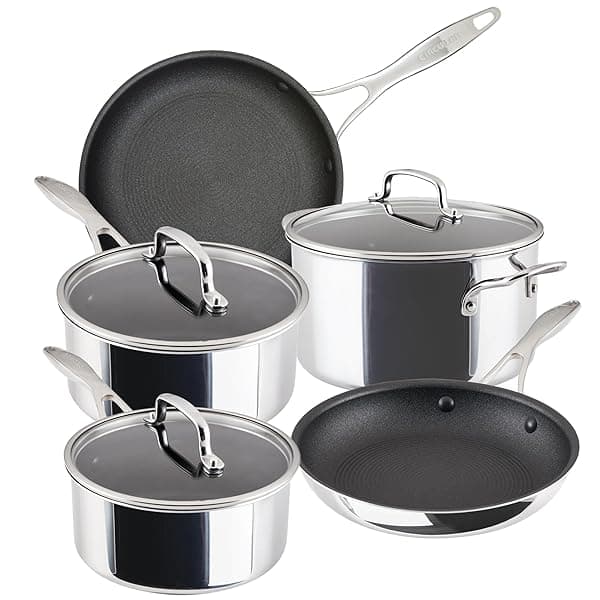
This premium set combines the durability of stainless steel with advanced non-stick technology that claims genuine scratch resistance, even with metal utensils. The all-hob compatibility including induction makes it exceptionally versatile, whilst the construction quality suggests this is a long-term investment for serious home cooks who want professional-grade performance.
Best for BeginnersTefal Taste Twin Frying Pan Set
With an impressive number of verified customer reviews, this twin frying pan set offers excellent value for money. The Thermo-Spot heat indicator takes the guesswork out of preheating, whilst the lightweight aluminium construction makes handling easy. It's an ideal choice for renters or those with non-induction hobs seeking reliable everyday performance.
Premium ChoiceTefal Origins Stone 5 Piece
This set offers comprehensive coverage for everyday cooking with a well-thought-out selection of pan sizes. The stone-effect coating provides durable non-stick performance, and the graduated saucepan sizes handle everything from small sauces to family portions. Thousands of positive reviews confirm its reliability for standard electric, gas, and ceramic hobs.
Budget FriendlyTefal Induction Non‑Stick Coating 5‑Piece Cookware
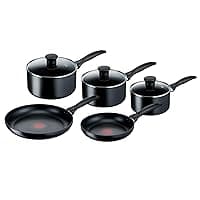
A top-rated cookware with excellent customer reviews. This model stands out for its quality and reliability.
Frequently asked
What's the difference between stainless steel and non-stick cookware?
Stainless steel offers superior durability and works brilliantly for browning and deglazing, developing fond that adds flavour to sauces. It requires more cooking oil and technique to prevent sticking. Non-stick cookware uses coated surfaces for easy food release and cleanup with minimal fat, making it ideal for eggs, fish, and delicate foods. However, non-stick coatings eventually wear out and require replacement. Many cooks keep both types for different tasks.
Can I use non-stick cookware on induction hobs?
Non-stick cookware works on induction hobs only if it has a magnetic base layer, typically steel or iron beneath the aluminium core. Check product descriptions for 'induction compatible' or test with a magnet, if it sticks firmly to the base, it will work. Many modern non-stick sets include induction-compatible bases whilst maintaining the lightweight feel and non-stick benefits of aluminium construction.
How long should a good cookware set last?
Quality stainless steel sets can last decades with proper care, often outliving their owners. Non-stick cookware typically lasts three to five years with regular use before coatings degrade, though premium reinforced coatings may extend this further. Longevity depends significantly on maintenance, hand-washing, avoiding metal utensils on non-stick surfaces, and preventing thermal shock all extend cookware life considerably. Budget sets may need replacing within one to two years.
Is it worth buying an expensive cookware set?
Premium cookware offers tangible benefits including better heat distribution, more durable construction, superior non-stick coatings, and longer warranties. For passionate home cooks who use their pans daily, the investment pays dividends through enhanced cooking performance and longevity. However, mid-range sets often provide excellent value, particularly for occasional cooks or those learning. Consider your cooking frequency, skill level, and whether you'll maintain the pans properly before investing in top-tier options.
What size cookware set do I need for a family of four?
A five to seven piece set typically suits families of four, including 16-20cm saucepans for vegetables and sauces, a larger 22-24cm saucepan or stockpot for pasta and soups, and 24-28cm frying pans for main dishes. Consider your cooking style, if you batch-cook or entertain frequently, larger capacities prove valuable. Graduated sizes let you match pan capacity to portion size, improving energy efficiency and cooking performance.