
A decent cup of coffee or tea at home costs far less than you think: the right accessories start at under £6 on the UK market. This guide cuts through the noise to tell you which pieces are genuinely essential, which are pleasant extras, and which three products cover most home setups without cluttering a standard 600mm kitchen worktop.
What to look for
01Blade grinder vs burr grinder: what the wattage tells you
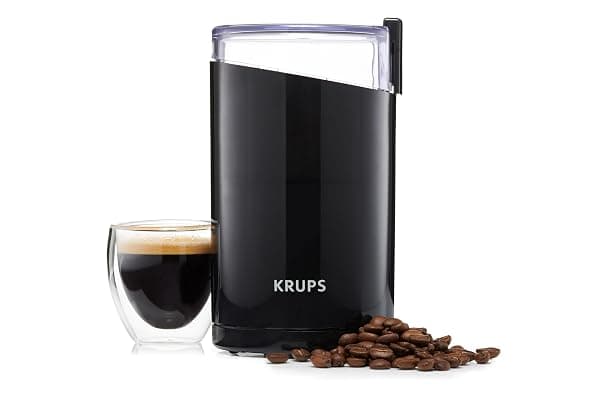
Blade grinders run on 200–300W and chop beans unevenly, giving you a mix of fine dust and coarse chunks. That inconsistency matters most for espresso, where grind size controls extraction. For cafetière or filter coffee, a blade grinder is perfectly adequate. The KRUPS F2034238 runs at 200W and holds 75g (enough for around 12 cups), while the KYG manages 300W with a 70g bowl and a 45 dB low-noise motor. Burr grinders, like the De'Longhi KG79 at £51.99, produce a uniform grind size and are worth the premium if you pull espresso shots daily. On UK 240V mains, all three draw well within standard socket limits, so there is no wiring concern. If you only make cafetière coffee once or twice a day, spend £16–£25 on a blade grinder and put the saving toward better beans.
02Cafetière capacity and borosilicate glass: sizing for your household
Cafetières are sold by cup count, but 'cup' usually means 125ml, not a standard UK mug. The Bodum Chambord at 1 litre nominally serves 8 cups, which is roughly 4 large mugs. The TBGENIUS at 0.6 litres suits 1–2 people. Both use borosilicate glass, which handles thermal shock far better than ordinary glass and won't crack when you pour near-boiling water straight in. If you live in a hard-water area (most of England and Wales), a stainless-steel filter is easier to descale than a fine mesh one. The Bodum Chambord's reusable stainless-steel filter is straightforward to rinse under the tap. For a solo drinker, the TBGENIUS at £12.99 is the sensible choice; for a household of three or four, the Bodum at £30.92 earns its place.
03Milk frothers: handheld wand vs automatic jug
A handheld frother like the POWSAF wand costs £5. 99 and runs on batteries, making it the lowest-commitment entry point for lattes and cappuccinos. It froths cold or warm milk in about 20 seconds but requires you to heat the milk separately. An automatic jug frother, such as the Rafow 5-in-1 at £37.89, heats and froths up to 500ml in one step, handles hot and cold foam, and is dishwasher safe. The gap in price is significant: the Rafow's 90-day high was £46.99, so the current price represents a saving of £9.10. If you make one milky coffee a day, the POWSAF wand is all you need. If you regularly make drinks for two or more people, or want hot chocolate and matcha as well, the automatic jug pays for itself in convenience within a few weeks.
04Capacity and grind volume: matching the grinder to your routine
Most blade grinders quote capacity in grams of whole beans. A standard cafetière dose is roughly 7–10g per 125ml cup, so a 75g bowl (KRUPS) gives you enough for a full 8-cup brew in one go. The Aigostar holds 60g, which covers a 4–6 cup batch. Grind time matters too: over-grinding with a blade grinder generates heat that can scorch lighter roasts, so pulse in 5-second bursts rather than holding the button down. The KYG's safety lock prevents accidental activation, which is useful if you store it in a drawer. For spices and nuts, any of these blade grinders work well, but keep a separate bowl or clean thoroughly between uses to avoid coffee-flavoured cumin.
Our top picks
Best for everyday cafetière and filter coffeeKRUPS F2034238 Coffee Mill and Spice
Its 200W motor and 75g stainless-steel bowl handle enough beans for 12 cups in a single grind. One-touch operation keeps the learning curve flat, and the compact footprint fits neatly on a standard UK worktop without taking up the space a burr grinder demands.
Best cafetière for households of three or fourBODUM CHAMBORD French Press Coffee Maker
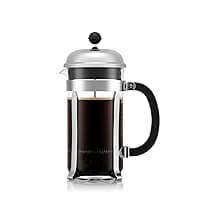
The Bodum Chambord's 1-litre borosilicate glass jug and reusable stainless-steel filter make it the most practical cafetière here at £30.92, down from a 90-day high of £37.76. It brews 8 cups per press, which suits a busy household morning routine.
Best budget frother for solo coffee drinkersMilk Frother Handheld for Coffee with
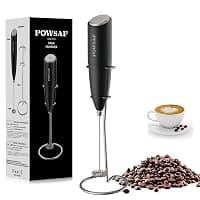
Currently at £5.99, the POWSAF handheld wand hit a 90-day low of £3.70 and a high of £14.32, so you are buying at a historically good price. It froths milk for cappuccinos, matcha, and hot chocolate with a single button press, comes with a stand to avoid drips on the worktop, and requires no mains socket. For anyone who wants frothy coffee without committing to a £37+ automatic jug, this is the obvious starting point.
Best for espresso enthusiasts who want consistent grind sizeDe'Longhi
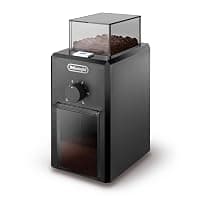
The De'Longhi KG79 at £51.99 is the only burr-style grinder in this selection, producing a uniform grind that blade machines cannot match. That consistency is essential for espresso extraction. It is the most expensive pick here, but for anyone running a home espresso machine daily, the step up from a £25 blade grinder is immediately noticeable in the cup.
Frequently asked
What is the difference between a blade grinder and a burr grinder?
A blade grinder uses spinning stainless-steel blades to chop beans into uneven particles, similar to a food processor. A burr grinder crushes beans between two abrasive surfaces, producing a consistent particle size. For cafetière and filter coffee, a blade grinder costing £16–£25 is perfectly adequate. For espresso, where grind uniformity controls extraction time and flavour, a burr grinder such as the De'Longhi KG79 at £51.99 is worth the extra spend.
How much coffee do I need for a French press?
A standard ratio is 1 gram of ground coffee per 10ml of water, so a 1-litre cafetière like the Bodum Chambord needs roughly 100g of grounds for a full brew. Most blade grinders hold 60–75g per batch, so you may need two grinds for a full pot. A 0.6-litre cafetière such as the TBGENIUS needs around 60g, which fits in a single grind cycle. Adjust to taste: stronger drinkers often go up to 1g per 8ml.
Is a handheld milk frother worth buying?
For solo use, yes. A handheld frother like the POWSAF wand at £5.99 froths milk in under 30 seconds and takes up almost no drawer space. The trade-off is that you must heat the milk separately in a jug or microwave first. If you make drinks for two or more people regularly, an automatic jug frother such as the Rafow 5-in-1 at £37.89 heats and froths in one step and is more practical at volume.
Can I use a coffee grinder for spices?
Yes, blade grinders handle spices, nuts, and herbs well. The KRUPS F2034238 and KYG are both marketed for multi-use. The key issue is flavour transfer: coffee oils cling to the bowl and blades, so grinding cumin after coffee beans will taint the spice. Either keep a dedicated grinder for spices or clean the bowl thoroughly between uses by grinding a small amount of dry bread or uncooked rice to absorb residual oils, then wiping clean.
What size cafetière should I buy?
Match capacity to your household. A 0.6-litre cafetière (4 cups at 125ml each, roughly 2 large mugs) suits 1–2 people. A 1-litre model (8 cups, around 4 large mugs) suits 3–4 people. Bear in mind that cafetière coffee should be poured immediately after brewing to prevent over-extraction, so avoid buying a larger pot than you will fill. The TBGENIUS 0.6L at £12.99 is ideal for a solo drinker; the Bodum Chambord 1L at £30.92 suits a family kitchen.