
Food processors range from 260W to 700W in this roundup, but even the most powerful model costs under £2 a year in electricity at typical UK usage. The real running-cost differences come down to motor efficiency, how often you use it, and whether a cheaper, lower-wattage machine can actually handle your weekly prep.
What to look for
01Wattage and what it actually costs per year
On the UK 240V mains supply, a food processor's wattage tells you how much power it draws per hour of use. In practice, most home cooks run a food processor for two to five minutes per session, not a full hour. A 260W LINKChef mini chopper doing the same drops that to under 57p. The annual saving is real but modest: less than £1 separates the cheapest and most powerful machines here. Where wattage matters more is performance. A 260W motor can struggle with hard root vegetables or large batches, forcing you to run it longer or in multiple pulses, which partially erodes the efficiency advantage. If your prep is mostly onions, garlic, and soft fruit, a low-wattage mini chopper is genuinely efficient. For pastry dough or dense nuts, the 600W or 700W models earn their slightly higher running cost.
02Capacity versus motor load
Overfilling a food processor bowl forces the motor to work harder and draw closer to its peak wattage for longer. A 500ml bowl on the LINKChef 260W model is fine for a single portion of salsa, but chop a full onion in it and you are near the limit. The 2-litre stainless steel bowl on the IMURZ 500W machine gives you more headroom, meaning the motor rarely hits peak draw. The Bosch MultiTalent 3 and Russell Hobbs Desire both offer 1.5L usable capacity with 600W-plus motors, a combination that keeps the motor running well within its limits for most family-sized tasks. Running a motor near its ceiling repeatedly also shortens its lifespan, so an undersized machine used hard can cost more over time through earlier replacement. Match bowl size to your typical batch: a 600ml bowl suits one to two people, while a 1.5L or larger suits families or batch cooking.
03Standby draw and cord storage
Unlike smart appliances, food processors draw zero standby power once unplugged. The LINKChef 260W mini chopper includes integrated power cord storage, which is a small but practical feature for UK kitchens where worktop space is often limited to 600mm-wide sections between appliances. Keeping the cord tidy means you are more likely to unplug the machine after use rather than leaving it plugged in at the socket. While a food processor left plugged in but switched off draws negligible power, it is good practice on UK ring-main circuits to unplug small appliances when not in use. None of the machines here have a standby mode or digital display that would add a phantom load, so your running cost is purely the seconds or minutes the motor is actually spinning.
04Hard water and descaling considerations
If you live in a hard-water area (much of southern England and the Midlands), limescale build-up inside a food processor bowl or on its blades is not a direct running-cost issue, but it affects longevity. Stainless steel bowls, as found on the LINKChef 1.5L dual-speed model and the IMURZ 2-litre machine, resist limescale staining better than plastic and are easier to wipe clean with a diluted white vinegar solution. Plastic bowls on the Kenwood FP120 and Russell Hobbs Desire can cloud over time in hard-water areas, though this is cosmetic rather than functional. Longer-lasting components mean fewer replacements, which is the most significant long-term cost factor for any food processor.
Our top picks
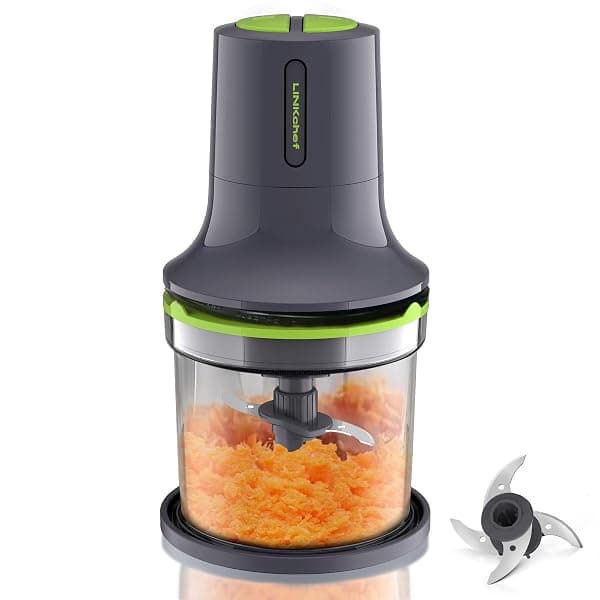
Best for low running costs on a tight budgetLINKChef Food Processor
At 260W, this is the most energy-efficient machine in the group, and at £25.99 (with a 90-day low of £20.54) it is also among the cheapest to buy. The 500ml bowl suits one to two portions, and the integrated cord storage keeps a small UK kitchen tidy. Four bi-level blades handle soft vegetables, onions, and baby food without the motor straining.
Best value for a larger 2-litre bowlMini Chopper Electric Food Processor with
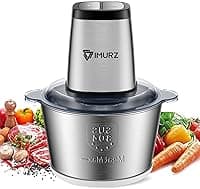
Currently £21.98, this IMURZ 500W machine is the cheapest route to a 2-litre stainless steel bowl in this roundup. The larger capacity means the 500W motor rarely hits peak draw, keeping running costs low while handling family-sized batches of chopped veg or minced meat. Two speed settings give you control over texture. The stainless steel bowl also resists limescale staining better than plastic in hard-water areas.
Best mid-range pick for regular batch cookingBosch MultiTalent 3 Food Processor
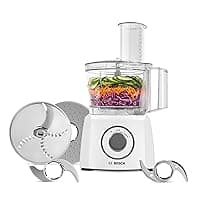
The Bosch MultiTalent 3 MCM3100WGB draws 700W but its current price of £59.99 represents a significant drop from its 90-day high of £84.50. That motor headroom means it processes dense ingredients, including nuts and root vegetables, without prolonged running times that would offset the higher wattage. Bosch's UK after-sales support and spare parts availability make this a lower-risk long-term purchase than lesser-known brands.
Best for versatility with multiple attachmentsRussell Hobbs Desire Electric Food Processor
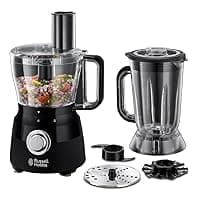
At £64.23, the Russell Hobbs Desire 600W includes a dough hook, creaming disc, reversible slicing and shredding disc, and a 1.5L plastic jug alongside the main bowl. That range of attachments means one machine replaces several, reducing the total number of appliances drawing power in your kitchen. Its 90-day low of £44.00 shows it does go on sale, so it is worth watching if the current price feels steep.
Best compact option from a trusted UK brandKenwood Compact Food Processor
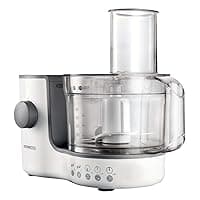
The Kenwood FP120 runs at 400W with a 1.4L bowl, sitting neatly between the mini choppers and full-size machines on both price (£39.95) and power draw. Kenwood has sold food processors in the UK for decades, and replacement blades and bowls are widely available. The shredder disc adds functionality beyond basic chopping, making this a practical step up from a 500ml mini chopper without a significant jump in electricity use.
Frequently asked
How much does it cost to run a food processor in the UK?
A 700W food processor used for five minutes a day costs approximately £1.53 per year. A 260W mini chopper doing the same costs under 57p annually. The difference between the cheapest and most powerful machines here is less than £1 per year in electricity, so purchase price and durability matter far more to your total cost of ownership than wattage alone.
Is a higher-wattage food processor better?
Higher wattage means more torque, which helps with dense ingredients such as nuts, raw root vegetables, and pastry dough. A 260W to 300W mini chopper handles soft vegetables, garlic, onions, and baby food without difficulty. For harder tasks or larger batches, a 500W to 700W machine is less likely to stall or overheat. The key is matching wattage to your actual use: a powerful motor running well within its limits is more efficient and longer-lasting than a small motor pushed to its ceiling.
Does a food processor use a lot of electricity?
No. Food processors are used in short bursts of one to five minutes, so even a 700W model consumes only a fraction of a kWh per session. For comparison, a standard UK kettle rated at 3kW uses more electricity boiling water once than a food processor uses in a typical week of daily prep. The appliances that drive up your electricity bill are those that run continuously, such as fridges, washing machines, and tumble dryers.
What size food processor do I need for a family of four?
A 1.5L to 2L bowl is the practical minimum for a family of four. Machines with a 500ml or 600ml bowl require multiple batches for a family-sized meal, which increases total running time and motor wear. The Russell Hobbs Desire and LINKChef 1.5L dual-speed model both offer 1.5L capacity at under £70. The IMURZ 2-litre machine at £21.98 is the most affordable route to a larger bowl in this roundup.
Should I unplug my food processor when not in use?
Food processors have no standby mode or digital display, so they draw no power when switched off at the socket. Unplugging is still good practice on UK ring-main circuits and is recommended by most UK electrical safety guidance. It also means you are not relying on the machine's own switch as the sole point of isolation. None of the machines in this guide have a phantom load to worry about, but unplugging is a simple habit that costs nothing.