
Most food processors come with three or four attachments, yet the majority of UK cooks use only one regularly. Knowing which extras earn their cupboard space, and which gather dust behind the 600mm cabinet door, saves you money and prep time from day one.
What to look for
01Motor wattage and what it can actually drive
On a UK 240V supply, wattage determines which attachments a machine can power without straining. A 260W motor, like the one in the LINKChef 500ml mini chopper, handles soft vegetables, garlic, and baby food comfortably, but will labour through dense dough or hard root vegetables. Step up to 400W, as found in the Kenwood FP120, and you unlock shredder discs for carrots and courgettes. At 500W, the IMURZ 2-litre model copes with larger batches. The Russell Hobbs Desire at 600W sits at the point where most disc attachments, including slicing and grating discs, operate without the motor overheating mid-task. If you plan to use disc attachments regularly, choose a machine whose motor is specified at 400W or above. Anything lower is best treated as a dedicated chopper rather than a true multi-attachment processor.
02Bowl capacity and the attachments it limits
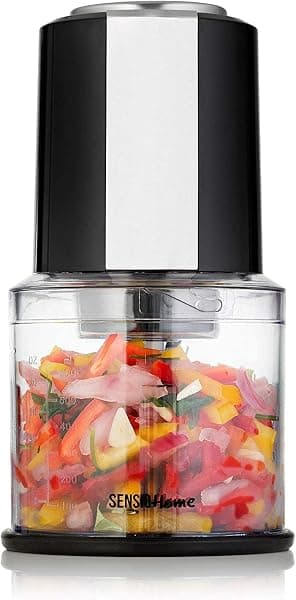
Bowl size directly restricts which attachments fit and how useful they are. The Sensio Home mini chopper has a 600ml bowl, which is fine for a batch of pesto or a handful of nuts, but a slicing disc in a 600ml bowl produces only a small portion of vegetables before you need to empty it. The LINKChef 1.5L stainless steel bowl doubles that throughput, making it practical for a family salad. The IMURZ 2-litre bowl is the largest in this group and suits disc work for meal-prep quantities. Kenwood's 1.4L bowl is a common UK kitchen standard, sized to fit neatly in a 600mm-deep cupboard. As a rule, if you want to use a slicing or grating disc as a genuine time-saver rather than a novelty, aim for at least 1.2L capacity. Smaller bowls are best matched to a single chopping blade and nothing more.
03Blade types: what each one genuinely does
Most compact processors ship with a multi-level chopping blade. The LINKChef 1.5L uses a 3-layer blade; the LINKChef 500ml and IMURZ both use 4 bi-level blades. More blade levels generally mean finer, more even chopping in fewer pulses, which matters for onions and garlic where uneven chunks are frustrating. Disc attachments, present on the Kenwood FP120 (shredder disc) and the Bosch MultiTalent 3, add slicing and grating functions that a chopping blade cannot replicate. A dough blade, where included, is a flat or blunt arm that folds rather than cuts, essential for bread dough but useless for chopping. The Braun MultiQuick 7 takes a different approach entirely: its EasyClick Plus system lets you swap attachments on a hand blender body, which is practical in small UK kitchens where counter space is at a premium. Identify the two or three tasks you do most often, then check the included attachment list before buying.
04Hard water and blade longevity
In hard-water areas covering much of southern and eastern England, limescale builds up on metal components if they are left wet. Stainless steel blades, as used in the Sensio Home (4 stainless steel blades) and the LINKChef 1.5L (stainless steel bowl), resist corrosion better than chrome-plated alternatives. Rinsing blades immediately after use and drying them before storage extends their life significantly. Dishwasher-safe attachments are convenient, but repeated dishwasher cycles in hard-water households can dull blade edges faster than hand washing. If you live in a hard-water area, check the manufacturer's guidance on whether blades are dishwasher-safe or hand-wash only, and factor that into your routine.
05Storage: cord management and footprint
The LINKChef 500ml mini chopper includes built-in power cord storage, a small but genuinely useful feature in a UK kitchen where worktop space is limited and trailing cables are a hazard. Compact machines like the Sensio Home and the LINKChef 500ml have a small footprint that fits inside a standard 600mm-deep cupboard without disassembly. Larger processors such as the Bosch MultiTalent 3 and the Russell Hobbs Desire are bulkier and more likely to live on the worktop permanently. If you plan to store the machine away between uses, measure your cupboard opening before buying, and check whether the bowl and lid stack inside the main body or need separate storage.
Our top picks
Best for small kitchens with limited storageSensio Home Mini Food Chopper Processor
Four stainless steel blades in a 600ml bowl at 300W makes the Sensio Home the most compact option here. Its small footprint slots into a 600mm cupboard without disassembly, and the single-blade setup is genuinely sufficient for daily garlic, onion, and nut prep. It does one job well rather than promising attachments you will never use, which makes it the honest choice for a solo cook or a small flat.
Best for batch chopping with a larger bowlLINKChef Food Processor

The LINKChef 1.5L uses a 3-layer stainless steel blade arrangement in a stainless steel bowl, giving more even results across a larger volume than most mini choppers. The 1.5L capacity handles a full batch of onions or a portion of meat mince without needing to stop and empty mid-task. Dual-speed control adds precision for coarser or finer textures, which is useful when prepping baby food alongside adult meals.
Best for disc attachments on a budgetKenwood Compact Food Processor
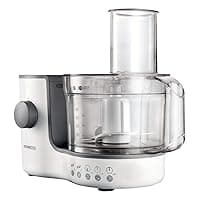
The Kenwood FP120 is the entry point for genuine multi-attachment processing: a 400W motor on the UK 240V supply drives both a chopping blade and a shredder disc, plus an emulsifying attachment. The 1.4L bowl fits the standard 600mm cupboard depth. For anyone who wants to slice courgettes or grate carrots in bulk rather than by hand, this is the lowest-cost route to a disc-capable machine in this group.
Best for high-volume family meal prepRussell Hobbs Desire Electric Food Processor
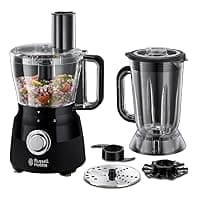
A 600W motor paired with a 1.5L usable capacity bowl means the Russell Hobbs Desire handles harder ingredients, including dense root vegetables and larger meat portions, that would stall a lower-wattage machine. The 600W specification on a UK 240V supply gives it enough headroom to run disc attachments continuously without the motor cutting out. It is the most capable machine in this group for households cooking from scratch most evenings.
Best for versatility across multiple attachment typesBosch MultiTalent 3 Food Processor
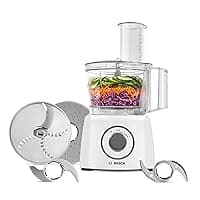
The Bosch MultiTalent 3 is built around a multi-attachment system that accepts slicing, grating, and chopping accessories on a single motor body. Its compact white design fits most UK kitchen aesthetics, and the Bosch attachment ecosystem means you can add accessories later without replacing the whole machine. For cooks who want to expand their prep repertoire gradually, this is the most future-proof option in the group.
Frequently asked
Which food processor attachments do I actually need for everyday cooking?
For most UK home cooks, three attachments cover the vast majority of tasks. First, a multi-level chopping blade for garlic, onions, herbs, and nuts. Second, a shredder or grating disc for carrots, courgettes, and cheese. Third, a slicing disc for cucumber, beetroot, and potatoes. A dough blade is worth having only if you bake bread regularly. Emulsifying attachments are useful for mayonnaise and dressings but not essential. Start with the chopping blade and add discs only if your machine's motor is specified at 400W or above.
Can I buy extra attachments for my food processor separately?
It depends on the brand. Kenwood and Bosch both sell additional discs and blades as separate accessories, so you can add a slicing disc to a machine that shipped with only a chopping blade. Smaller or own-brand machines, including the LINKChef and Sensio Home models, typically use proprietary fittings that are not interchangeable with other brands. Before buying a budget processor, check whether replacement blades are available to purchase individually, as blades do blunt over time, particularly in hard-water areas where dishwasher use accelerates wear.
Is a higher-wattage food processor always better?
Not always. Wattage determines what a machine can handle, not how well it handles everyday tasks. A 260W mini chopper is perfectly adequate for garlic, soft vegetables, and baby food. You only need 500W or above if you are processing hard root vegetables, large meat portions, or running disc attachments continuously. Higher wattage also means a larger, heavier motor body, which takes up more cupboard space. Match the wattage to your actual cooking habits rather than buying the most powerful machine available.
What size food processor bowl do I need for a family of four?
A 1.2L to 1.5L bowl is the practical minimum for a family of four. Smaller 500ml to 600ml bowls require multiple batches for a family-sized portion of chopped onions or grated vegetables, which defeats the time-saving purpose. The LINKChef 1.5L and Russell Hobbs Desire 1.5L usable capacity are both sized appropriately. If you regularly cook for more than four people or do significant meal prep at weekends, the IMURZ 2-litre bowl offers more headroom without stepping up to a full-sized processor.
Are food processor blades dishwasher safe?
Many are labelled dishwasher-safe, but there are two practical caveats for UK households. First, stainless steel blades, such as those in the Sensio Home and LINKChef 1.5L, hold up better in a dishwasher than chrome-plated alternatives. Second, in hard-water areas covering much of southern and eastern England, repeated dishwasher cycles deposit limescale on blade edges and can accelerate dulling. Hand washing in warm soapy water and drying immediately is the safest approach for preserving blade sharpness over time, regardless of the dishwasher-safe label.