
A good set of kitchen knives transforms everyday cooking from a chore into a pleasure. Whether you're slicing vegetables for a weeknight stir-fry or carving the Sunday roast, the right knife makes all the difference to speed, safety, and enjoyment in the kitchen. Yet with countless options flooding the UK market, from budget-friendly starter sets to professional-grade steel, finding knives that balance sharpness, durability, and comfort can feel overwhelming.
The kitchen knife landscape has evolved considerably in recent years. Gone are the days when a decent knife set required a small fortune or a trip to specialist cookware shops. Today's manufacturers offer impressive quality across various price points, with innovations like integrated sharpeners and ergonomic handles making knife maintenance simpler than ever. The challenge isn't finding good knives, it's identifying which features genuinely matter for your cooking style and which are merely marketing flourishes.
This guide cuts through the confusion to help you choose kitchen knives that will serve you well for years to come. We'll explore the key factors that separate excellent knives from disappointing ones, from blade construction and steel quality to handle design and maintenance requirements. Whether you're equipping your first kitchen, replacing worn-out blades, or simply curious about upgrading your current set, you'll find practical advice tailored to real-world UK cooking needs.
What to look for
01Blade Material and Construction
The steel used in your knife blade fundamentally determines its performance and longevity. Stainless steel dominates the UK market for good reason, it resists rust and staining whilst requiring minimal maintenance, making it ideal for busy home cooks. High-carbon stainless steel offers the best of both worlds: the edge retention and sharpness of carbon steel with stainless properties that tolerate occasional dishwasher mishaps (though hand washing remains best practice). German-style stainless steel typically features a slightly softer composition, creating robust, forgiving blades that withstand heavy-duty tasks, whilst Japanese-influenced designs often use harder steel for razor-sharp edges that excel at precision work. Consider blade thickness too, thicker blades suit chopping and heavy prep work, whilst thinner profiles glide through delicate slicing tasks. Full-tang construction, where the blade extends through the entire handle, provides superior balance and durability compared to partial-tang alternatives.
02Essential Knives vs. Complete Sets
Before selecting a knife set, honestly assess which blades you'll actually use. Many home cooks find that three core knives, a chef's knife, paring knife, and serrated bread knife, handle ninety percent of kitchen tasks. A quality trio often outperforms a drawer full of mediocre blades you'll rarely touch. However, comprehensive sets offer advantages beyond variety: they typically include a storage block that protects edges and keeps counters organised, plus the convenience of matching handles and aesthetics. Sets also represent better value when you genuinely need multiple knives, particularly when they include useful additions like kitchen scissors or a utility knife for mid-sized tasks. Consider your cooking habits carefully, enthusiastic home cooks who prepare diverse meals will appreciate having specialised blades for different tasks, whilst occasional cooks might find a well-chosen smaller set more practical. Remember that you can always start with essentials and add specialised knives later as your skills and interests develop.
03Handle Design and Comfort
A knife's handle profoundly affects comfort, control, and safety during use, yet shoppers often overlook this crucial element. Ergonomic handles reduce hand fatigue during extended prep sessions and provide the secure grip essential for safe cutting. Handle materials range from traditional wood (attractive but requiring more maintenance) to modern synthetic options that offer durability and dishwasher tolerance. Many contemporary knives feature textured or contoured grips that prevent slipping even when wet. Weight and balance matter tremendously, the knife should feel like a natural extension of your hand, with weight distributed appropriately between blade and handle. German-style knives typically feature heavier, more substantial handles that suit a rocking cutting motion, whilst Japanese-inspired designs often have lighter handles for precise, controlled cuts. If possible, hold potential purchases before buying to assess how they feel in your grip. Consider that different household members may have varying preferences based on hand size and cutting style.
04Maintenance and Sharpening Systems
Even the finest knives require regular maintenance to perform optimally, making ease of care an essential purchasing consideration. Some modern knife sets include integrated sharpeners built into the storage block, a convenient feature that encourages regular honing without requiring separate tools or skills. These systems work well for maintaining everyday sharpness, though professional sharpening every year or two keeps blades in peak condition. Stainless steel knives generally demand less maintenance than carbon steel alternatives, which can stain or rust if not dried promptly. Consider whether you're willing to hand-wash and immediately dry your knives or need dishwasher-safe options (though hand washing extends any knife's lifespan). Storage matters too, knife blocks protect edges from damage and keep dangerous blades safely contained, whilst magnetic strips save counter space and display your collection. Some sets include blade guards for drawer storage. Realistic assessment of your maintenance commitment helps ensure you choose knives that will remain sharp and functional rather than deteriorating from neglect.
05Value and Warranty Considerations
Kitchen knives represent a spectrum of investment levels, from budget-friendly options to premium professional-grade sets. Higher prices often reflect superior steel quality, better edge retention, and more comfortable handles, but excellent mid-range options now deliver impressive performance for home cooks. Consider cost per knife when evaluating sets, sometimes a comprehensive collection offers better value than purchasing individual blades, whilst other times you're paying for unnecessary extras. Warranty coverage indicates manufacturer confidence and provides protection against defects; look for guarantees of at least several years. Brand reputation matters in the knife world, as established manufacturers typically maintain stricter quality control and offer better customer service. That said, newer brands sometimes deliver exceptional value by cutting marketing costs rather than corners on construction. Read verified customer reviews focusing on long-term performance rather than initial impressions, comments about edge retention after six months or a year prove more valuable than unboxing excitement. Balance your budget against your cooking frequency and enthusiasm; serious home cooks benefit from investing in quality that will last decades.
Our top picks
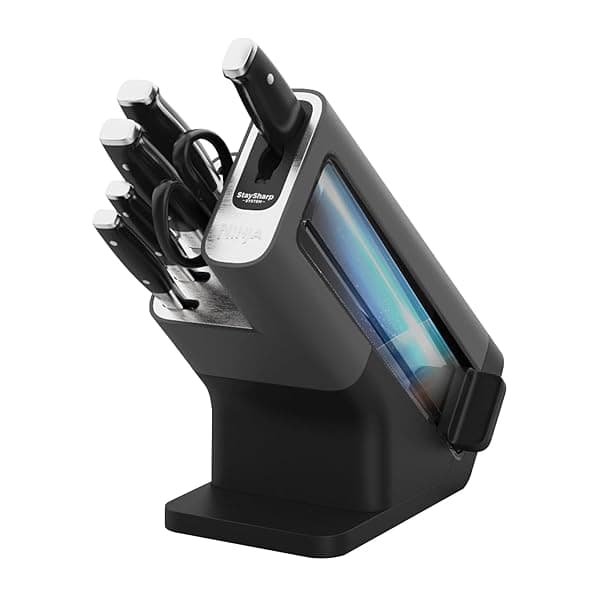
Chef's ChoiceNinja Foodi StaySharp Knife Block with
This set's integrated sharpening system solves the most common knife maintenance challenge, keeping blades consistently sharp with minimal effort. The comprehensive collection covers all essential kitchen tasks whilst the impressive customer rating from over six thousand reviews demonstrates reliable, long-term performance that home cooks genuinely appreciate.
Runner UpYabano Knife Set
German stainless steel construction delivers the durability and edge retention serious home cooks demand, whilst the built-in sharpener and attractive wooden block add convenience and kitchen aesthetics. The extensive fourteen-piece collection provides specialised blades for diverse cooking tasks without requiring premium pricing.
Best Valuemicocali Knife Set
This streamlined six-piece set focuses on essential knives that handle everyday cooking tasks, making it ideal for first-time buyers or those seeking straightforward functionality. The stainless steel construction and storage block provide everything needed for a well-equipped kitchen without overwhelming choices or unnecessary extras.
Budget pickSHAN ZU Steak Knife Set of
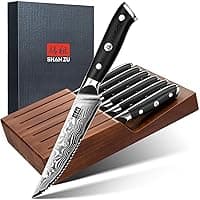
A strong option in the kitchen knives category. Links to our product detail page for full price history before you decide.
Frequently asked
What knives do I actually need in my kitchen?
Most home cooks need just three essential knives: a chef's knife for general prep work, a paring knife for detailed tasks like peeling and trimming, and a serrated bread knife for slicing crusty loaves and soft tomatoes. These three handle the vast majority of kitchen cutting tasks. A utility knife can be useful for mid-sized jobs, but start with the core trio before expanding your collection based on your specific cooking habits.
Are expensive kitchen knives worth the investment?
Quality kitchen knives that suit your cooking style are worth investing in, but 'expensive' is relative. Mid-range knives now offer excellent steel quality and durability for home cooks, often matching professional performance at more accessible prices. The key is choosing knives with good steel, comfortable handles, and solid construction rather than simply buying the priciest option. A well-maintained mid-range knife will outperform a neglected premium blade every time.
How do I keep my kitchen knives sharp?
Regular honing with a steel before each use realigns the blade edge and maintains sharpness between proper sharpenings. For actual sharpening, use a whetstone, manual sharpener, or electric sharpener every few months depending on usage, or consider knife sets with built-in sharpening systems for convenience. Professional sharpening once or twice yearly keeps blades in optimal condition. Always hand wash and dry knives immediately, store them properly in a block or on a magnetic strip, and never cut on glass, marble, or ceramic surfaces which damage edges.
What's the difference between German and Japanese kitchen knives?
German knives typically feature softer steel with a wider blade angle, creating robust, forgiving knives ideal for heavy-duty chopping and rocking cuts. Japanese knives use harder steel with sharper angles, producing lighter blades that excel at precise, delicate slicing but require more careful handling and maintenance. German styles suit general home cooking and can withstand occasional mishaps, whilst Japanese-inspired designs appeal to enthusiasts seeking razor-sharp precision for specific techniques.
Can I put kitchen knives in the dishwasher?
Whilst some manufacturers label their knives dishwasher-safe, hand washing remains best practice for all quality kitchen knives. Dishwashers expose blades to harsh detergents, extreme heat, and jostling against other items, which dulls edges, damages handles, and can cause rust spots even on stainless steel. Hand washing takes mere seconds, immediately drying preserves the blade, and this simple routine dramatically extends knife lifespan and performance.