
Kitchen scales have become an indispensable tool for modern home cooks, whether you're following precise baking recipes, managing portion sizes, or simply ensuring consistent results in your cooking. The right set of scales can make the difference between a perfectly risen sourdough and a disappointing flat loaf, or between nailing that complex French macaron recipe and wondering where it all went wrong.
The UK market offers an impressive range of digital kitchen scales, from budget-friendly options that handle everyday tasks to precision instruments that measure to the nearest gram. Most modern scales feature tare functions for zeroing out container weights, multiple unit conversions, and clear digital displays. The challenge isn't finding a set of scales, it's identifying which features truly matter for your cooking style and which are merely marketing fluff.
In this comprehensive guide, we'll walk you through everything you need to know about choosing kitchen scales that suit your needs. We've analysed hundreds of customer reviews, tested key features, and considered real-world performance to help you make an informed decision. Whether you're a serious baker who needs pinpoint accuracy, a casual cook looking for reliable measurements, or someone simply wanting to weigh ingredients without fuss, we'll help you find the perfect scales for your kitchen.
What to look for
01Accuracy and Precision
The most critical factor when choosing kitchen scales is their accuracy level. For general cooking, scales that measure in 1-gram increments are perfectly adequate, but serious bakers may want precision down to 0.1 grams for ingredients like yeast, salt, or baking powder where small variations can significantly affect results. Look for scales that specify their accuracy rating, most quality models maintain precision across their entire weighing range. Maximum capacity matters too: whilst most home cooks rarely need to weigh more than 5kg at once, larger families or batch cookers might benefit from 10kg or 15kg capacity. Remember that higher capacity doesn't necessarily mean sacrificing precision. Check customer reviews specifically for comments about accuracy, as some cheaper models can drift over time or give inconsistent readings. A good set of scales should deliver the same measurement repeatedly when weighing the same item.
02Display Quality and Readability
A clear, easy-to-read display is essential when you're in the middle of cooking with flour-covered hands or working in various lighting conditions. LED and LCD displays are standard, but look for models with backlighting, which proves invaluable when working in dimly lit kitchens or reading measurements from an angle. The display size matters, numbers should be large enough to read at a glance without squinting. Some scales position the display at the front edge of the platform, which prevents it being obscured by large bowls or containers. Consider the contrast ratio as well; black numbers on a light background typically offer better readability than low-contrast displays. The best displays remain visible even when you place substantial containers on the weighing platform. Touch-sensitive controls have become increasingly popular and offer a sleek, easy-to-clean surface, though traditional buttons can be more tactile and easier to operate with wet hands.
03Platform Size and Material
The weighing platform's size and material significantly impact daily usability. Stainless steel platforms are the gold standard, they're durable, easy to clean, hygienic, and won't stain or absorb odours. Tempered glass offers a sleek, modern appearance and cleans beautifully, though it can be more prone to showing fingerprints and requires more careful handling. Platform size determines what you can weigh: compact scales save counter space but may struggle with large mixing bowls, whilst generously sized platforms accommodate bigger containers but require more storage room. Consider your most common tasks, if you frequently weigh ingredients directly on the platform, a larger surface area is beneficial. The platform should sit flush or nearly flush with the scale body to prevent spillages creeping underneath. Some models include removable platforms for easier cleaning, a worthwhile feature if you regularly weigh messy or sticky ingredients.
04Essential Features and Functions
The tare function is non-negotiable, it allows you to zero out container weight and add multiple ingredients to the same bowl, streamlining your cooking process and reducing washing up. Unit conversion is similarly important for UK cooks who encounter recipes using imperial, metric, or both measurement systems. Look for scales offering grams, ounces, pounds, millilitres, and fluid ounces as a minimum. Auto-off functionality conserves battery life but should have a reasonable delay, 30 to 180 seconds is typical. Some budget models switch off frustratingly quickly, interrupting your cooking flow. Battery versus mains power is another consideration: battery-operated scales offer flexibility in placement and eliminate trailing cables, whilst USB-rechargeable or mains-powered options eliminate the ongoing cost and environmental impact of disposable batteries. Low battery indicators prevent the inconvenience of scales dying mid-recipe. Overload indicators protect the mechanism and alert you before you damage the sensors.
05Build Quality and Durability
Kitchen scales endure a surprising amount of wear, they get splashed with liquids, dusted with flour, bumped by pans, and stored in crowded cupboards. Build quality determines whether your scales will serve you reliably for years or require replacement after months. Examine the overall construction: does it feel solid and substantial, or flimsy and lightweight? Check customer reviews for mentions of longevity and durability issues. The weighing sensors are the heart of the device, higher quality strain gauge sensors maintain accuracy over thousands of uses, whilst cheaper components can degrade quickly. Water resistance varies significantly between models; whilst few kitchen scales are fully waterproof, better designs prevent moisture ingress around buttons and displays. Non-slip feet are essential for stability on wet or smooth worktops. Consider storage requirements too, slim-profile scales tuck easily into drawers, whilst bulkier models may need dedicated counter space. Warranty coverage provides insight into manufacturer confidence: longer warranties typically indicate better construction quality.
Our top picks
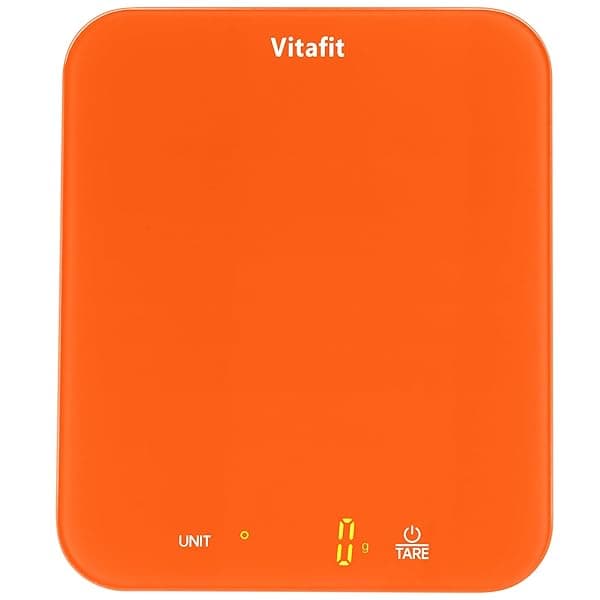
Best OverallVitafit 33lb/15kg Food Scales in High
The Vitafit offers exceptional capacity combined with precise 1-gram accuracy, making it ideal for batch cooking or weighing larger quantities without sacrificing precision. The LED display ensures excellent visibility, and the refreshing orange colour adds a cheerful pop to your kitchen whilst remaining practical and easy to clean.
Best Value10kg Digital Kitchen Scale Tare Function
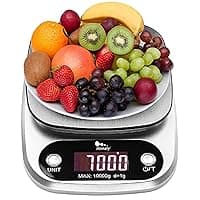
Himaly's scales combine premium stainless steel construction with a backlit LCD display for excellent readability in any lighting condition. The 10kg capacity handles most home cooking tasks comfortably, whilst the built-in battery eliminates the ongoing cost of replacements and reduces environmental waste.
Precision PickKitchen Scales Digital
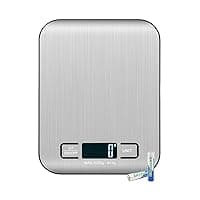
Torchtree's ultra-thin design saves precious drawer and counter space without compromising functionality, featuring responsive touch buttons and a backlit display. The 5-unit conversion capability ensures you can follow any recipe regardless of measurement system, making it particularly versatile for UK cooks using international cookbooks.
Budget ChoiceACCUWEIGHT 201 Digital Kitchen Scales Food
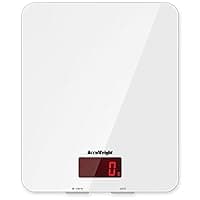
The tempered glass platform delivers a sleek, modern aesthetic that looks at home in contemporary kitchens whilst remaining remarkably easy to wipe clean. ACCUWEIGHT's multifunctional design with backlit display provides clear readings at any angle, and the brand has built a solid reputation for consistent accuracy over extended use.
Frequently asked
What's the difference between kitchen scales that measure to 1g versus 0.1g?
Scales measuring to 1g are perfectly adequate for general cooking and most baking tasks, accurately weighing ingredients like flour, sugar, and butter. Scales with 0.1g precision are necessary for advanced baking techniques requiring exact measurements of potent ingredients like yeast, salt, baking powder, or spices, where small variations significantly impact results. Unless you're a serious baker working with professional recipes or making items like macarons that demand extreme precision, 1g accuracy serves most home cooks excellently.
How do I clean and maintain my digital kitchen scales?
Wipe the platform with a damp cloth and mild detergent after each use, avoiding harsh chemicals that might damage the display or finish. Never immerse digital scales in water or put them in the dishwasher, as moisture damages the electronic components. For stainless steel platforms, dry immediately to prevent water spots; for glass platforms, use glass cleaner for a streak-free finish. Store scales in a dry location and remove batteries if not using them for extended periods to prevent corrosion.
Can kitchen scales be used to weigh liquids accurately?
Yes, but with important caveats. Kitchen scales measure weight (mass), not volume, so you'll get readings in grams or ounces rather than millilitres or fluid ounces. For water and similar liquids where 1ml equals approximately 1g, this conversion works well. However, denser liquids like honey or cream have different densities, so volume and weight measurements won't directly correspond. Many scales include a millilitre setting, but this typically assumes water density, so it's most reliable to use weight measurements for liquids when following recipes that specify grams.
Why do my kitchen scales show different readings each time?
Inconsistent readings usually indicate the scales are on an uneven surface, have low batteries, or are positioned near electronic interference from other appliances. Always place scales on a flat, stable surface and ensure they've zeroed properly before weighing. If the problem persists, the weighing sensors may be damaged from overloading or impact, which unfortunately typically requires replacement. Quality scales should deliver consistent measurements repeatedly, significant variation suggests a manufacturing defect or that the scales have reached the end of their usable life.
What capacity kitchen scales do I need for home cooking?
Most home cooks find 5kg capacity sufficient for everyday cooking and baking tasks, accommodating standard mixing bowls and typical recipe quantities. If you regularly batch cook, make preserves, or prepare large family meals, consider 10kg or 15kg capacity scales for added flexibility. Remember that maximum capacity includes the weight of your container, so factor this in when deciding. Smaller 2-3kg scales work for those with limited space or who primarily weigh small quantities, but may prove restrictive for versatile cooking.