
Multi-cookers tracked in the UK currently range from £11.99 to £229.99, with the typical price sitting at £56.83. That is a wide spread for what looks like a single pot on your worktop. Understanding what pushes a model up or down that scale helps you avoid overpaying for functions you will never use — or skimping on the one spec that actually matters.
What to look for
01Capacity and how it scales price
Capacity is the single biggest driver of cost in this category. A compact 3-litre model aimed at one or two people costs far less to manufacture than a 6-litre or 8-litre pot designed for family batch cooking. The Nutricook Smart Pot 2 at 8 litres, for example, sits at £119.99 — roughly double the price of the 6-litre Midea at £59.99. The extra material in the inner pot, the larger heating element needed to bring that volume up to pressure, and the heavier-duty lid seal all add to the bill of materials. For a UK kitchen where worktop space is often limited to 600mm-deep units, a larger pot also demands a more robust housing, which costs more to tool and produce. If you are cooking for two, a 3-litre to 5-litre model will almost always be cheaper and more practical than buying capacity you do not need.
02Number of cooking functions and preset programmes
Manufacturers use function count as a headline selling point, and it does correlate with price — up to a point. The Drew and Cole CleverChef advertises 14 functions at £78.23, while the Instant Pot Duo offers 7 functions at £86.17. More programmes mean more software development, more safety testing across each mode, and sometimes additional physical components such as a bread-making paddle or a steaming rack. However, research consistently shows that most owners regularly use three or four functions at most: pressure cook, slow cook, sauté, and rice. Beyond roughly 10 presets, you are largely paying for marketing rather than genuine utility. If you know you want bread-making or yoghurt-making specifically, check that the function is genuinely implemented rather than a relabelled slow-cook cycle.
03Build quality: inner pot material and lid construction
The inner pot material is where budget models cut corners most visibly. Entry-level multi-cookers often use a thin aluminium pot with a non-stick coating that chips within a year of regular use. Mid-range and premium models switch to stainless steel inner pots, which are dishwasher safe, do not leach flavour, and last considerably longer. The Midea 6-litre specifically lists a stainless steel inner pot as a key spec, which partly justifies its price over cheaper alternatives. Lid construction matters too: a pressure-rated lid with a silicone sealing ring, a float valve, and an anti-block shield costs more to produce than a simple vented glass lid. The Quest 1500W model uses a vented glass lid and sits at £33.05 — it cannot pressure-cook, which is why it is cheaper. You are not getting a worse product; you are getting a different product.
04Brand premium and after-sales support
Instant Pot commands a price premium partly because of its established UK customer base and the availability of spare parts — sealing rings, inner pots, and steam racks are all sold separately on Amazon UK. That ecosystem has real value: if your sealing ring splits after 18 months, you can replace it for a few pounds rather than buying a whole new appliance. Lesser-known brands may offer identical specs on paper but provide no spare parts and limited UK warranty support. Nutricook includes a two-year warranty explicitly in its product listing, which is worth factoring into the effective cost. Brand premium is not pure marketing; it often reflects genuine support infrastructure. That said, the average discount off the 90-day high price across tracked models is 10.9%, so waiting for a sale on a branded model can close the gap with a no-name alternative.
05Wattage and energy running costs on UK mains
On UK 240V mains, multi-cooker wattage typically runs from 500W for compact steamers up to 1500W for larger electric multi-function models. The Quest Professional Multi-Function Electric Cooker is rated at 1500W, which means it draws more power per session than a 1000W pressure cooker. However, because pressure cookers reach temperature quickly and then cycle on and off to maintain pressure, their actual energy consumption per meal is often lower than their peak wattage suggests. A 1000W pressure cooker cooking a stew in 25 minutes will use less electricity than a 1500W open-pan model simmering for 90 minutes. If you are in a hard-water area and regularly descale your kettle, note that the same limescale build-up can affect the heating element in a multi-cooker over time, slightly reducing efficiency. Wattage is a useful comparison point, but factor in cooking time to get a true picture of running costs.
06Sale cycles and 90-day price tracking
The spread between the lowest and highest tracked prices in this category is striking. Across the 24 products monitored, the average discount off the 90-day high is 10.9%. Some individual models show far larger swings: the Midea 6-litre has ranged from £32.00 to £79.98 in the past 90 days — a difference of nearly £48. Buying at the wrong moment on a mid-range model can cost you more than buying a budget model at its lowest. The Salter 3-Tier Food Steamer is currently showing the biggest discount in the tracked set, at 25.3% off its recent high, saving £6.06. Checking a price-tracking tool before you buy, and comparing the current price against the 90-day high, is one of the most reliable ways to get a genuinely good deal rather than a sale that is not really a sale.
Our top picks
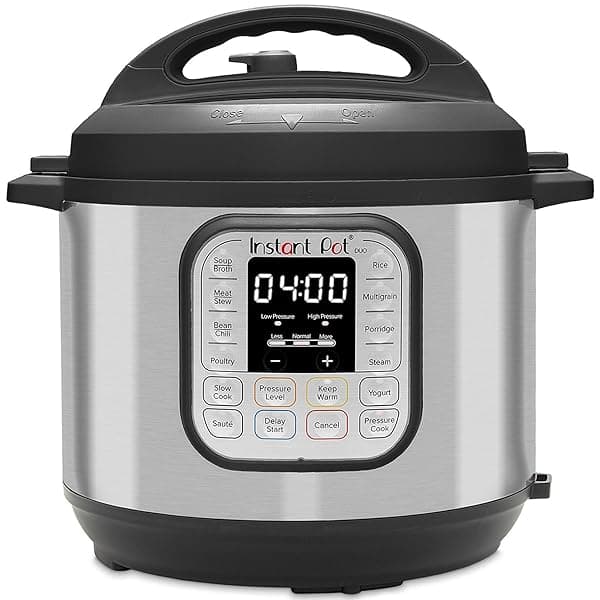
Best for reliable everyday pressure cookingInstant Pot Duo 7-in-1 Electric Multi-Cooker
Currently £86.17, just £3.32 below its 90-day high, the Instant Pot Duo 7-in-1 holds its price because demand stays consistent. The seven functions cover the modes most households actually use, and replacement sealing rings are widely available on Amazon UK.
Best for families who want the most functions per poundDrew&Cole CleverChef 14-in-1 Multi Cooker
At £78.23, the Drew and Cole CleverChef 14-in-1 offers the highest function count of any model here, including a bread-maker mode that most competitors omit. It is designed for five-portion batch cooking, making it practical for households of four or more. Its 90-day high was £79.99, so the current price is close to its floor — you are unlikely to find it significantly cheaper by waiting.
Frequently asked
Why is there such a big price difference between multi-cookers?
The tracked UK price range runs from £11.99 to £229.99, and three factors account for most of the gap. First, capacity: an 8-litre pot costs more to make than a 3-litre one. Second, build quality: stainless steel inner pots and pressure-rated lids cost more than thin aluminium with a vented glass lid. Third, brand and support: established brands charge a premium partly because spare parts and UK warranty support are genuinely available. Function count adds cost up to around 10 presets, but beyond that the price increase rarely reflects real-world utility.
Is it worth waiting for a sale to buy a multi-cooker?
Often yes. Across 24 tracked UK models, the average discount off the 90-day high price is 10.9%. Some models show much larger swings: the Midea 6-litre ranged from £32.00 to £79.98 in 90 days. Use a price-tracking tool to check the 90-day history before buying. If the current price is close to the 90-day high, waiting a few weeks is likely to save you a meaningful amount. If it is near its 90-day low, buy now.
Do more cooking functions mean a better multi-cooker?
Not necessarily. Most owners regularly use three or four functions: pressure cook, slow cook, sauté, and rice. Models with 12 or 14 presets are not worse, but the extra programmes often duplicate each other or are rarely used in practice. Pay for additional functions only if you have a specific use case in mind, such as bread-making or yoghurt production. Otherwise, a 7-in-1 at a lower price will serve most households just as well as a 14-in-1 at a higher one.
Does wattage affect running costs on UK mains?
Peak wattage matters less than total energy used per meal. On UK 240V mains, a 1000W pressure cooker that finishes a stew in 25 minutes uses less electricity than a 1500W open-pan model simmering for 90 minutes, even though the peak draw is lower. The Quest 1500W model draws more power per minute but is used for shorter, hotter cooking sessions. For regular batch cooking, a pressure cooker's shorter cook times generally make it more economical to run, regardless of its rated wattage.
What capacity multi-cooker do I need for a family of four?
A 5-litre to 6-litre inner pot is the practical minimum for four people cooking a main meal. The Instant Pot Duo at 5.7 litres and the Midea at 6 litres both sit in this range. For batch cooking — making enough for two or three meals at once — an 8-litre model such as the Nutricook Smart Pot 2 gives you more headroom. Bear in mind that UK kitchen worktops are typically 600mm deep, and larger pots need more clearance under overhead cupboards when the lid is open or venting steam.