
Finding the right blender can transform your kitchen routine, whether you're whipping up morning smoothies, creating silky soups, or experimenting with homemade sauces and dips. The UK market offers an impressive range of blenders, from compact personal models perfect for single servings to powerful multi-function machines that can handle everything from crushing ice to making hot soup. With so many options available, understanding what features truly matter can help you avoid buyer's remorse and ensure you invest in a blender that matches your lifestyle.
The best blender for you depends entirely on how you plan to use it. Daily smoothie enthusiasts might prioritise portability and easy cleaning, whilst adventurous cooks may want multiple speed settings and specialist programmes for different tasks. Power matters, but it's not everything, blade design, jug capacity, and build quality all play crucial roles in performance and longevity. This guide will walk you through the essential factors to consider, helping you navigate motor wattage, jug materials, and special features so you can make an informed decision that serves you well for years to come.
What to look for
01Motor Power and Performance
Motor wattage gives you a good indication of a blender's capability, though it's not the only factor determining performance. Models ranging from 300W to 1200W or more serve different purposes. Lower-wattage personal blenders work perfectly well for soft fruits and leafy greens, whilst higher-powered machines excel at crushing ice, processing nuts, and handling tougher ingredients like frozen fruits or fibrous vegetables. Consider what you'll blend most often, if you're making green smoothies with kale and frozen berries, you'll want at least 600W. For nut butters, crushing ice for cocktails, or hot soup making, look towards 1000W and above. Remember that blade design and quality matter just as much as raw power; a well-engineered blade system can outperform a more powerful but poorly designed competitor.
02Jug Capacity and Material
Blender jugs typically range from small personal bottles around 600ml to family-sized vessels of 2 litres or more. Consider your household size and typical usage, single-serve bottles suit individuals or couples, whilst larger families benefit from bigger capacities that can prepare multiple portions at once. Material choice affects durability, weight, and safety. Glass jugs are scratch-resistant, don't retain odours, and look elegant, but they're heavier and can break if dropped. Plastic jugs, particularly those made from BPA-free Tritan, are lightweight and shatterproof, though they may scratch over time. Some blenders include multiple containers, offering flexibility for different tasks. Check whether components are dishwasher safe, as this significantly reduces cleaning effort. Graduated markings on the jug help with recipe accuracy, and a well-designed pouring spout prevents drips and mess.
03Speed Settings and Programmes
The number and type of speed options determine a blender's versatility. Basic models offer simple on/off or pulse functions, which suffice for straightforward smoothies. Mid-range and premium blenders provide multiple manual speed settings, giving you precise control over texture, essential for achieving everything from chunky salsas to silky purées. Auto programmes represent a significant convenience upgrade, particularly for less experienced users. Pre-set modes for smoothies, ice crushing, soups, or nut butters take the guesswork out of blending, automatically adjusting speed and duration for optimal results. Pulse functions offer control for achieving specific textures without over-processing. Consider whether you want the flexibility to experiment with manual controls or prefer the simplicity of one-touch programmes. Some advanced models include blade reversal or stirring mechanisms that prevent ingredients from getting stuck, particularly useful for thicker mixtures.
04Special Features and Versatility
Modern blenders increasingly offer features beyond basic blending that enhance their utility. Soup-making functions heat ingredients through friction whilst blending, creating hot soups in minutes without a separate pan, ideal for quick lunches. Some models include additional attachments like personal blending cups with travel lids, perfect for on-the-go breakfasts. Safety features such as overspill sensors and secure locking mechanisms prevent accidents and mess. Noise level varies considerably between models; if you blend early mornings or have noise-sensitive household members, this matters. Self-cleaning functions save time, many blenders clean themselves with just water and a drop of washing-up liquid on a high-speed cycle. Cord storage, non-slip bases, and compact footprints improve daily usability. Consider whether you want a single-purpose appliance or a multi-tasker that might replace other kitchen gadgets, potentially saving both money and worktop space.
05Build Quality and Longevity
A blender represents a long-term investment, so construction quality directly affects value over time. Examine the base unit's stability, a heavy, solid base with rubber feet prevents vibration and movement during operation, especially important for powerful models. Blade quality matters enormously; stainless steel blades maintain sharpness far longer than cheaper alternatives and resist corrosion. Check coupling mechanisms between jug and base for robust construction, as this connection point experiences significant wear. Motor durability varies between brands; established manufacturers typically offer better reliability, though even budget options can perform well if not overworked. Warranty length indicates manufacturer confidence, look for at least one year, with premium brands often offering two to five years. Read customer reviews focusing on long-term performance rather than initial impressions. Replacement parts availability extends product life; brands offering spare jugs, lids, and blades provide better long-term value than those requiring complete replacement when components wear out.
Our top picks
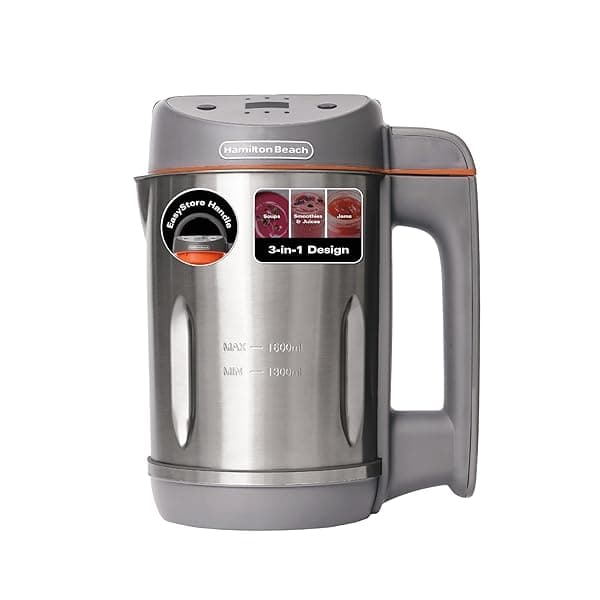
Power PickHamilton Beach 3-in-1 Soup Maker
This multi-talented appliance combines soup making, blending, and jam making in one compact unit with thoughtful features like auto-stir and overspill sensors. The angled digital display improves usability, and the 1.6-litre capacity suits medium households wanting to expand beyond basic smoothies into hot food preparation.
Frequently asked
What wattage blender do I need for smoothies?
For basic fruit smoothies with soft ingredients, a 300-400W blender suffices. However, if you regularly use frozen fruits, leafy greens like kale, or want to crush ice, opt for at least 600-800W. More powerful 1000W-plus models offer versatility for tougher tasks like nut butters and aren't significantly more expensive, making them better long-term investments for varied use.
Are glass or plastic blender jugs better?
Glass jugs resist scratches, don't retain odours or stains, and feel more premium, but they're heavier and breakable. BPA-free plastic (particularly Tritan) is shatterproof, lightweight, and often dishwasher-safe, though it may scratch over time and can retain strong odours from pungent ingredients. For families with children or clumsy moments, plastic offers practical safety advantages, whilst glass suits those prioritising longevity and aesthetics.
Can blenders make hot soup?
Yes, certain blenders feature soup-making functions that heat ingredients through high-speed friction whilst blending, creating hot soup in 20-30 minutes without a hob. These multi-function models typically include pre-programmed soup settings and can reach temperatures around 100°C. Standard blenders can blend cooked soup ingredients for smooth consistency but cannot heat them from raw, requiring separate cooking first.
How do I clean a blender quickly?
For quick cleaning, immediately fill the jug halfway with warm water, add a drop of washing-up liquid, and run on high speed for 30-60 seconds. Rinse thoroughly afterwards. For stuck-on residue, soak briefly before repeating. Many blenders have dishwasher-safe components for deeper cleaning, though hand-washing the blade assembly prevents premature dulling and extends blade life.
What's the difference between a personal blender and a full-size blender?
Personal blenders are compact, single-serve machines (typically 300-500ml capacity) where you blend directly in a portable bottle, ideal for individuals making quick smoothies. Full-size blenders have larger jugs (1.5-2.5 litres), more powerful motors, and additional features like multiple speeds and programmes, suited to families or varied cooking tasks. Personal blenders prioritise convenience and portability, whilst full-size models offer versatility and capacity for batch preparation.