
A stand mixer is one of those kitchen appliances that transforms how you bake. Whether you're kneading bread dough, whipping cream, or mixing cake batter, a good stand mixer takes the hard work out of food preparation and delivers consistent results every time. For serious home bakers and cooking enthusiasts across the UK, investing in the right stand mixer means less time spent on manual labour and more time enjoying the creative process.
The market for stand mixers has expanded significantly in recent years, with options ranging from budget-friendly models to professional-grade machines. Understanding what separates a mediocre mixer from an excellent one is crucial to making a purchase you won't regret. Key considerations include motor power, bowl capacity, speed settings, and the quality of included attachments. The best stand mixers combine robust construction with versatile functionality, handling everything from delicate meringues to heavy bread doughs without breaking a sweat.
This comprehensive buying guide will help you navigate the options available in 2026, focusing on what matters most for UK kitchens. We'll explore the essential features to look for, explain how different specifications affect performance, and highlight top-rated models that offer genuine value. Whether you're a beginner baker looking for your first mixer or an experienced cook seeking an upgrade, you'll find the practical advice you need to choose a stand mixer that fits your baking ambitions and kitchen space perfectly.
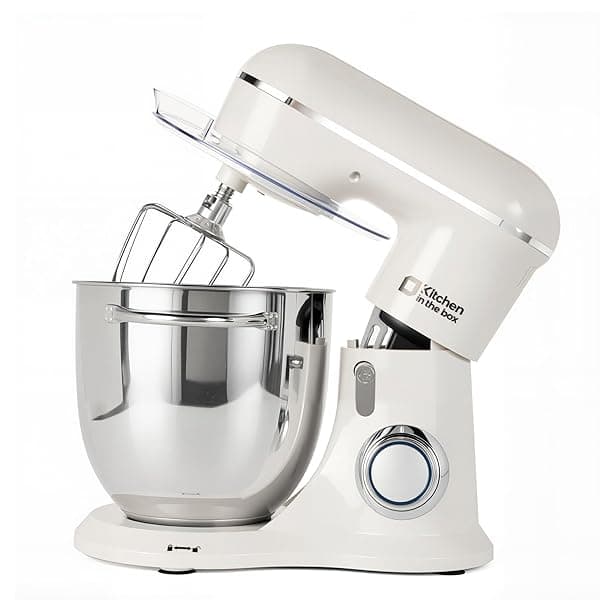
What to look for
01Motor Power and Performance
The motor is the heart of any stand mixer, and its power directly influences what tasks the machine can handle. Measured in watts, motor power typically ranges from 300W for basic models to over 1,000W for heavy-duty machines. A more powerful motor doesn't just work faster, it handles dense mixtures like bread dough and thick cookie batter without straining or overheating. For occasional baking of cakes and light mixing, a 500-600W motor suffices. However, if you regularly make bread, knead stiff doughs, or mix large quantities, look for motors rated at 1,000W or higher. Pay attention to whether manufacturers quote input power (total electricity consumed) or output power (actual mixing strength). The best stand mixers maintain consistent speed even under load, without the motor slowing down or the mixer 'walking' across your worktop when handling heavy mixtures.
02Bowl Capacity and Design
Bowl size determines how much you can mix in one batch, making it a crucial consideration based on your typical baking needs. Common capacities range from 3 litres for compact models to 7 litres for larger machines. A 4.5-5 litre bowl suits most home bakers, accommodating typical recipes for cakes, biscuits, and bread dough for a standard loaf. Larger 6-7 litre bowls are ideal for batch baking or large families. Consider the bowl material too: stainless steel is durable, easy to clean, and doesn't retain odours, whilst glass bowls allow you to see the mixing progress and are microwave-safe. Some models feature a handle for easy lifting and pouring, whilst others include measurement markings for convenience. The bowl's attachment mechanism matters as well, look for a secure, twist-lock design that prevents wobbling during operation. A mixer with multiple bowl options provides excellent versatility for different tasks.
03Speed Settings and Control
Variable speed control allows you to match the mixing intensity to your specific task, from gentle folding to vigorous whipping. Most quality stand mixers offer between 6 and 12 speed settings, providing fine control over mixing action. Lower speeds are essential for incorporating dry ingredients without creating clouds of flour, whilst higher speeds whip cream and egg whites to perfect peaks. A pulse function proves useful for short bursts of power when you need precise control. The best models feature gradual speed transitions that prevent ingredients from splattering when you increase speed. Look for mixers with clearly marked speed dials or digital displays that make it easy to select and repeat successful settings. Some advanced models include pre-programmed settings for common tasks like kneading or whipping, though manual control generally offers greater flexibility. A soft-start feature that begins mixing gently before ramping up to your selected speed helps prevent messy flour eruptions.
04Attachments and Versatility
Standard stand mixers typically include three essential attachments: a flat beater for general mixing, a wire whisk for aeration, and a dough hook for kneading. The quality of these attachments significantly affects performance, look for sturdy construction rather than flimsy alternatives. Some manufacturers offer dishwasher-safe attachments, which simplifies cleanup considerably. Beyond the basics, consider whether the mixer has an attachment hub that accepts optional accessories. Many brands offer pasta makers, food grinders, vegetable slicers, and other attachments that transform your stand mixer into a multi-functional kitchen tool. Check the range and availability of compatible attachments if versatility matters to you. The attachment mechanism should allow quick, tool-free changes between accessories. Coated beaters are particularly worth seeking out as they prevent scratching non-stick bowls. A flex-edge beater with a silicone edge continuously scrapes the bowl sides, reducing the need to stop and manually scrape down ingredients during mixing.
05Build Quality and Stability
A stand mixer represents a long-term investment, so robust construction is paramount. The best models feature metal gear systems rather than plastic components, which wear out quickly under regular use. A heavy base provides stability during operation, lightweight mixers tend to vibrate and 'walk' across worktops when handling thick mixtures. Tilt-head designs offer easy access to the bowl and attachments, whilst bowl-lift models typically provide greater stability for heavy-duty tasks. Check that moving parts operate smoothly without excessive play or wobbling. The planetary mixing action, where the attachment rotates around the bowl whilst also spinning on its own axis, ensures thorough ingredient incorporation without manual intervention. Quality mixers include suction feet or rubber pads that grip work surfaces securely. Consider the overall build materials, die-cast metal housings outlast plastic alternatives. A splash guard attachment point helps contain ingredients during mixing, preventing mess whilst allowing you to add ingredients through a chute without stopping the machine.
Our top picks
Best OverallKitchen in the box Stand Mixer
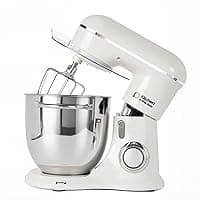
This powerful 1,300W mixer combines impressive motor strength with a generous 6-litre capacity, making it ideal for ambitious home bakers who regularly tackle bread dough and large batches. The 10-speed settings provide excellent control across different mixing tasks, whilst the complete attachment set ensures you're ready to start baking straight from the box.
Runner UpKitchen in the box Stand Mixer
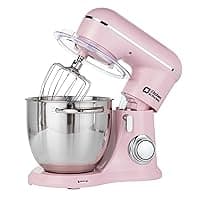
Identical in performance to its grey counterpart, this pink variant offers the same robust 1,300W motor and 6-litre capacity with an eye-catching aesthetic that brightens any kitchen. It's perfect for bakers who want professional-level performance without compromising on style, with all the power needed for demanding recipes.
Frequently asked
What size stand mixer do I need for home baking?
For most home bakers, a 4.5 to 5-litre capacity provides the ideal balance, handling typical recipes for cakes, biscuits, and single loaves of bread comfortably. If you regularly bake in large batches or have a big family, consider a 6-litre or larger model. Smaller 3-4 litre mixers work well for compact kitchens and occasional baking, though they limit batch sizes.
How many watts should a good stand mixer have?
A stand mixer with 600-800W suits most baking tasks including cakes and light doughs. For regular bread making and heavy-duty mixing, look for 1,000W or higher to ensure the motor handles dense mixtures without straining. Remember that a quality motor design matters as much as raw wattage, a well-engineered 800W mixer can outperform a poorly designed 1,000W model.
Are stand mixer attachments interchangeable between brands?
Generally, no, most manufacturers use proprietary attachment systems specific to their brand. Some brands within the same parent company may share compatibility, but it's essential to check before purchasing additional attachments. This makes choosing a brand with a good range of available accessories important if you plan to expand your mixer's functionality beyond basic mixing tasks.
Can stand mixers knead bread dough effectively?
Yes, stand mixers with adequate power (typically 800W or higher) and a proper dough hook attachment knead bread dough excellently, saving significant time and effort compared to hand kneading. The mixer should handle the dough without straining, slowing down, or overheating. For best results, follow the manufacturer's guidelines on maximum dough quantities and kneading times to avoid overworking the motor.
What's the difference between tilt-head and bowl-lift stand mixers?
Tilt-head mixers have a hinged head that tilts back for easy bowl and attachment access, making them more convenient for most home bakers. Bowl-lift models use levers to raise and lower the bowl, typically offering greater stability for heavy-duty tasks and larger capacities. Tilt-head designs are generally more compact and suit standard kitchen worktops, whilst bowl-lift models are preferred for professional-level baking.