
Food processors have become indispensable kitchen companions for home cooks across the UK, transforming tedious prep work into quick, effortless tasks. Whether you're slicing vegetables for a Sunday roast, kneading dough for fresh bread, or blitzing ingredients for a smooth soup, the right food processor can save you considerable time and effort whilst delivering consistently excellent results.
The market offers an impressive range of options, from compact mini choppers perfect for small kitchens to full-sized processors with multiple attachments for ambitious cooking projects. Understanding the differences between motor power, bowl capacity, blade configurations, and attachment versatility is crucial to finding a model that matches your cooking habits and kitchen space. Some processors excel at specific tasks like dough kneading, whilst others prioritise versatility with numerous attachments for slicing, grating, and blending.
In this comprehensive guide, we'll walk you through everything you need to know about choosing the best food processor for your needs. We've analysed customer reviews, compared features across popular models, and identified the key factors that separate excellent performers from disappointing purchases. Whether you're a occasional cook seeking basic chopping capabilities or an enthusiastic home chef requiring professional-grade performance, our recommendations will help you make an informed decision that serves you well for years to come.
What to look for
01Motor Power and Performance
Motor wattage directly impacts a food processor's ability to handle tough tasks and process larger quantities without strain. Entry-level models typically offer between 350-500 watts, which suffices for everyday chopping, slicing, and light mixing. However, if you regularly knead bread dough, process hard vegetables, or make nut butters, look for motors rated at 600 watts or higher. More powerful motors maintain consistent speed under load, preventing the frustrating slowdown that occurs when cheaper models encounter resistance. Additionally, higher wattage generally correlates with durability and longevity, as the motor doesn't need to work at maximum capacity for routine tasks. Consider your typical usage: occasional vegetable prep requires less power than frequent batch cooking or demanding recipes. Multi-speed settings provide greater control, allowing you to adjust processing intensity for delicate herbs versus hearty root vegetables.
02Bowl Capacity and Design
Bowl capacity fundamentally determines how much food you can process in a single batch, making it essential to match this to your household size and cooking habits. Compact processors with 1-1.5 litre bowls suit singles, couples, or those with limited counter space, whilst families typically benefit from 2-litre capacity or larger. However, capacity isn't just about volume, bowl design affects processing efficiency too. Look for bowls with well-designed curves that guide ingredients toward the blade rather than creating dead spots where food escapes processing. Transparent bowls let you monitor progress without stopping, whilst measurement markings prove helpful for recipe accuracy. Material matters as well: glass resists staining and scratching better than plastic, though it adds weight. Some models include multiple bowl sizes, offering flexibility for small and large tasks. Consider both your typical batch sizes and maximum capacity needs, a bowl that's too small means tedious multiple batches, whilst an oversized bowl may struggle with small quantities.
03Blade Selection and Attachments
The versatility of your food processor depends heavily on its blade and attachment selection. At minimum, expect a sharp chopping blade (often S-shaped) for general processing tasks. Quality models include reversible slicing and grating discs with multiple thickness options, typically ranging from fine graters for cheese to thicker slicers for vegetables. Dough blades with blunt edges prove essential if you bake regularly, as they knead without overworking the gluten. Some processors offer specialised attachments like julienne cutters, citrus presses, or emulsifying discs for mayonnaise and dressings. However, more attachments don't automatically mean better value, prioritise the functions you'll genuinely use. Storage matters too; look for models with integrated attachment storage or compact designs that don't clutter your cupboards. Blade quality varies significantly: stainless steel maintains sharpness longest, whilst some budget blades dull quickly. Check whether replacement parts are readily available and reasonably priced, as blades eventually require replacement even with careful use.
04Ease of Use and Cleaning
A food processor that's difficult to assemble or clean will likely remain unused in your cupboard, regardless of its capabilities. Look for intuitive assembly with clear indicators showing correct positioning, twist-lock bowls and simple blade attachments save frustration. Control placement matters: top-mounted buttons prove easier to access than side switches, whilst pulse functions should be instantly accessible for precise control. Safety features like lid-locking mechanisms prevent operation when improperly assembled, protecting fingers and preventing messy spills. Regarding cleaning, dishwasher-safe components save considerable time, though check whether all parts tolerate machine washing or just specific elements. Smooth surfaces without excessive crevices prevent food buildup, whilst removable blade assemblies clean more thoroughly than fixed designs. Consider the feed chute design too, wider tubes accommodate whole vegetables, reducing pre-cutting, whilst narrow chutes may require more prep but offer better control. Cord storage, compact footprints, and reasonable weight enhance overall user experience, particularly if you need to move or store the processor between uses.
05Build Quality and Reliability
Investing in a well-constructed food processor pays dividends through years of reliable service, whilst cheaper models often fail within months. Examine the housing material, sturdy plastic or metal bases indicate quality, whereas flimsy construction suggests corner-cutting. The motor housing should feel substantial and include ventilation to prevent overheating during extended use. Stability matters significantly: rubberised feet or suction bases prevent dangerous movement during operation, particularly when processing heavy loads. Check customer reviews specifically for longevity feedback, patterns of motor failure, cracked bowls, or stripped gears reveal design weaknesses. Warranty coverage provides insight into manufacturer confidence: longer warranties typically accompany better-built machines. Brand reputation counts too; established kitchen appliance manufacturers generally offer superior after-sales support and replacement parts availability. Consider the machine's intended lifespan relative to your needs, occasional users may accept lighter construction, whilst frequent cooks require commercial-grade durability. Finally, assess noise levels through reviews, as powerful motors needn't be excessively loud with proper engineering.
Our top picks
Best OverallKenwood
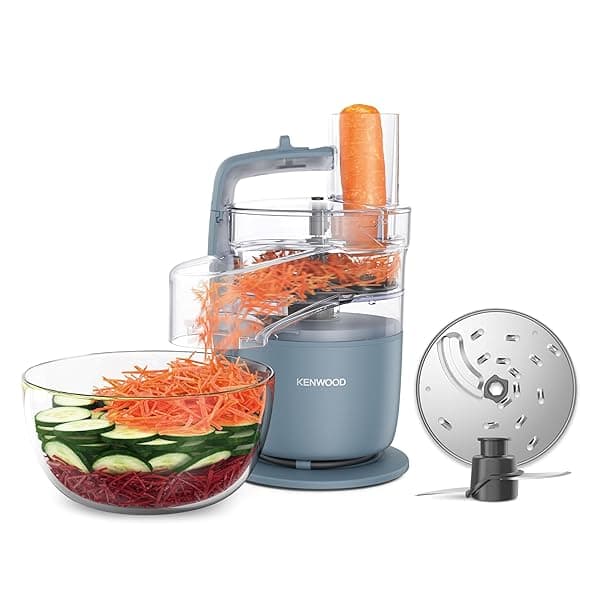
This Kenwood delivers impressive 650-watt power in a compact package, making it ideal for smaller kitchens without sacrificing performance. The Express Serve feature and comprehensive attachment selection including a dough blade provide excellent versatility for everyday cooking tasks.
Runner UpKenwood Compact Food Processor
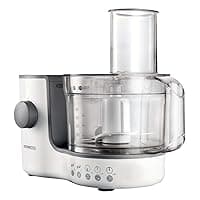
Backed by an exceptional 8,000-plus reviews, this Kenwood represents outstanding value with its emulsifying capabilities and integrated blender functionality. The 1.4-litre capacity strikes an excellent balance for couples and small families, whilst the compact design doesn't dominate limited counter space. Its consistently high ratings demonstrate dependable performance for standard food processing needs.
Best ValueDMD Collective
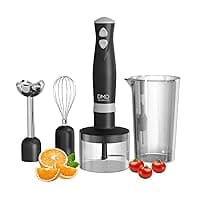
This versatile stick blender system offers remarkable flexibility for those wanting multiple functions without dedicating storage space to a full-sized processor. The combination of immersion blending, chopping, and blending capabilities suits varied cooking styles, particularly for soups, smoothies, and quick prep tasks. It's an excellent entry point for first-time buyers or supplementary tool for established kitchens.
Frequently asked
What's the difference between a food processor and a blender?
Food processors excel at chopping, slicing, grating, and kneading with interchangeable blades and discs, making them ideal for solid foods and prep work. Blenders specialise in liquids and creating smooth textures like smoothies and soups using fixed blades at the bottom of a tall jug. Whilst some overlap exists, processors handle diverse solid food tasks better, whereas blenders create smoother liquid results. Many home cooks benefit from owning both appliances for different culinary needs.
How many watts should a good food processor have?
For general home use including chopping vegetables, making dips, and light mixing, 400-500 watts suffices perfectly well. However, if you regularly knead dough, process tough vegetables, grind nuts, or handle large quantities, look for 600-800 watts for consistent performance without motor strain. Higher wattage generally indicates better durability and the ability to maintain speed under heavy loads. Consider your typical usage patterns rather than simply choosing the most powerful option available.
Can you make dough in a food processor?
Yes, food processors make excellent dough quickly and efficiently, often producing better results than hand kneading for pastry. Look for models with dedicated plastic dough blades rather than sharp metal chopping blades, as these knead without cutting gluten strands. Most processors handle bread dough, pastry, and pizza bases brilliantly, though you'll need adequate motor power, at least 500 watts, for consistent kneading. The pulsing action creates perfectly combined dough in minutes rather than the extended hand-kneading time.
Are food processor parts dishwasher safe?
Most modern food processors feature dishwasher-safe bowls, lids, and blade attachments, though you should always verify the manufacturer's specific guidance. The motor base should never go in the dishwasher, simply wipe it clean with a damp cloth. Some components like rubber seals may deteriorate faster with repeated high-temperature washing, so occasional hand washing extends their lifespan. Sharp blades often benefit from careful hand washing to maintain their edge and prevent damage from jostling against other items.
What size food processor do I need for a family of four?
A 2-litre capacity serves most families of four comfortably, allowing you to prepare vegetables for meals or mix ingredients in single batches. Smaller 1.5-litre models work if you cook modest portions, whilst larger 2.5-3 litre processors suit batch cooking or families with heartier appetites. Consider your typical cooking style, if you prepare multiple dishes simultaneously or cook ahead for the week, larger capacity prevents frustrating multiple batches. Remember that bowls work best when between one-third and three-quarters full for optimal processing results.