
Blenders on the UK market currently span from £11.99 to £229.99, and the gap between those two figures is not just about brand names. Motor wattage, jug material, blade count, and build quality all shift meaningfully as you move up the price ladder. This guide breaks down what each price tier actually delivers so you can spend confidently.
What to look for
01Motor wattage and what it means for your blending
Wattage is the single most reliable indicator of blending power. On the UK 240V mains supply, a 350W motor (like the one in the Breville Blend Active personal blender) handles soft fruit and yoghurt smoothies without complaint, but it will struggle with frozen fruit or ice. Step up to 450W to 550W, the range covering the Philips 3000 Series and the Geepas 2-in-1, and you gain enough torque for occasional ice crushing and thicker soups. At 800W, machines such as the Tefal Blendforce II and the Kitcanis 800W model can pulverise harder ingredients repeatedly without the motor overheating. As a rule of thumb: under 400W suits daily smoothies; 400W to 600W covers most family tasks; 700W and above is where serious batch cooking and ice-heavy drinks become genuinely easy. Do not assume a higher-wattage machine is always worth the premium, though. If you only blend a single portion of banana and oat milk each morning, 350W is perfectly adequate and will cost you far less to buy.
02Jug material: glass versus plastic
At the budget end of the market, below roughly £25. 00, plastic jugs dominate. Plastic is lighter, less likely to shatter if knocked off a worktop, and cheaper to manufacture. The trade-off is that plastic scratches over time, can retain odours from strong ingredients such as garlic or turmeric, and may discolour with repeated use. Glass jugs, found on mid-range machines like the NETTA 1.5L table blender and the Tefal Blendforce II 2L model, feel more robust, clean more thoroughly, and do not absorb smells. They are heavier, which matters if you have limited upper-body strength, and they add to the unit's overall cost. For UK households in hard-water areas, glass is also easier to descale because limescale residue wipes away cleanly rather than embedding in micro-scratches. If longevity and hygiene matter to you, the extra outlay for a glass jug is usually justified.
03Capacity and who actually needs what
Personal blenders, such as the 600ml Breville Blend Active bottle or the 400ml portable mini juice blender available from £11. 99, are sized for one portion blended directly into a travel cup. They suit commuters or solo households but are impractical for batch-making soup or blending for a family. Mid-range jug blenders typically offer 1.5L to 1.6L total capacity, with an effective (safe fill) capacity somewhat lower. The Daewoo 2-in-1 Soup Maker, for instance, holds 1.6L and claims up to six portions of soup. At the top of the range, the Tefal Blendforce II provides a 2L jug with 1.25L effective capacity, which is enough for four generous smoothies in a single batch. Standard UK kitchen cupboards are 600mm deep, so check the blender's height before buying: tall jug blenders can foul on overhead cabinets when the lid is on.
04Price tiers and what you actually get
Across the 23 blenders tracked for this guide, prices run from £11. 99 to £229.99, with a typical price of around £44.59. The budget tier, roughly £11.99 to £25.00, covers portable personal blenders and basic single-speed jug models. Expect plastic construction, one or two speed settings, and motors in the 350W to 450W range. The mid tier, £25.00 to £60.00, is where the majority of UK shoppers land. Here you find glass-jug options, multiple speed settings, pulse functions, and wattages up to 800W. The premium tier, above £100.00, brings die-cast metal bases, variable speed dials, self-cleaning programmes, and motors powerful enough for nut butters and frozen desserts. One practical note: the average discount off the 90-day high price across tracked models is 12.7%, so checking historical pricing before you buy can save a meaningful amount, particularly on mid-range machines that fluctuate regularly.
05Blade design and cleaning practicality
Blade count and material affect both blending performance and how easy the machine is to clean. Stainless steel blades are standard across all price points and resist corrosion well, which matters in the UK where hard water can accelerate rust on cheaper alloys. Budget blenders often use a fixed blade assembly that cannot be removed, making thorough cleaning difficult. Mid-range models such as the Russell Hobbs Food Collection 400W blender feature removable stainless steel blades, and the jug and lid are dishwasher safe, which is a genuine convenience advantage. The Tefal Blendforce II goes further with four removable Powelix blades. More blades generally mean finer results with fibrous ingredients like kale or ginger, but they also create more surfaces to clean by hand if you are not putting the jug in the dishwasher.
Our top picks
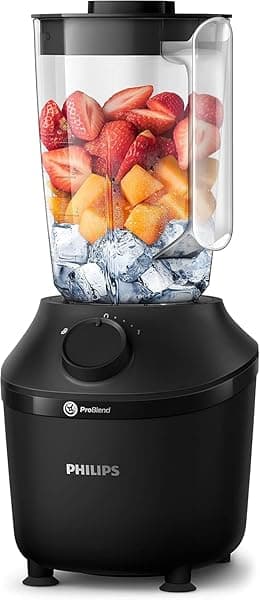
Best budget jug blender for everyday smoothiesPhilips Blender 3000 Series
Currently £24.00, down 40% from its 90-day high, the Philips 3000 Series represents a saving of £15.99 and is the biggest current discount among tracked models. Its 450W ProBlend motor handles soft fruit and yoghurt reliably, and the 1.9L plastic jug gives you enough room for two portions. A solid first blender for a small household.
Best mid-range blender for batch cooking and iceTefal Blendforce II Blender
The Tefal Blendforce II runs at 800W and comes with a 2L glass jug, giving it the motor and capacity to handle frozen fruit, ice crushing, and batch soup in a way that lower-wattage plastic-jug rivals cannot match. At £41.90 against a 90-day high of £62.49, it is currently sitting well below its peak price. Four removable Powelix blades and a dishwasher-safe jug make cleaning straightforward, which matters when you are using it daily.
Best personal blender for commuters and small kitchensBreville Blend Active Personal Blender &
![Breville Blend Active Personal Blender & Smoothie Maker | 350W | 1 Portable Blend Active Bottle (600ml) | Leak Proof Lid | Black & Gold [VBL251] — Blenders deal](/_next/image?url=https%3A%2F%2Fm.media-amazon.com%2Fimages%2FI%2F61NFIfk2hbL._SL200_.jpg&w=256&q=75)
At £19.98, the Breville Blend Active is one of the most affordable ways to get a portable blending setup. Its 350W motor blends directly into a 600ml leak-proof bottle, so there is no jug to wash and no decanting step. It is not built for ice or hard vegetables, but for a daily banana and oat milk smoothie it is genuinely practical. The Black and Gold finish is smarter than most budget options at this price point.
Best glass-jug blender under £35 for versatile home useNETTA Table Blender & Smoothie Maker
The NETTA 500W table blender pairs a 1.5L glass jug with eight speed settings and a pulse function, plus a four-blade stainless steel assembly suited to ice crushing. At £33.99, it sits at its 90-day high, so it is worth watching for a price drop given its tracked low of £14.00. For households in hard-water areas, the glass jug is a practical advantage: limescale wipes away cleanly rather than embedding in plastic scratches.
Frequently asked
How much should I spend on a blender in the UK?
UK blender prices currently range from £11.99 to £229.99, with the typical price sitting around £44.59. For most households, spending between £25.00 and £50.00 gets you a capable mid-range machine with a decent motor (400W to 800W), a glass or sturdy plastic jug, and multiple speed settings. Below £25.00 you are looking at basic single-speed models or small personal blenders. Above £100.00 you are paying for premium build quality, more powerful motors, and features like variable speed dials or self-cleaning programmes, which most home cooks do not need.
Is a higher wattage blender always better?
Not always. Wattage determines how much power the motor draws from the UK 240V mains, which translates to blending force. A 350W blender handles soft fruit and liquids perfectly well for daily smoothies. You only need 700W or more if you regularly blend frozen fruit, crush ice, or process hard vegetables and nuts. Buying an 800W machine when you only make one banana smoothie a day means paying more upfront and using more electricity than necessary.
Are glass jug blenders worth the extra cost?
For most UK buyers, yes. Glass jugs do not scratch, do not absorb odours from strong ingredients, and are easier to descale, which is particularly relevant in hard-water areas across much of England. They feel more durable over years of use. The main downsides are weight and the risk of breakage if dropped. If you have limited strength or young children in the kitchen, a high-quality plastic jug from a reputable brand is a reasonable alternative, but glass is the better long-term investment if the budget allows.
What is the cheapest blender available in the UK right now?
The cheapest blender tracked in this guide is a portable 400ml mini juice blender at £11.99. It is a rechargeable personal blender with six blades, designed for single-portion smoothies and travel use. At that price, do not expect it to handle ice or fibrous vegetables. It is best suited to soft fruit, pre-made juice, and protein shakes. If you need a full-size jug blender, budget closer to £20.00 to £25.00 for something with enough capacity and motor power to be genuinely useful.
When is the best time to buy a blender to get a good deal?
Blender prices fluctuate regularly. Across the 23 models tracked for this guide, the average discount off the 90-day high price is 12.7%, which means patience can save you a meaningful amount. The biggest single discount currently available is 40% off the Philips 3000 Series, a saving of £15.99. Checking a price-tracking tool before you buy, and comparing the current price against the 90-day high, is the simplest way to avoid paying over the odds. Sales events such as Black Friday and Amazon Prime Day also tend to bring genuine reductions on mid-range blenders.