
Choosing a coffee machine comes down to four things: how you take your coffee, how much counter space you have, whether you want beans or pods, and how much you're willing to spend. Prices in this guide run from £34.00 for a portable manual brewer to £687.00 for a fully automatic bean-to-cup machine with a colour touchscreen.
What to look for
01Bean-to-cup, pod, or manual: which type suits you?
Bean-to-cup machines grind fresh beans for every shot, giving you café-quality espresso at home without buying pre-ground coffee. They cost more upfront (typically £299.99 to £687.00 in this guide) but save money on pods over time. Pod machines are faster and tidier but lock you into proprietary capsules that cost 25p to 50p each. Manual brewers such as the AeroPress Go require no electricity at all and produce excellent filter-style or espresso-style coffee for as little as £34.00. If you drink two or more coffees a day and care about flavour, a bean-to-cup machine pays for itself within a year or two. If you want speed and minimal faff, a pod machine or a super-automatic like the De'Longhi Magnifica is the more practical choice. Think about who else in the household drinks coffee: a machine with one-touch recipes suits a busy family far better than a semi-automatic that requires manual tamping.
02Wattage and boil time on UK 240V mains
Most home espresso machines in the UK run between 1,000W and 1,500W on the standard 240V supply. The De'Longhi Magnifica ECAM222.20.B is rated at 1,450W, which means it reaches brewing temperature quickly, typically in under 40 seconds. Higher wattage generally means faster heat-up and more consistent steam pressure for frothing milk. If you're on a prepayment meter or watching your energy bills, note that a 1,450W machine running for two minutes per day adds roughly 1.75 kWh per month, costing around 50p at current UK unit rates. Semi-automatic machines with a dedicated boiler (like the Sage Barista Express) often take longer to warm up but maintain more stable temperature throughout a multi-shot session, which matters if you're making back-to-back flat whites for a household of four.
03Counter space and cupboard sizing
UK kitchens are often compact, so dimensions matter. The standard UK worktop depth is 600mm, and many bean-to-cup machines sit right at the edge of that. The De'Longhi Rivelia is marketed as compact for a fully automatic machine, which is worth checking against your available space before buying. The Sage Barista Express is notably wider than most super-automatics because it houses a separate grinder hopper. The AeroPress Go collapses into a 96mm-diameter cup, making it the obvious choice if you have no spare worktop at all. Always check the height too: machines with top-fill water tanks need clearance above them, and under-cabinet installation can be a problem if your overhead cupboards sit lower than 450mm from the worktop surface.
04Hard water and descaling in the UK
If you live in London, the South East, East Anglia, or the East Midlands, you are almost certainly in a hard-water area. Limescale builds up inside boilers and pipes, reducing heating efficiency and eventually blocking the machine. All the bean-to-cup machines in this guide have a descaling alert, but the frequency varies: in a very hard-water area you may need to descale every four to six weeks. De'Longhi and Sage both sell their own descaler solutions (around £8 to £12 per treatment), and using the correct product matters for warranty purposes. Some machines, including the De'Longhi Rivelia, have a built-in water hardness test strip in the box. Using a filtered water jug to fill the tank, or fitting an inline filter, can extend the interval between descales significantly and protect the internal boiler.
05Milk frothing: automatic vs manual steam wand
If you drink flat whites, lattes, or cappuccinos, the milk system is as important as the espresso unit. Fully automatic machines like the De'Longhi Magnifica Evo Next and the Rivelia use a LatteCrema or similar automatic frother: you connect a milk carafe, press a button, and the machine does the rest. This is convenient but gives you less control over texture. The Sage Barista Express has a manual steam wand, which takes practice but produces the microfoam that baristas use for latte art. The Breville Barista Max also includes a steam wand alongside its integrated grinder. If you are new to espresso, an automatic frother removes one variable from the process. If you enjoy the craft side of coffee-making, a manual wand is more rewarding and produces better results once you have the technique.
Our top picks
Best for serious home baristas who want café-level espressoSage
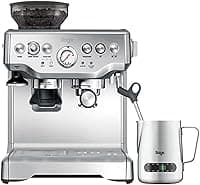
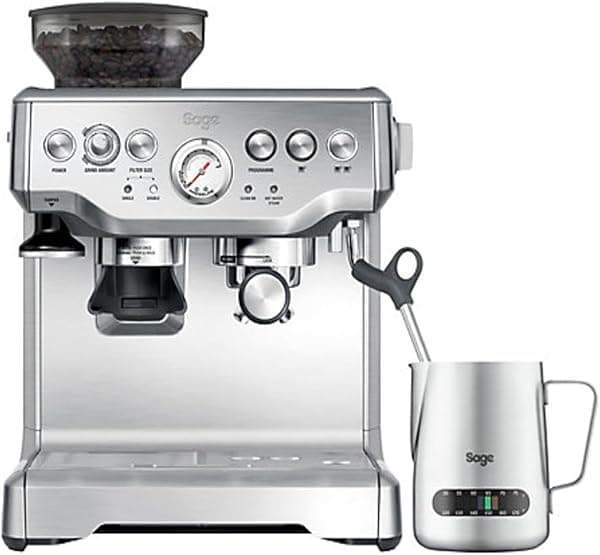
The Sage Barista Express pairs a built-in conical burr grinder with a manual steam wand and PID temperature control, giving you precise, repeatable espresso at home. Currently listed at £629.00, it is sitting above its 90-day low, so it is worth watching for a price drop before buying. The brushed stainless steel finish suits most UK kitchen styles, and the manual tamping process rewards the effort with noticeably better extraction than push-button automatics.
Best for travel, camping, or kitchens with no worktop spaceAeroPress Go
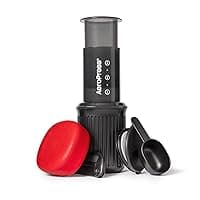
The AeroPress Go costs £34.00 and is at its 90-day low price right now, making it the sharpest value pick in this guide. It needs no electricity, no pods, and no descaling, which makes it ideal for hard-water areas where machine maintenance is a chore. The entire kit packs into a 96mm travel mug, so it works equally well on a camping trip or in a studio flat. It produces a smooth, low-bitterness cup in around two minutes using standard ground coffee.
Best for households that want hands-off milk drinksDe'Longhi Magnifica Evo Next ECAM312.80.TB
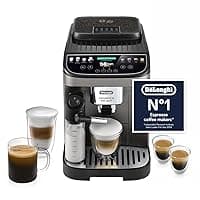
The De'Longhi Magnifica Evo Next ECAM312.80.TB costs £499.99 and includes an automatic milk frother that handles lattes and cappuccinos without any manual steaming technique. The intuitive touch display makes recipe selection quick, and the bean-to-cup system means fresh-ground coffee every time. Its 90-day low of £380.00 suggests it does go on sale, so setting a price alert before buying is sensible.
Best for a compact fully automatic machine with a colour displayDelonghi Rivelia EXAM440.55.G
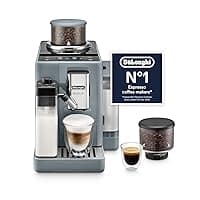
The De'Longhi Rivelia EXAM440.55.G offers 16 one-touch recipes, a full-colour touch display, and the LatteCrema Hot automatic milk system at £687.00. Its compact footprint makes it a better fit for a 600mm-deep UK worktop than many rivals at this price. The machine includes a water hardness test strip, a thoughtful touch for UK buyers in hard-water areas. It has dropped to £229.00 in the past, so the current price is near its 90-day high of £699.00.
Frequently asked
What is the best coffee machine for home use in the UK?
For most UK households, a super-automatic bean-to-cup machine strikes the best balance. If you drink mostly black coffee, it is hard to beat. If you want milk drinks without any technique, step up to the Magnifica Evo Next at £499.99 for its automatic frother. Budget under £50? The AeroPress Go at £34.00 produces excellent coffee with no running costs.
How often do I need to descale a coffee machine in the UK?
It depends on your water hardness. In soft-water areas (Scotland, Wales, the South West), descaling every two to three months is usually sufficient. In hard-water areas such as London and the South East, you may need to descale every four to six weeks. Most modern machines display a descaling alert. Using filtered water in the tank can extend the interval. Always use the manufacturer's own descaler or a compatible product to avoid voiding your warranty. De'Longhi and Sage descaler solutions cost roughly £8.00 to £12.00 per treatment.
Is a bean-to-cup machine worth the money?
If you drink two or more coffees a day, yes. A bag of good whole beans costs around £8.00 to £12.00 and makes roughly 30 to 40 espressos, working out at 20p to 40p per cup. Comparable pod capsules cost 25p to 50p each, and a café flat white in the UK averages around £3.50 to £4.50. A £299.99 bean-to-cup machine pays for itself in under a year compared with daily café visits. The main ongoing costs are beans, descaler, and occasional filter replacements.
What size coffee machine fits on a standard UK worktop?
Standard UK worktops are 600mm deep. Most bean-to-cup machines are between 230mm and 380mm deep, so they fit comfortably. Width varies more: the Sage Barista Express is wider than average because of its integrated grinder. Always check the height clearance if you have overhead cupboards, as top-fill water tanks need at least 150mm of clearance above the machine lid. The AeroPress Go is the smallest option at 96mm in diameter and fits anywhere.
Can I use a coffee machine with a UK 13-amp plug?
Yes. All the machines in this guide are designed for the UK 240V, 50Hz supply and come with a standard UK three-pin plug. The De'Longhi Magnifica is rated at 1,450W, which draws around 6 amps, well within the 13-amp fuse limit. No adaptor or special wiring is needed. If you are using a kitchen extension lead, check its rated wattage: a 1,500W machine on a cheap extension strip rated below 2,000W can cause overheating.