
A good family coffee machine needs to handle 4 or 5 drinks in quick succession without overheating or running dry. These 8 bean-to-cup models, ranging from £299.99 to £699.00, cover every household budget and kitchen size common to UK homes, from compact flats to larger family kitchens.
What to look for
01Water tank capacity and back-to-back brewing
A family of four making two rounds of coffee each morning needs a machine that won't demand a refill mid-session. Look for tanks of at least 1.8 litres; the Breville Barista Max leads this shortlist with a 2.8 L reservoir, which comfortably covers six to eight espresso-based drinks before you need to top up. Smaller tanks (around 1.4 L, common on compact superautomatic machines) are fine for one or two users but become a daily chore in a busy household. Also consider how easy the tank is to remove and carry to the tap, particularly if your machine sits under wall-mounted cupboards, which in most UK kitchens leave only 400 mm to 450 mm of clearance above the worktop.
02Grinder type and noise at school-run o'clock
Bean-to-cup machines grind fresh for every cup, which is great for flavour but can be loud at 6 am. Ceramic burr grinders, as found on the Philips 3300 Series, run noticeably quieter than steel burr equivalents and the Philips marketing claims 40% quieter operation. Steel conical burrs, used on the Sage Barista Express with its 16 grind settings, give finer control for espresso enthusiasts but produce more noise. If your kitchen is open-plan or children sleep nearby, ceramic is worth prioritising. Both types outlast blade grinders by years, which matters when a machine is used 5 to 10 times daily.
03Milk frothing: automatic versus manual steam wand
Families with mixed tastes, some wanting flat whites, others hot chocolates or babycinos, benefit from automatic milk frothing. The De'Longhi Rivelia's LatteCrema Hot system and the Magnifica Evo Next's automatic frother handle this hands-free, reducing mess and the learning curve for whoever is first up. Manual steam wands, like the one on the Sage Barista Express, produce superior microfoam for latte art but require practice and cleaning after every use. For a household where multiple people make drinks, automatic wins on consistency and speed. If you live in a hard-water area (much of southern England), choose a machine with a built-in water filter or descaling alert, as limescale damages milk circuits faster than brew circuits.
04Wattage and running costs on UK mains
All machines on this list run on the UK's 240V mains supply. Wattage ranges from around 1,450W (De'Longhi Magnifica ECAM222.20.B) to roughly 1,600W on higher-end models. The difference in per-cup energy cost is negligible, perhaps 1p to 2p per drink, but standby consumption adds up over a year. Look for machines with an auto-off timer, ideally settable to 15 or 30 minutes, to avoid leaving a 1.5 kW element on all day. UK energy prices in 2026 make this a real consideration: a machine left on for 8 hours draws roughly the same energy as boiling a kettle 20 times.
05Price tracking and when to buy
Coffee machine prices fluctuate significantly. The Philips 3300 Series has swung between £134.00 and £475.00 in the past 90 days, a gap of £341.00. The De'Longhi Magnifica has a 90-day low of £50.00 against a current price of £299.99, suggesting deep promotional discounts are possible. Checking price history before buying, particularly around Amazon Prime Day and Black Friday, can save £100.00 or more on mid-range models. The Gaggia Brera, by contrast, has held a flat £425.00 for 90 days, so waiting for a sale there may not pay off.
Our top picks
Best for the coffee enthusiast in a family household.Sage
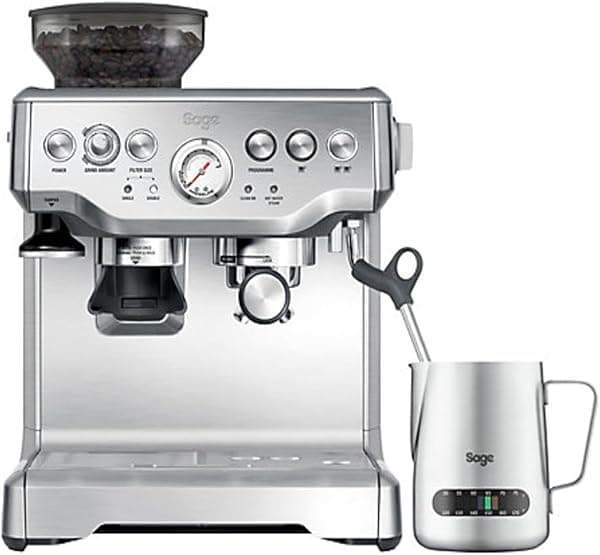
The Sage Barista Express costs £494.99 and pairs a 15-bar Italian pump with 16 grind settings and PID temperature control, giving a home barista genuine espresso-grade results. The manual steam wand produces proper microfoam. It is not the fastest option for back-to-back family orders, but for households where one person makes all the drinks and cares deeply about extraction quality, nothing else on this list comes close. The brushed stainless steel finish also holds up well to daily kitchen use.
Best for quiet mornings and easy cleaning.Philips 3300 Series Bean to Cup
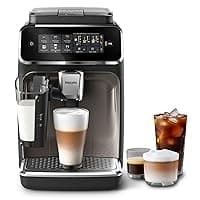
Currently at £349.00, down from a 90-day high of £475.00, the Philips 3300 Series is at a strong price point right now. Its ceramic grinder runs 40% quieter than steel alternatives, which matters in open-plan UK homes at 7 am. The LatteGo milk system disassembles into just two parts for rinsing, a genuine time-saver when you are making six drinks before the school run. Six hot and iced drink options cover the full range of family preferences.
Best for families who want fully automatic milk drinks without fuss.De'Longhi Magnifica Evo Next ECAM312.80.TB
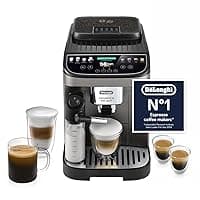
The De'Longhi Magnifica Evo Next at £499.99 adds an automatic milk frother and an intuitive touch display to the Magnifica platform. The automatic frothing system means cappuccinos and lattes require no manual technique, useful when multiple household members are making drinks independently. The black and titanium finish is compact enough for most UK kitchen worktops. Its 90-day low of £380.00 suggests it does go on sale, so it is worth watching before committing at full price.
Best for large families wanting the widest drink menu.Delonghi Rivelia EXAM440.55.G
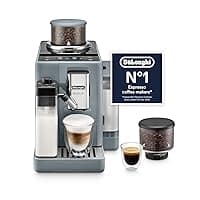
The De'Longhi Rivelia at £699.00 offers 16 one-touch recipes via a full-colour touch display and uses the LatteCrema Hot automatic milk frother for consistent results across the whole menu. Its compact dimensions make it a reasonable fit for a 600mm worktop run. At the top of the price range here, it is best suited to households that will genuinely use the breadth of recipes daily, rather than those who mainly drink black coffee.
Best for high-volume households who hate refilling the water tank.Breville Barista Max Espresso Machine |
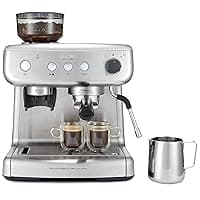
The Breville Barista Max carries a 2.8 L water tank, the largest on this list, and a 15-bar Italian pump. At £381.00 (down from a 90-day high of £444.99), it offers good value for a machine that can handle a long morning session without interruption. The integrated grinder and steam wand give manual control to those who want it. Stainless steel construction handles the daily wear of a busy kitchen.
Frequently asked
What size water tank do I need for a family coffee machine?
For a household of four making two drinks each per day, a tank of at least 1.8 litres is recommended. That covers eight standard espresso-based drinks before refilling. The Breville Barista Max on this list has a 2.8 L tank, the largest here, and is the most practical for high-volume mornings. Tanks under 1.4 L will need refilling daily in a family setting, which becomes tedious quickly.
Are bean-to-cup coffee machines worth it for families?
For families spending £4.00 to £5.00 per coffee at a café, a bean-to-cup machine typically pays for itself within 6 to 12 months. A £299.99 machine making four drinks a day at roughly 30p per cup (beans plus energy) saves around £1,400.00 per year compared with buying out. The convenience of fresh-ground coffee on demand, without pods or filter papers to buy, also reduces ongoing costs and waste.
Do I need a coffee machine with a built-in grinder?
For most families, yes. A built-in grinder means one less appliance on the worktop, fresher-tasting coffee, and no separate grinder to clean. All machines on this list include integrated grinders. The Sage Barista Express offers the most grind control with 16 settings, while the Philips 3300 Series uses a ceramic burr grinder that runs quieter, which is worth considering in open-plan UK kitchens.
How often do I need to descale a coffee machine in the UK?
In hard-water areas, which covers most of southern England and parts of the Midlands, descaling every 4 to 8 weeks is realistic with daily use. In softer-water areas such as Scotland and Wales, every 2 to 3 months is more typical. Most machines on this list have automatic descaling alerts. Using a water filter cartridge (available for De'Longhi and Philips models) extends the interval and protects the milk circuit, which is more vulnerable to limescale than the brew group.
What is the difference between 15 bar and lower pressure coffee machines?
15 bar refers to the pump pressure used to force hot water through the coffee puck. Both the Sage Barista Express and the Breville Barista Max use 15-bar Italian pumps. In practice, the pressure at the group head during extraction is closer to 9 bar, which is the industry standard for espresso. A higher-rated pump does not automatically mean better coffee; grind size, dose, and temperature (controlled by PID on the Sage) have more impact on the final cup.
Which coffee machine is easiest to clean for a busy family?
The Philips 3300 Series is the standout here. Its LatteGo milk system separates into two parts and rinses under the tap in under a minute. Most fully automatic machines on this list run an automatic rinse cycle on startup and shutdown. Manual steam wands, as on the Sage Barista Express and Breville Barista Max, require wiping and purging after every use, which adds 2 to 3 minutes per session. For families prioritising speed and low maintenance, an automatic frother is the practical choice.