
A scratched or warped pan is more than an eyesore: it can leach coating into your food and add minutes to every cook. Most non-stick cookware lasts 3 to 5 years under daily use, and UK kitchens face the added challenge of hard water deposits accelerating wear. This guide tells you exactly when to replace your pans and which sets are worth buying next.
What to look for
01Signs your non-stick coating has failed
The clearest signal is visible scratching or flaking on the cooking surface. Once the coating chips, it cannot be repaired, and continuing to cook on it risks ingesting fragments of PTFE or ceramic material. A second sign is food sticking despite using oil, which means the coating's release properties have broken down. A third is warping: if your pan rocks on a flat induction hob, heat distribution becomes uneven and cooking times suffer. On a 240V UK mains supply, induction hobs in particular demand a perfectly flat base to maintain magnetic contact, so a warped pan is genuinely unusable rather than just inconvenient. If your pan shows two or more of these signs, replace it rather than persevere.
02Induction compatibility: what to check before you buy
Around half of new UK hobs sold today are induction, so checking compatibility before purchasing is essential. Look for the coiled-spring symbol on the pan base or the words 'suitable for induction' in the product listing. All the sets in this guide that carry an induction label, including the Nuovva 8-piece, the Tower Cerasure 5-piece, the Kitchen Academy 12-piece, and the Tefal Titanium 5-piece, have a ferromagnetic base that works on induction. Cast iron, such as the VonShef 3-piece skillet set, is naturally induction-compatible. Standard aluminium pans without a steel base plate are not. If you are unsure about your existing pans, hold a fridge magnet to the base: a strong pull means induction-ready.
03Pan size and UK kitchen storage
Standard UK base units are 600mm wide, and most kitchen drawers or cupboard shelves are shallower than you expect. A 12-piece set sounds generous, but stacking lids and pans in a 600mm cupboard requires planning. Nesting sets, where pans stack inside one another, save significant space. The Fadware set with detachable handles is particularly useful here: removing the handle reduces the footprint to roughly that of a bowl, so all three pans (20cm, 24cm, and 28cm) fit in a single shelf. For a household of two, a 20cm and 28cm twin set such as the Tefal Taste covers most daily cooking without cluttering limited storage.
04Non-stick material: PTFE versus ceramic versus cast iron
PTFE (often sold under the Teflon brand) offers the slipperiest surface and the lowest price per pan, but it degrades above 260°C and scratches if you use metal utensils. Ceramic coatings, used in the Tower Cerasure and the Nuovva marble-effect set, are PTFE-free and handle slightly higher temperatures, though they typically lose their non-stick properties faster than PTFE if you use high heat regularly. Cast iron, as in the VonShef pre-seasoned skillet set, has no coating to fail: it builds a natural non-stick layer over time and can go from hob to oven without issue. The trade-off is weight (a 25cm cast iron pan can exceed 2kg) and the need to dry it immediately after washing to prevent rust, which matters in a damp UK kitchen.
05Price and value: when to spend more
Budget sets under £35. 00 are fine for light use, but the coating on cheaper pans often degrades within 18 months of daily cooking. Spending £50.00 to £90.00 on a reputable brand typically buys a thicker aluminium base, a more durable coating, and a longer guarantee. The Tefal Titanium 5-piece at £75.00 uses a titanium-reinforced PTFE layer that resists scratching better than standard coatings. The Kitchen Academy 12-piece at £89.99 is the most comprehensive set here and has dropped as low as £79.99 in the past 90 days. If you are replacing a full kitchen's worth of cookware in one go, a larger set at this price point works out cheaper per piece than buying individually.
Our top picks
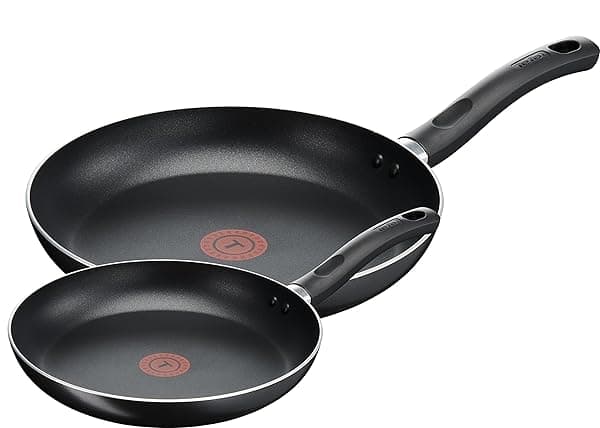
Best for everyday cooking in a small householdTefal Taste Non-Stick Twin Frying Pan
At £31.95 for a 20cm and 28cm pair, the Tefal Taste Twin Set covers the two sizes most UK home cooks actually reach for: a small pan for eggs and sauces, and a large one for stir-fries and pasta. The non-stick coating is PTFE-based and Tefal's quality control is reliable at this price. Note that this set has hit a 90-day low of £9.00, so it is worth watching for a price drop before buying.
Best induction-compatible set for a full kitchen refreshNon Stick Pots and Pans Set
The Nuovva 8-piece set at £59.47 includes pots, pans, and lids in a marble-effect ceramic non-stick finish that works on induction hobs. Eight pieces at under £60.00 is strong value, and the set has traded between £49.99 and £69.99 over the past 90 days, so the current price sits near the middle of its range. The ceramic coating is PTFE-free, which appeals to cooks in households with young children.
Best Tefal set on a tighter budgetTefal Origins Stone Non-Stick 5-Piece Pots
The Tefal Origins Stone 5-piece at £49.99 has dropped as low as £30.00 in the past 90 days, making it one of the best-value branded sets to watch. It includes glass lids, a stone-effect non-stick interior, and five pieces covering the core cooking tasks. If you want a trusted brand without paying for titanium reinforcement, this is the sensible middle ground.
Best cast iron set for high-heat cookingVonShef Cast Iron Skillet Pan Set
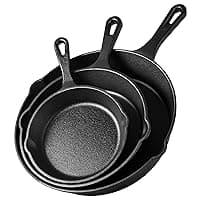
The VonShef 3-piece pre-seasoned cast iron skillet set costs £24.99 and includes 15cm (6"), 20cm (8"), and 25cm (10") pans. Cast iron has no coating to scratch or replace, works on every hob type including induction, and goes straight into the oven. The pre-seasoning means you can cook on it immediately. It is heavier than non-stick, but for searing meat or cooking on a gas hob, nothing at this price comes close.
Best for small kitchens with limited storageFadware Non Stick Frying Pan Set
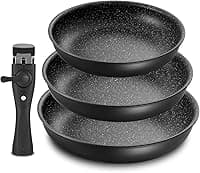
The Fadware 3-pan set at £36.99 has a detachable handle that reduces each pan to a compact disc shape, solving the storage problem in a 600mm kitchen cupboard. The set covers 20cm, 24cm, and 28cm, and the price has held steady at £36.99 for the full 90-day period, so there is no need to wait for a sale. The detachable handle also makes the pans oven-safe.
Best ceramic non-stick set for induction hobsTower T80303 Cerasure 5 Piece Pan
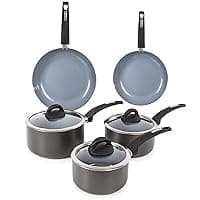
The Tower Cerasure 5-piece in graphite costs £43.23 and includes induction compatibility across all five pieces. The Cerasure ceramic coating is PTFE-free and Tower backs it with a 10-year guarantee, which is unusually long at this price point. The set has traded as low as £24.00 in the past 90 days, so setting a price alert is worthwhile before committing at the current price.
Best large set for families or batch cookingKitchen Academy 12-Piece Induction Hob Pots
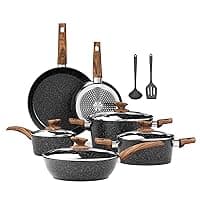
The Kitchen Academy 12-piece induction set at £89.99 is the most complete option here, covering saucepans, frying pans, a stockpot, and lids. It has dropped to £79.99 in the past 90 days, and at that price works out to under £7.00 per piece. The non-stick interior is suitable for induction hobs, and 12 pieces means you are unlikely to need to buy anything extra for a fully equipped kitchen.
Best durable non-stick set for daily induction cookingTefal Titanium Non-Stick 5-Piece Induction Pan
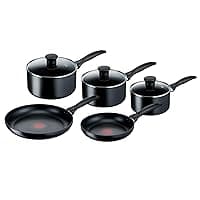
The Tefal Titanium 5-piece induction set at £75.00 uses a titanium-reinforced non-stick coating that resists scratching better than standard PTFE layers. It includes glass lids and covers the five most-used pan sizes. The set has hit a 90-day low of £30.00, so it is worth monitoring, but even at £75.00 the titanium reinforcement justifies the premium over a basic non-stick set if you cook on induction every day.
Frequently asked
How often should you replace non-stick pans in the UK?
Most non-stick pans last 3 to 5 years with daily use, though cheaper sets may show wear within 18 months. Replace a pan when you see visible scratching or flaking on the cooking surface, when food sticks despite using oil, or when the base has warped and rocks on your hob. Hard water in many UK regions can accelerate exterior discolouration, but that alone is not a reason to replace a pan if the cooking surface is still intact.
Are non-stick pans safe to use once scratched?
A lightly scratched PTFE coating is generally considered low risk by UK food safety bodies, as PTFE is chemically inert and passes through the body without being absorbed. However, once the coating is visibly flaking or peeling, fragments can end up in food, and at that point replacement is the sensible choice. Ceramic coatings that have scratched through to the base metal should also be replaced, as the non-stick benefit is gone and the exposed aluminium can react with acidic foods.
What is the best cookware set for an induction hob in the UK?
For induction hobs, you need pans with a ferromagnetic base. From the sets in this guide, the Nuovva 8-piece (£59.47), Tower Cerasure 5-piece (£43.23), Kitchen Academy 12-piece (£89.99), and Tefal Titanium 5-piece (£75.00) are all confirmed induction-compatible. The VonShef cast iron set (£24.99) also works on induction naturally. Check for the coiled-spring symbol on the base or in the product listing before buying any pan for an induction hob.
Can I put non-stick pans in the dishwasher?
Most manufacturers advise against it. Dishwasher detergents are alkaline and abrasive, and the high-temperature wash cycle degrades non-stick coatings significantly faster than hand washing. Even pans labelled 'dishwasher safe' tend to lose their non-stick properties sooner if machine-washed regularly. Hand washing with warm water and a soft sponge, then drying immediately (especially important in hard-water areas where limescale deposits form quickly), will extend the life of any non-stick pan.
Is cast iron cookware worth buying for a UK home kitchen?
Yes, for specific tasks. Cast iron excels at high-heat searing, oven cooking, and anything that benefits from retained heat, such as a Sunday roast or a frittata. The VonShef 3-piece pre-seasoned set at £24.99 is a low-risk entry point. The downsides are weight (each pan is heavy), the need to dry immediately after washing to prevent rust, and a longer pre-heat time compared to aluminium. If you cook on a gas or induction hob and want pans that last decades rather than years, cast iron is a sound investment.