
Choosing your first juicer comes down to one decision: slow cold-press or fast centrifugal. Cold-press models extract more nutrients and run quietly, while centrifugal juicers cost under £40 and suit busy mornings. This guide covers eight models across both types, so you can find the right fit for your kitchen counter and your budget.
What to look for
01Cold-press vs centrifugal: which type suits you?
Cold-press (masticating) juicers use a slow-turning auger, typically spinning at around 40-80 RPM, to crush fruit and vegetables. The low speed generates minimal heat, which helps preserve enzymes and vitamins. Juice from a cold-press machine also separates more slowly in the fridge, so it keeps well for 24-48 hours. The trade-off is price: entry-level cold-press models start at around £69.99, and they take longer to process each piece of produce. Centrifugal juicers spin a blade at high speed, often 800-900W, to shred and separate juice in seconds. They are louder and the juice oxidises faster, but they cost as little as £33.95 and handle a full apple in one go. For a beginner who wants a quick glass of orange juice before work, centrifugal is the practical starting point. If you are serious about nutrition and do not mind a slower process, a cold-press machine is worth the extra spend.
02Feed chute size and prep time
Most juicers in this price range advertise a 3-inch (approximately 76mm) wide chute, which fits a whole small apple or a halved orange without pre-cutting. That matters on a busy morning. The AMZCHEF automatic model (B0DKNQ9NZ4) goes further with a 145mm opening, which is wide enough for most whole fruits straight from the fruit bowl. Smaller chutes on budget centrifugal models mean you will spend a few extra minutes chopping. If you juice leafy greens such as spinach or kale, chute width matters less than auger design: cold-press machines handle soft leaves far better than centrifugal blades, which tend to spit them out with low yield. Consider how much prep time you are realistically willing to do each morning before committing to a model.
03Wattage and UK mains compatibility
All juicers in this guide are designed for the UK 240V mains supply, so there is no compatibility concern. Wattage tells you about motor power, but the relationship between watts and juice quality differs by type. A 250W cold-press motor (such as the AMZCHEF B0DKNQ9NZ4) produces excellent yield because it works slowly under sustained pressure. A 900W centrifugal motor (FOHERE, Juilist) extracts juice quickly through speed rather than pressure. Higher wattage in a centrifugal machine generally means it copes better with hard root vegetables like carrots and beetroot. For soft fruits and citrus, even a 600W motor is sufficient. Do not assume a higher wattage number always means a better machine: the juicing mechanism matters as much as the motor rating.
04Cleaning and daily practicality
Cleaning is the main reason people stop using their juicer within a month. Cold-press machines have more parts: an auger, a drum, a filter screen, and end caps. Budget around 5-10 minutes for a thorough rinse after each use. The Fridja f1900 is noted for being relatively easy to disassemble, and its filter screen responds well to the cleaning brush included in the box. Centrifugal juicers have fewer components but the mesh filter basket can clog with pulp fibres, especially if you live in a hard-water area where mineral deposits build up on fine mesh over time. A soft brush (usually included) and a quick soak in warm soapy water after each session keeps the filter clear. The NutriBullet 800W centrifugal model includes a 1.5L pulp basin, which reduces how often you need to stop and empty it mid-session.
05Counter space and storage
UK kitchens are often compact, and a juicer that lives on the worktop needs to fit under standard 450mm-high wall cabinets. Most upright cold-press models stand around 380-420mm tall, which clears standard cabinets with a little room to spare. Check the height specification before ordering if your wall units sit lower than average. Centrifugal juicers tend to be shorter and wider, making them easier to slide under cabinets but bulkier side to side. The AMZCHEF cold-press models (B0G33JPST2 and B0FY23RMZ1) are compact enough for a standard 600mm-deep worktop without feeling intrusive. If storage space is tight, a centrifugal model that disassembles flat is easier to put away in a cupboard between uses.
Our top picks
Best budget centrifugal juicer for quick morning useJuicer Machines
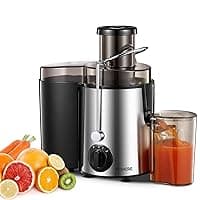
The FOHERE centrifugal juicer costs £39.97, which is above its 90-day low of £32.00, but it remains the most capable centrifugal option under £40. Its 400W motor (with a peak draw up to 900W) handles hard vegetables like carrots without stalling, and the 3-inch feed chute takes whole small fruits. Three speed settings give you control over pulp level. A cleaning brush is included, which matters given how quickly the mesh filter clogs.
Best cold-press juicer for versatility and nut milksFridja f1900 Cold Press Juicer
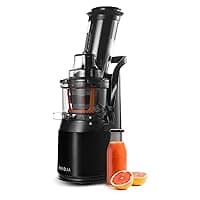
The Fridja f1900 costs £119.99 but has dropped to £85.00 in the past 90 days, so it is worth adding to a price alert. Its 240W motor and 78mm BPA-free wide chute handle juice, vegan nut milks, sorbet, and ice cream, making it the most versatile machine in this guide. The black stainless steel body is robust and looks at home on a modern UK kitchen worktop.
Best hands-free cold-press juicer for larger householdsAMZCHEF Automatic Cold Press Juicer Machines
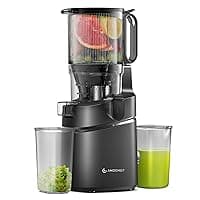
The AMZCHEF automatic model runs at 250W with a 145mm feed opening and a 2L capacity jug, meaning you can load it and walk away while it juices. Currently £117.63, down from a 90-day high of £149.99, it represents good value for a hands-free machine. The triple filter system and safety lock add reassurance for households with children.
Best centrifugal juicer for recognised brand reliabilitynutribullet 800W Centrifugal Juicer
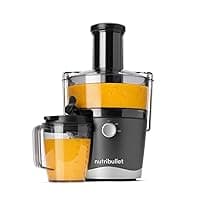
The NutriBullet 800W centrifugal juicer costs £69.99 but has a 90-day low of £56.00, so it regularly drops to a strong price point. The 8-piece set includes a 1.5L pulp basin and an 800ml pitcher, reducing interruptions during a large batch. Two speed settings and a no-drip spout are practical details that cheaper centrifugal models skip.
Best centrifugal juicer under £35 for occasional useJuilist Juicer Machines
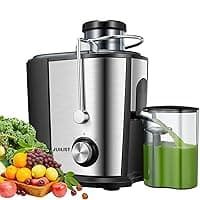
The Juilist centrifugal juicer costs £33.95, just above its 90-day low of £30.00, making it the most affordable entry point in this guide. Its 600W motor handles soft fruits and citrus without difficulty, and the anti-drip spout prevents mess on the worktop. The 3-inch wide chute reduces chopping time. Ideal if you want to try juicing before committing to a higher-spend model.
Frequently asked
What is the difference between a cold-press juicer and a centrifugal juicer?
A cold-press (masticating) juicer uses a slow-turning auger to crush produce, generating minimal heat and preserving more nutrients. The juice lasts 24-48 hours in the fridge before separating. A centrifugal juicer uses a fast-spinning blade to shred and separate juice in seconds. It is louder, the juice oxidises faster, and it is less effective with leafy greens, but it costs less and works more quickly. Cold-press models in this guide start at £69.99; centrifugal models start at £33.95.
Are juicers hard to clean?
Cleaning time varies by type. Centrifugal juicers have fewer parts but a fine mesh filter basket that clogs with pulp fibres, especially in hard-water areas where mineral deposits build up. Budget around 3-5 minutes for a rinse and brush after each use. Cold-press machines have more components (auger, drum, filter screen, end caps) and take 5-10 minutes to clean properly. All models in this guide include a cleaning brush. Rinsing parts immediately after use makes the job significantly easier.
Will a juicer fit under my kitchen cabinets?
Most upright cold-press juicers stand around 380-420mm tall, which clears standard UK wall cabinets (typically mounted 450mm above the worktop) with a small margin. Centrifugal juicers are generally shorter but wider. If your wall units sit lower than standard, measure the gap before ordering. The compact AMZCHEF cold-press models (B0G33JPST2 and B0FY23RMZ1) are a safe choice for a standard 600mm-deep worktop.
How much should I spend on a first juicer?
If you are new to juicing and unsure whether you will use it regularly, start with a centrifugal model between £33.95 and £69.99. The Juilist (£33.95) and FOHERE (£39.97) are low-risk starting points. If you are committed to daily juicing and want better nutrient retention and quieter operation, a cold-press machine at £69.99 (AMZCHEF) is a worthwhile step up. The Fridja f1900 at £119.99 (with a 90-day low of £85.00) suits those who also want to make nut milks and sorbets.
Can I juice leafy greens like spinach or kale in a budget juicer?
Centrifugal juicers struggle with leafy greens. The high-speed blade tends to spit soft leaves through with low juice yield, and the result is often more foam than juice. Cold-press machines handle spinach, kale, and wheatgrass far more effectively because the auger compresses the leaves slowly and extracts liquid efficiently. If leafy greens are a priority, choose a cold-press model such as the AMZCHEF (B0G33JPST2) or the Fridja f1900, both of which are designed for whole fruits and vegetables including soft leaves.