
Juicer wattage is one of the most misunderstood specs on the shelf: a 900W centrifugal machine and a 240W cold press can both produce excellent juice, but they do it in completely different ways. On the UK's 240V mains supply, even a modest 200W slow juicer draws enough current to crush fibrous vegetables efficiently. What matters is how that power is applied, not the raw number.
What to look for
01Centrifugal vs cold press: what the wattage is actually doing
Centrifugal juicers run at high speed, typically 800W to 900W on UK models, spinning a mesh basket to shred fruit and fling juice outward. That speed generates heat and introduces air, which can degrade heat-sensitive nutrients and cause juice to separate in the glass within minutes. Cold press (masticating) juicers use a slow-turning auger at 200W to 250W to squeeze produce rather than shred it. The lower wattage is not a weakness: the auger's mechanical advantage means it extracts more juice per gram of produce, especially from leafy greens and soft fruits. In practical terms, a 240W Fridja or 250W AMZCHEF will yield denser, slower-separating juice than an 800W centrifugal, even though the centrifugal draws three to four times more power from your 240V socket.
02Feed chute size and prep time
The width of the feed chute determines how much chopping you do before juicing. Centrifugal models tend to offer wider openings: the Reemix 800W has a 3-inch (roughly 76mm) mouth, and the FOHERE and Juilist machines match that. Cold press machines have historically required more prep, but newer designs close the gap considerably. The AMZCHEF cold press offers a 145mm opening, large enough to drop in a whole apple without halving it first. The EUHOMY cold press goes further with a 135mm chute and an auto-cutting auger that handles whole fruit automatically. If you juice before work and every minute counts, chute diameter is at least as important as wattage when choosing between models.
03Noise, speed settings, and kitchen practicality
Centrifugal juicers are loud. Running at 800W to 900W and high RPM, they are comparable to a food processor and unsuitable for early-morning use in a flat with thin walls. Cold press machines run quietly enough to hold a conversation over. Most models in both categories offer two speed settings: a lower speed for soft fruits such as oranges and berries, and a higher speed for hard produce like carrots and beetroot. The NutriBullet 800W centrifugal includes a no-drip spout, which matters on a worktop. UK kitchens often have limited counter depth, so check the footprint: tall vertical cold press juicers can be awkward under standard 450mm-high wall cupboards.
04Cleaning and filter design
Cleaning is where many juicers lose owners within a month. Centrifugal machines have a fast-spinning mesh filter basket that traps pulp in fine holes, and scrubbing it clean requires the brush that better models include (the Reemix ships with one). Cold press machines use a different approach: the AMZCHEF and EUHOMY both use triple-filter systems that separate juice, pulp, and foam into distinct channels, making rinsing more straightforward. Hard-water areas across much of England and Wales leave limescale deposits on metal mesh filters, so look for dishwasher-safe parts or filters that can be soaked in a dilute citric acid solution. BPA-free Tritan plastic components, as used in the Anybear and Fridja, are more resistant to staining from beetroot and carrot than standard plastics.
05Juice yield and pulp dryness
Yield is the practical measure of efficiency: how much juice do you get from a kilogram of apples? Cold press machines consistently produce drier pulp, meaning more juice ends up in your glass. A masticating juicer running at 200W to 250W typically extracts 15 to 20 per cent more juice from the same quantity of produce compared with a centrifugal machine. Over a week of daily juicing, that difference adds up to real savings on your fruit and vegetable shop. The AMZCHEF's 2-litre juice capacity and the EUHOMY's 1.8-litre chute capacity mean fewer stops to empty the container mid-session, which matters if you are juicing for a family rather than a single serving.
Our top picks
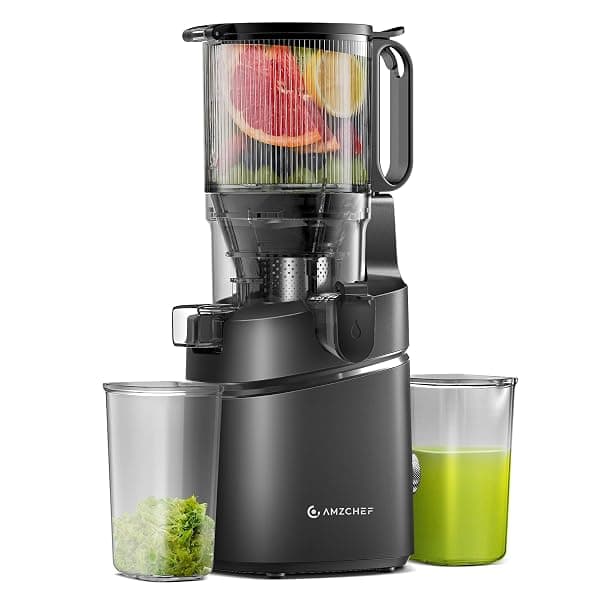
Best cold press for whole fruit without the prepAMZCHEF Automatic Cold Press Juicer Machines
The AMZCHEF runs at 250W with a 145mm feed opening, wide enough to drop in a whole apple or orange without pre-cutting. Its 2-litre juice container and triple-filter system keep sessions uninterrupted, and the safety lock prevents the motor from running with the lid off. A solid choice for anyone who wants cold press quality without spending ten minutes chopping before breakfast.
Best cold press for juice quality and buildFridja f1900 Cold Press Juicer
The Fridja f1900 runs at 240W through a 78mm chute and uses BPA-free components throughout. At this wattage the auger extracts efficiently from both soft citrus and harder root vegetables. The 78mm chute requires some prep but keeps the machine compact enough for a standard UK worktop. A dependable masticating machine from a brand with a focused product range.
Best centrifugal for speed and brand reliabilityNutribullet Centrifugal Juicer 800W
The NutriBullet 800W centrifugal offers two speed settings, a wide feed chute, and a no-drip spout that keeps the worktop clean between pours. At 800W on the UK 240V supply it processes hard vegetables quickly. Dishwasher-safe parts reduce the cleaning burden, and NutriBullet's UK parts availability means replacement components are straightforward to source.
Best cold press under £55EUHOMY Cold Press Juicer Machines
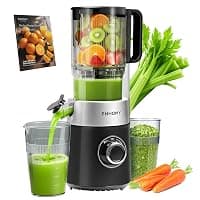
The EUHOMY cold press packs a 135mm chute and an auto-cutting auger into a machine that sits at the accessible end of the cold press market. The triple-filter setup separates pulp and foam cleanly, and the self-feeding design reduces hands-on time. For anyone curious about cold press juicing without committing to a premium outlay, this is a practical entry point.
Best budget centrifugal for occasional useJuilist Juicer Machines
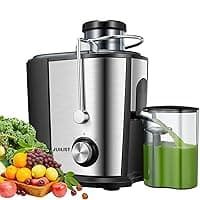
The Juilist draws up to 600W in normal operation through a 3-inch wide-mouth chute and includes anti-drip and anti-slip features that punch above its price bracket. Two speed settings handle both soft and hard produce. It ships with a recipe booklet, which is genuinely useful for new juicers. If you juice two or three times a week rather than daily, this covers the basics without overspending.
Best for straightforward daily centrifugal juicingFOHERE Juicer Machines for Whole Fruit
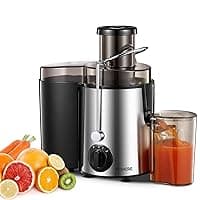
The FOHERE offers three speed settings rather than the two found on most rivals at this price, giving finer control over fibrous vegetables versus soft fruit. Rated for whole fruit and vegetable input, it handles a standard morning juice session without fuss. Three speeds on a centrifugal machine at this price point is a practical differentiator worth having.
Frequently asked
Does higher wattage mean better juice from a juicer?
Not directly. Wattage tells you how much power a juicer draws from the mains, not how efficiently it extracts juice. A 240W cold press masticating juicer typically yields more juice per kilogram of produce than an 800W centrifugal, because the slow auger squeezes rather than shreds. Higher wattage in a centrifugal machine means faster processing and the ability to handle harder vegetables without stalling, but it does not improve juice quality in the way that a cold press mechanism does.
Is a cold press juicer worth the extra cost over a centrifugal?
It depends on how often you juice and what you put in. Cold press machines extract more juice per kilogram of produce, run quietly, and produce juice that separates more slowly in the glass. If you juice daily and use leafy greens, wheatgrass, or soft fruits, the yield improvement can offset the higher purchase price over several months of use. If you juice occasionally and mainly use hard fruits like apples, a centrifugal machine at a lower price point does the job adequately.
What size feed chute do I need for a juicer?
A 76mm (3-inch) chute handles most fruit if you halve apples and quarter larger items first. For genuinely hands-free whole-fruit juicing, look for 130mm or wider: the AMZCHEF cold press offers 145mm, which fits a whole medium apple. Wider chutes save meaningful prep time over a week of daily juicing. Note that very wide chutes on cold press machines sometimes require an auto-cutting auger to handle whole fruit without jamming.
Are juicers hard to clean?
Centrifugal juicers have fine mesh filter baskets that trap pulp and require a dedicated brush to clean properly. Models like the Reemix include a brush; check before buying if one is not listed. Cold press machines with triple-filter systems tend to rinse more easily because the pulp is channelled separately. In hard-water areas, soaking metal mesh components in a dilute citric acid solution once a week prevents limescale build-up. Dishwasher-safe parts, offered on the NutriBullet 800W, simplify the process considerably.
Can I use a juicer for vegetables as well as fruit?
Yes, though the machine's wattage and mechanism affect how well it handles different produce. Hard root vegetables such as carrots and beetroot benefit from higher torque: centrifugal machines at 800W to 900W process them quickly, while cold press machines at 200W to 250W use auger pressure to squeeze them slowly but effectively. Leafy greens such as kale and spinach are better suited to cold press machines, as centrifugal baskets struggle to extract juice from flat, flexible leaves efficiently.