
Juicer capacity ranges from around 1.8 L to 2 L across the models on this page, and that gap matters more than it sounds. A smaller jug suits a single-serve morning routine; a 2 L vessel lets a household of four juice a full bag of apples without stopping to empty the pulp bin mid-session. Here is how to match the size to your actual habits.
What to look for
01Jug and pulp-bin capacity
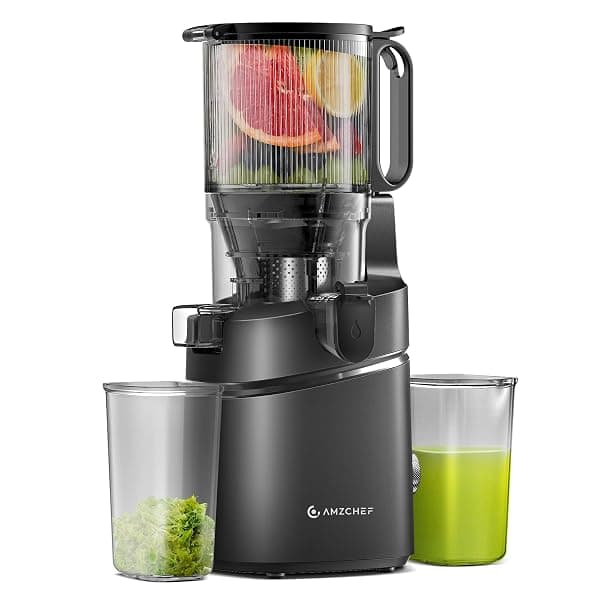
The juice jug and the pulp container are two separate volumes, and both fill up. The AMZCHEF cold-press model ships with a 2 L jug, which is generous enough for three or four large glasses before you need to decant. The EUHOMY cold-press has a 1.8 L chute-feed chamber rather than a traditional jug, so usable yield per run is slightly lower. For a solo juicer making one 250 ml glass a day, either is fine. For a family of four who want fresh juice at breakfast without stopping to empty mid-cycle, the 2 L AMZCHEF is the more practical choice. Also check the pulp bin: a small bin means more interruptions on high-fibre vegetables like carrots and beetroot, which are common in UK kitchens. If you juice daily, look for a pulp container that holds at least 1.5 L.
02Feed-chute diameter and prep time
A wider chute means less chopping before you start. The AMZCHEF offers a 145 mm opening, wide enough to drop in a whole apple or a halved orange without pre-cutting. The EUHOMY's 135 mm chute is close behind. At the other end, the Fridja f1900 has a 78 mm chute, which is narrower and better suited to softer produce or pre-cut chunks. Centrifugal models like the NutriBullet 800W and the FOHERE also feature wide feed chutes designed for whole fruit. In a busy UK morning, shaving two minutes off prep time is a genuine quality-of-life gain, especially if you are juicing hard root vegetables that need to be quartered anyway. Wider is not always better for slow juicers, though: a narrower chute on a masticating machine can grip fibrous greens more effectively.
03Motor wattage and juice yield
Wattage on a UK 240 V mains supply translates directly to how hard the machine works against dense produce. Centrifugal juicers in this group run from 500 W (Reemix) up to 900 W (FOHERE, Juilist), giving fast extraction in under a minute per batch. Cold-press masticating juicers use far less power: the Fridja runs at 240 W, the AMZCHEF at 250 W, and the Anybear at 200 W. Lower wattage is not a weakness here. Slow juicers spin at 40-80 RPM rather than thousands, so they generate less heat and oxidation, which preserves more nutrients and produces drier pulp, meaning more juice per kilogram of fruit. If you live in a hard-water area and use citrus heavily, the lower-acid juice from a cold-press machine also tends to be gentler on limescale-prone components.
04Footprint and 600 mm cupboard compatibility
Most UK kitchen worktops are 600 mm deep, and a tall masticating juicer can easily exceed that clearance when the jug is attached. Vertical cold-press designs like the EUHOMY and AMZCHEF tend to have a smaller base footprint than horizontal masticating models, but they are taller. Centrifugal machines such as the NutriBullet and FOHERE are typically wider and shorter. Before buying, check the assembled height against any overhead cupboards: a machine that cannot sit under a 450 mm wall unit is one you will store in a cupboard and rarely use. The Fridja f1900, for example, is a compact vertical design suited to tighter worktop arrangements.
05Ease of cleaning
A juicer you dread cleaning is a juicer that stays in the cupboard. Cold-press machines have more parts: auger, filter basket, juice jug, pulp bin, and lid. The EUHOMY and AMZCHEF both advertise triple-filter systems, which extract more juice but add one more component to rinse. The NutriBullet centrifugal juicer specifies dishwasher-safe parts, which is a practical advantage for households without a dedicated cleaning routine. If you live in a hard-water area, rinse all filter meshes immediately after use: limescale deposits in fine mesh are difficult to shift once dry. A dedicated cleaning brush, included with most models here, makes the difference between a two-minute rinse and a ten-minute scrub.
Our top picks
Best for families juicing whole fruit in bulkAMZCHEF Automatic Cold Press Juicer Machines
The 145 mm feed opening and 2 L jug capacity make this the most practical cold-press option for households juicing large volumes. The 250 W motor runs on UK 240 V mains and the triple-filter system extracts a high juice yield from both soft fruit and firm vegetables. A safety lock prevents accidental start-up, which matters in a busy kitchen.
Best for quick weekday juicing with easy clean-upNutribullet Centrifugal Juicer 800W
At 800 W on UK 240 V mains, the NutriBullet centrifugal juicer processes a glass of juice in under a minute. Dishwasher-safe parts remove the biggest friction point in a daily routine. The wide feed chute handles whole fruit, and the no-drip spout keeps the worktop clean. Two speed settings let you adjust for softer citrus versus harder root vegetables.
Best compact cold-press for solo usersEUHOMY Cold Press Juicer Machines
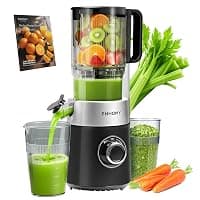
The 135 mm self-feeding chute and 1.8 L chamber handle whole fruit without pre-cutting, while the auto-cutting auger reduces the manual effort typical of masticating machines. The compact vertical footprint fits under standard 450 mm UK wall cupboards more comfortably than wider centrifugal designs. Triple filtration keeps pulp out of the finished juice.
Best for nutrient-focused juicing on a mid-range budgetFridja f1900 Cold Press Juicer
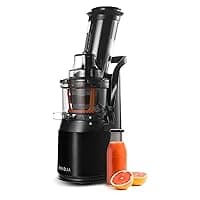
The Fridja f1900 runs at 240 W, slow enough to minimise heat oxidation during extraction. Its 78 mm chute suits pre-cut produce and softer greens rather than whole apples, making it a good fit for someone who already preps ingredients as part of a morning routine. BPA-free construction throughout is a practical reassurance for daily use.
Best budget centrifugal juicer for occasional useFOHERE Juicer Machines for Whole Fruit
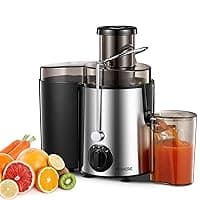
Three speed settings give more control than most entry-level centrifugal machines, which typically offer only two. The FOHERE handles whole fruit and vegetables and is designed for UK 240 V mains. At this price tier it is best suited to occasional rather than daily use, where the lower build specification is less likely to show over time.
Frequently asked
What size juicer jug do I need for a family of four?
For four people, look for a juice jug of at least 1.5 L and a pulp bin of similar size. A 2 L jug, such as the one on the AMZCHEF cold-press model, lets you produce enough juice for four 250 ml glasses in a single run without stopping to empty the container. If you also juice high-fibre vegetables like carrots or beetroot, a larger pulp bin is equally important, as fibrous produce fills it quickly.
Is a cold-press juicer better than a centrifugal juicer?
It depends on your priorities. Cold-press masticating juicers spin at 40-80 RPM, generate less heat, and typically extract more juice per kilogram of produce, leaving drier pulp. They are quieter and better suited to leafy greens. Centrifugal juicers spin at thousands of RPM, process fruit in seconds, and are easier to clean, particularly models with dishwasher-safe parts. For a quick weekday glass of apple juice, a centrifugal machine is often the more practical choice.
How wide a feed chute do I need to juice whole apples?
A standard apple is roughly 70-80 mm in diameter. To feed one in whole without cutting, you need a chute of at least 80 mm, and ideally 100 mm or more for comfort. The AMZCHEF offers a 145 mm opening, which accommodates most whole fruit. The EUHOMY provides 135 mm. The Fridja f1900's 78 mm chute will take small apples but most medium fruit will need to be halved first.
Are juicers hard to clean in a hard-water area?
Fine mesh filter baskets are the main problem in hard-water areas: mineral deposits from tap water bond to the mesh and are difficult to remove once dry. The practical fix is to rinse all filter components immediately after use, before the residue dries. A dedicated cleaning brush, included with most models here, helps clear the mesh. Running a diluted citric acid solution through the machine monthly also dissolves limescale build-up in internal components.
Will a tall juicer fit under my kitchen cupboards?
Standard UK wall cupboards are mounted 450 mm above the worktop. Vertical cold-press juicers, including the EUHOMY and AMZCHEF, can reach 400-450 mm in assembled height with the jug attached, so measure before buying. Centrifugal machines like the NutriBullet tend to be shorter and wider, which suits lower clearances. If worktop space is tight, check the product dimensions against your specific cupboard height before ordering.