
A cold press juicer crushes fruit and veg slowly with a screw, and a centrifugal juicer shreds it against a basket spinning at high speed. That one difference decides which produce juices well and how much chopping you do first. Read on to match the type to what you juice, then compare cold press and centrifugal models on chute size and cleaning.
What to look for
01What is a cold press juicer, and how is a centrifugal juicer different?
A cold press juicer turns a screw-shaped auger slowly to crush produce and press the juice through a screen. A centrifugal juicer grates produce on a fast spinning disc and throws it against a mesh basket, so the juice comes through in seconds. Centrifugal machines are quick and loud, and many take whole apples through a wide chute. The Geepas has a 75mm mouth, and the Puremy pairs a 75mm chute with a 1200W motor. Cold press machines run on far less power, such as 200W for the Anybear and 300W for the Reemix, because the auger works by pressing slowly. Their juice comes out with less froth on top. Product names can blur the line. The Sage Nutri Juicer Cold is listed as a centrifugal cold juicer, so check how the listing describes the extraction method and go by that.
02Which type is better for leafy greens, hard veg and soft fruit?
Cold press is the better choice for leafy greens and herbs, and centrifugal handles hard fruit and veg such as apples, carrots and beetroot quickly. A fast spinning basket tends to throw light leaves like spinach and kale out with the pulp before much juice is released, while an auger squeezes them against the screen. Hard produce is where a centrifugal machine is quickest. The Geepas is listed for apple, carrot, pear and orange, and the Quest Nutri-Q adds a pulse function to its 2 speeds. A cold press model copes with hard veg too, only more slowly, and very fibrous stalks go through more easily when cut into short lengths. Soft, juicy fruit such as grapes, melon and pineapple juices well on either type. Bananas and avocados give almost no juice in any juicer and belong in a blender. If most of your glasses are green, lean towards cold press. If they are mostly apple and carrot, centrifugal gets you there faster.
03How much prep and time does each type need?
A centrifugal juicer gets a glass poured fastest, and wide-chute cold press models have closed much of the gap on chopping. Centrifugal machines with a 3-inch chute, such as the Juilist 400W, or the HomeTronix with its extra wide chute, are sold for whole fruit and veg and work through them quickly. Early cold press designs had narrow chutes that meant cutting everything into chunks, but many newer ones are built for whole fruit. The AMZCHEF has a 145mm opening and a 2L capacity. The EUHOMY pairs a 135mm chute and 1.8L hopper with a self-feeding, auto-cutting auger, and the Cooks Professional has a wide XL chute over a 1.8L hopper. You load the hopper and let the auger pull the produce down, though it still works more slowly than a spinning disc. With either type, peel thick-skinned citrus and take the stones out of fruit like mango and peach first.
04Which is quieter and easier to clean?
Cold press juicers are usually the quieter of the two, and cleaning takes a similar effort because both have a filter that needs brushing. A centrifugal motor makes a loud whine for the short time it runs, while a slow auger gives a lower grinding sound over a longer session. Fine pulp lodges in the holes of a centrifugal mesh basket. The Puremy and the Juilist 400W both come with a cleaning brush, and the anti-drip Juilist model is listed as easy to clean. A cold press machine has an auger, a screen and a chamber to rinse. The AMZCHEF and EUHOMY both list a triple filter, so check how the parts come apart before you buy. The NutriBullet centrifugal is listed as dishwasher safe, which saves some scrubbing. Whichever type you choose, rinse the parts straight after juicing, before the pulp dries on.
05How do pulp and juice differ between the two?
Cold press machines usually leave drier pulp and give juice with less foam, while centrifugal pulp tends to come out damp, which means some juice has stayed in it. Juice from a slow press also tends to separate less in the glass. The way each machine collects pulp differs too. The Quest Nutri-Q catches it in a 1.5L container beside a 0.5L jug, the HomeTronix has integrated juice and pulp collectors, and the Ninja Cold Press puts a 700ml jug alongside a 1.1L pulp container. The Cooks Professional sends juice and pulp out through separate outlets. A larger pulp container means fewer stops to empty it when you juice for more than one person. Juice from either type tastes best freshly made, and anything you keep should go in a covered jug in the fridge.
Our top picks
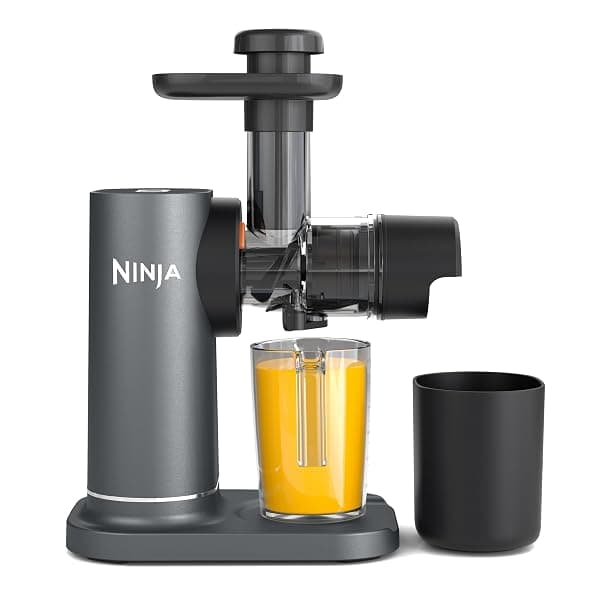
Best for cold press juicing with fewer stopsNinja Cold Press Juicer Machine with
Ninja's Cold Press Juicer comes with a 700ml jug and a 1.1L pulp container. Because the pulp side is the larger of the two, you can press several rounds of greens before emptying anything. Pick it if you are moving to cold press for leafy greens.
Best for whole fruit with little choppingCooks Professional Cold Press Juicer with
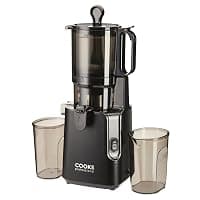
The Cooks Professional has a wide XL feeding chute over a 1.8L hopper, and a slow screw presses the produce. Juice and pulp leave through separate outlets. If chopping is what puts you off juicing, look at this one first.
Best for greens on a low-power cold pressAnybear Cold Press Juicer
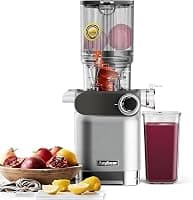
For spinach and apple blends, Anybear's masticating juicer runs at 200W and takes whole fruit and vegetables through a 4.3-inch feed chute. It uses Tritan materials and listed as BPA free. Juice recipes come with it, which helps in the first few weeks.
Best centrifugal for apples and carrotsGeepas 600W Juice Extractor | Centrifugal
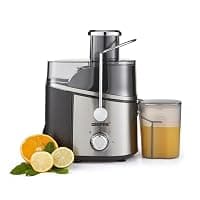
Geepas lists this 600W centrifugal juicer for apple, carrot, pear and orange, with a 75mm wide mouth. It has a stainless steel body and an extra filter basket, and it carries a 2 year warranty. Choose it for quick hard fruit and veg juice before work.
Best for juice and pulp collected in one unitHomeTronix Electric Juicer Fruit Vegetable Citrus
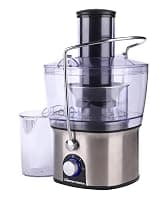
HomeTronix builds the juice and pulp collectors into this 700W centrifugal machine. It also has two speeds, a safety lock and an extra wide chute for whole fruit, and it is listed as easy to clean. Suits someone who juices apples and citrus on weekday mornings.
Frequently asked
Is a slow juicer the same as a cold press juicer?
Yes. Slow juicer, masticating juicer and cold press juicer are three names for the same design, where an auger crushes and presses produce at low speed. Listings often use two of the names together, as the Anybear and EUHOMY do. A citrus press or a centrifugal model sold with cold in its name is a different machine.
Is cold pressed juice healthier than juice from a centrifugal juicer?
Both types make juice from the same fruit and veg, and claims that cold pressing keeps noticeably more nutrients are not settled. The bigger health point applies to both, since juicing removes most of the fibre. NHS guidance counts fruit juice and smoothies as no more than 1 of your 5 A Day, at a combined 150ml a day.
Can a juicer make smoothies?
No, a juicer separates the juice from the fibre, while a smoothie blends the whole fruit, fibre included. For smoothies you need a blender, such as the 1.5L blender that comes with the YASHE food processor or a portable USB blender like the Elecphbo. Some people own both and use the juicer for greens and the blender for fruit.
Do I need a full juicer if I only drink orange juice?
Probably not. A citrus juicer is smaller and faster for oranges, lemons and grapefruit, and it is easier to wash. The NutriChef has a manual press handle and an adjustable pulp filter, the Keerain is an automatic electric model, and the SJH is a stainless steel hand press that needs no power at all.
Can I use a KitchenAid stand mixer as a juicer?
Yes, with an attachment. The Fgreeble masticating juicer attachment fits a KitchenAid stand mixer and works on the slow, pressing principle of a cold press juicer. Check that it suits your mixer model before buying, and expect smaller batches than a standalone machine with its own hopper.