
A juicer does not need to guzzle electricity to do a good job. The slow masticating models in this guide run at 240W to 250W on UK 240V mains, compared with 800W to 900W for centrifugal machines, and most cost between £33.95 and £119.99. If your energy bill is already under pressure, that wattage gap adds up fast.
What to look for
01Wattage and running cost on UK mains
UK mains runs at 240V, so wattage figures on juicers translate directly to real energy draw. A centrifugal juicer rated at 800W to 900W pulls roughly three to four times more power than a 240W to 250W masticating model. In practice, juicing sessions are short, typically two to five minutes, so the absolute cost per session is small. At the current Ofgem unit rate of around 24p per kWh, a 900W centrifugal juicer costs roughly 0.36p per minute of use, while a 240W cold-press model costs about 0.10p per minute. Over a year of daily juicing that difference reaches around £1.50 to £2.00, which is modest but real. The bigger energy argument for low-wattage masticating juicers is that they run more slowly and generate less heat, which preserves more nutrients and means you extract more juice per piece of fruit, so you buy less produce overall. That secondary saving often outweighs the electricity difference.
02Feed chute size and prep time
Most juicers in this guide feature a 78mm to 145mm wide chute, measured in millimetres because that is how UK product listings state it. A wider chute means less chopping, which matters if you juice daily before work. The Fridja f1900 has a 78mm chute, wide enough for a halved apple but not a whole one. The AMZCHEF 250W automatic model steps up to a 145mm opening, which fits most whole fruits without pre-cutting. Centrifugal machines such as the NutriBullet 800W also offer a 76mm (3-inch) chute and process food faster due to higher RPM, though they produce more foam and slightly drier pulp. If your kitchen worktop is tight, check the footprint too: most upright masticating juicers stand around 40cm to 45cm tall, so measure your under-cupboard clearance before buying, as standard UK kitchen wall units sit 460mm to 500mm above the worktop.
03Juice yield and pulp dryness
Juice yield is the percentage of liquid extracted from a given weight of produce. Cold-press masticating juicers typically achieve 15 to 20 per cent more yield than centrifugal models on fibrous vegetables such as carrots and kale. That matters in the UK where organic produce is expensive. Drier pulp from a masticating juicer also means less waste: you can use the pulp in soups or baking. The AMZCHEF models in this guide use a triple-filter or fine-mesh system that the brand claims maximises yield. Centrifugal juicers like the FOHERE 900W and NutriBullet 800W produce wetter pulp and more foam, which some users find off-putting in green juices. If you juice mostly citrus or soft fruit, the yield gap narrows and a centrifugal machine becomes more competitive on value.
04Cleaning and dishwasher compatibility
Cleaning a juicer is the main reason people stop using one. Centrifugal juicers have fewer parts but a fine mesh filter basket that clogs with pulp and requires a dedicated brush. The NutriBullet 800W includes dishwasher-safe parts, which is a genuine time-saver. Masticating juicers have more components, typically an auger, drum, filter, and two end caps, but the parts are usually smooth and rinse quickly under the tap. The Fridja f1900 is marketed as easy to clean, with smooth BPA-free components. If you live in a hard-water area, such as London, the South East, or the East Midlands, limescale can build up on plastic parts over time; a brief soak in diluted white vinegar once a week keeps components clear. Always check whether the filter mesh is dishwasher-safe before putting it on the top rack, as high heat can warp finer screens.
Our top picks
Best low-wattage cold-press juicer for daily use.Fridja f1900 Cold Press Juicer
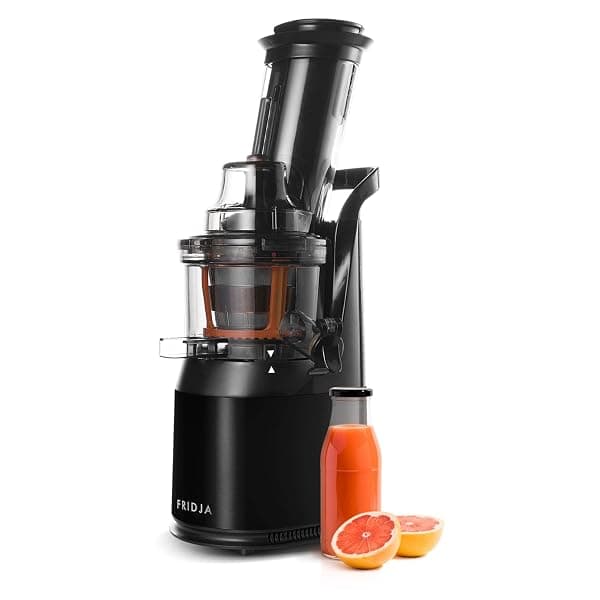
The Fridja f1900 runs at 240W on UK 240V mains, making it the most energy-efficient machine in this guide. Its 78mm BPA-free wide chute handles halved apples and whole celery sticks without fuss. Currently priced at £119.99, it has dropped to £85.00 in the past 90 days, so it is worth watching for a deal. The stainless steel body feels robust, and the machine also handles nut milks and sorbet, giving it genuine versatility beyond morning juice.
Best hands-free masticating juicer for whole fruit.AMZCHEF Automatic Cold Press Juicer Machines
At 250W and with a 145mm feed opening, this AMZCHEF automatic model is the widest-chute slow juicer here, meaning most whole apples and oranges drop straight in without chopping. The 2L capacity hopper suits batch juicing for a family. It currently sits at £117.63, down from a 90-day high of £149.99, and its triple-filter system is designed to maximise yield from leafy greens and root vegetables. The safety lock is a practical touch if you have children in the kitchen.
Best centrifugal juicer for speed and convenience.nutribullet 800W Centrifugal Juicer
If you want juice in under a minute and do not want to spend over £70, the NutriBullet 800W centrifugal juicer is the most capable fast machine here. Its 800W motor and 76mm (3-inch) chute handle tough root vegetables with ease, and the 1.5L pulp basin means fewer interruptions during a large batch. Dishwasher-safe parts cut cleaning time significantly. It has fallen to £56.00 in the past 90 days from a high of £89.00, making this a strong buy when on promotion.
Best budget centrifugal juicer under £35.Juilist Juicer Machines
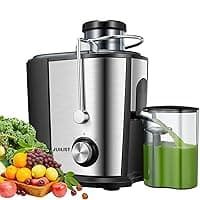
At £33.95, the Juilist is the most affordable machine in this guide and currently sits above its 90-day low of £30.00. Its 600W motor and 76mm (3-inch) wide-mouth chute cover everyday fruit and vegetables without fuss. The anti-drip spout and anti-slip base are thoughtful additions at this price. Two speed settings let you switch between soft citrus and harder carrots. It is not built for daily heavy use, but for occasional juicing on a tight budget it is hard to fault.
Frequently asked
How much electricity does a juicer use in the UK?
Running cost depends on wattage and session length. A 240W masticating juicer running for three minutes uses 0.012 kWh, costing roughly 0.29p at the current Ofgem rate of around 24p per kWh. An 800W centrifugal juicer over the same three minutes uses 0.04 kWh, costing about 0.96p. Over 365 daily sessions the difference is approximately £2.44 per year. The energy saving from choosing a low-wattage model is real but modest; the bigger argument for masticating juicers is higher juice yield, which reduces how much fruit and veg you need to buy.
Is a cold-press juicer better than a centrifugal juicer?
It depends on your priorities. Cold-press masticating juicers operate at low RPM, generate less heat, and typically extract 15 to 20 per cent more juice from fibrous produce such as kale, spinach, and carrots. The juice also tends to have less foam and a longer fridge life of up to 72 hours. Centrifugal juicers are faster, usually under 60 seconds per glass, and easier to find at lower price points. If you juice daily and prioritise yield and nutrition, a cold-press model is the better long-term investment. For occasional use or mostly soft fruit, a centrifugal machine is perfectly adequate.
What size juicer do I need for a UK kitchen worktop?
Most upright masticating juicers stand between 38cm and 46cm tall and have a footprint of roughly 15cm by 20cm. Standard UK kitchen wall units are typically mounted 460mm to 500mm above the worktop, so measure your clearance before buying a tall model. Centrifugal juicers tend to be shorter and wider. If worktop space is limited, look for a model with a compact base or one that can be stored in a 600mm-deep larder cupboard between uses. The AMZCHEF and Fridja models in this guide all fit comfortably under standard UK wall cabinets.
Does hard water affect a juicer?
Hard water, common across London, the South East, and the East Midlands, can leave limescale deposits on plastic components and filter meshes over time. This is more of an issue if you rinse parts and leave them to air-dry without wiping. To prevent build-up, soak removable plastic parts in a solution of one part white vinegar to three parts water for 15 minutes once a week. Avoid abrasive scourers on fine mesh filters as they can widen the holes and reduce filtration. Stainless steel components, such as those on the Fridja f1900, are more resistant to limescale staining than white plastic.
Which juicer is easiest to clean?
Ease of cleaning comes down to the number of parts and whether they are dishwasher-safe. The NutriBullet 800W centrifugal juicer has dishwasher-safe components, which is the most convenient option. Masticating juicers have more parts, typically four to six, but smooth auger and drum surfaces rinse quickly under the tap. The Fridja f1900 is widely praised in reviews for its straightforward disassembly. Whichever model you choose, rinsing parts immediately after use prevents pulp from drying and sticking, which is the main cause of difficult cleaning sessions.