
A decent juicer does not need to dominate your worktop. The eight models in this guide span budget centrifugal spinners to slow masticating presses, and most sit in the £30-£130 bracket depending on type and capacity. The slimmest fit comfortably on a 600mm-deep UK kitchen counter, though masticating models run taller and need clearance under wall cupboards. Whichever you choose, wattage, feed-chute width and how easily the filter cleans matter more day to day than the headline price.
What to look for
01Juicer type: centrifugal vs. masticating
Centrifugal juicers spin a fast blade at 800W to 900W, extracting juice in seconds but generating heat and noise. They suit busy mornings and hard produce such as apples and carrots. Masticating (slow or cold-press) juicers turn at a much lower speed, typically using 240W to 250W, and squeeze rather than shred. The slower action preserves more enzymes and produces drier pulp, meaning you get more juice per kilogram of fruit. For a small kitchen, the trade-off is footprint: many masticating models are tall and narrow, which can be awkward under low-hanging wall cupboards common in UK fitted kitchens. Measure your clearance before buying. If you live in a hard-water area such as London or the East Midlands, note that limescale builds up faster in centrifugal models with fine mesh filters, so look for dishwasher-safe parts.
02Wattage and UK mains compatibility
All juicers sold in the UK run on 230-240V mains with a standard UK three-pin plug, so wattage is the figure to watch. Centrifugal models in this guide run from 500W up to 900W. Higher wattage means faster juicing and better performance on tough fibrous vegetables such as kale or beetroot, but also more noise. Masticating juicers draw far less power, typically 200W to 250W. Lower wattage does not mean weaker results for soft fruit; it simply means the motor works more slowly and quietly. If you share a flat or juice early in the morning, a masticating model at 200-250W is noticeably kinder to neighbours.
03Feed chute size and prep time
A wide feed chute reduces chopping time, which matters in a small kitchen where counter space for a chopping board is limited. Several models here offer a 3-inch (approximately 76mm) chute, which fits a halved apple or a whole small orange. One automatic slow juicer in this guide goes further with a 145mm opening, wide enough for a whole large apple or a full beetroot without pre-cutting. Others sit around 78mm to 135mm. Wider is not always better: very wide chutes on compact machines can compromise the seal and reduce juice yield. Check that the chute diameter matches the produce you juice most often rather than simply picking the largest number.
04Capacity and storage
In a small kitchen, both the jug size and the pulp container matter. One centrifugal model in this guide includes an 800ml juice pitcher and a 1.5L pulp basin, which is generous for a household of two or three. An automatic slow juicer here has a 2L capacity bowl. Larger containers mean fewer interruptions mid-juice but take up more cupboard space when stored. If you juice for one, a smaller pitcher is easier to rinse and store. Also check the machine's overall height: tall masticating juicers can exceed 400mm and may not fit under standard 450mm UK wall-unit clearance. Confirm dimensions before ordering, especially if your kitchen has overhead cupboards directly above the worktop.
05Cleaning and ease of use
Cleaning is the main reason people stop using a juicer. Centrifugal models typically have fewer parts but a fine mesh filter that traps pulp fibres and is tedious to scrub by hand. Most models include a cleaning brush, and several have dishwasher-safe components. Masticating juicers have more parts (auger, drum, filter, jug) but the mesh is coarser and often rinses clean under a tap in under a minute. If you are likely to juice daily, prioritise a model whose filter can go in the top rack of a standard UK dishwasher.
Our top picks
Best for hands-free feedingAMZCHEF Automatic Cold Press Juicer Machines
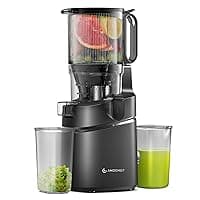
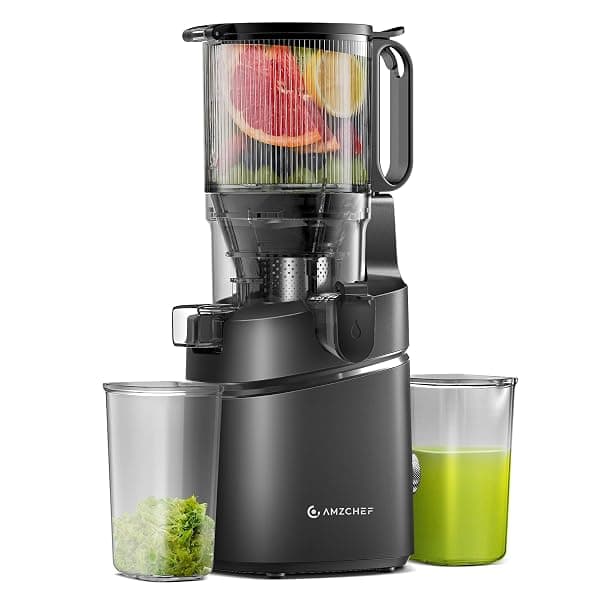
A 250W automatic slow juicer with a 145mm feed opening, wide enough to drop in a whole apple or beetroot without pre-cutting, backed by a triple filter and a 2L capacity bowl. The wide chute is the standout for a small kitchen: less chopping means less board space needed and a faster morning routine. A safety lock keeps the machine from running with the lid off.
Best quiet slow juicerFridja f1900 Cold Press Juicer
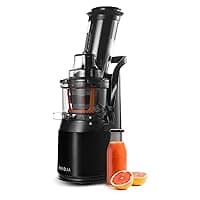
This cold-press juicer draws just 240W, the lowest of any masticating model in this guide, making it a sensible pick for anyone juicing early in a shared flat. Its 78mm chute is BPA-free and sized for most fruit and vegetables with light prep. The slow auger action suits leafy greens and produces drier pulp than a centrifugal spin, so you get more juice from the same amount of produce.
Best for everyday cleanupNutribullet Centrifugal Juicer 800W
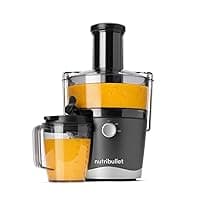
An 800W centrifugal juicer with two speed settings, a wide feed chute, an 800ml pitcher and a 1.5L pulp basin, all dishwasher safe. That combination of speed and capacity makes it well suited to a household of two or three who want fast juicing without hand-scrubbing the mesh filter every time. The no-drip spout also keeps the worktop cleaner between jugs.
Best compact cold pressEUHOMY Cold Press Juicer Machines
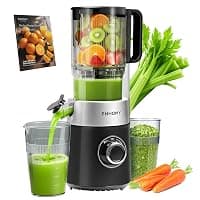
This masticating juicer pairs a 135mm chute with a self-feeding auto-cutting auger and a 1.8L capacity, so larger pieces of produce feed through with less manual pushing. A triple filter system is included for finer pulp separation. It suits a small kitchen where you want the drier pulp and higher yield of a cold-press machine without constant supervision during feeding.
Best budget centrifugalReemix Centrifugal Juicer Machine
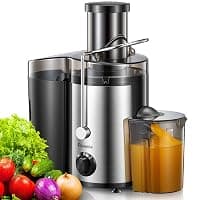
At 500W with a 3-inch feed chute and two speed settings, this is the lightest-duty centrifugal juicer in this guide, suited to softer fruit and vegetables rather than dense root veg. Its compact size and lower wattage make it an easy first juicer for a small kitchen where storage space and worktop footprint are tight. A straightforward pick if you are not yet sure how often you will juice.
Frequently asked
What is the difference between a cold press juicer and a centrifugal juicer?
A centrifugal juicer uses a fast-spinning blade, typically 800W to 900W, to shred fruit and spin out the juice in seconds. It is quick but noisy and generates some heat. A cold press (masticating) juicer uses a slow auger, usually 200W to 250W, to squeeze produce at low speed. The slower process produces less foam, drier pulp, and juice that keeps slightly longer in the fridge, up to 48 hours versus around 24 hours for centrifugal juice. Cold press models cost more but suit daily use and leafy greens better.
Are juicers easy to clean?
Ease of cleaning varies by type. Centrifugal juicers have fewer parts but a fine mesh filter that needs a brush to clear pulp fibres. Masticating juicers have more components (auger, drum, filter, jug) but the mesh is coarser and often rinses under a tap in under a minute. Look for dishwasher-safe parts, several models across both types confirm dishwasher compatibility. Most juicers include a cleaning brush. Rinsing parts immediately after use prevents pulp from drying and sticking, which is the main cause of difficult cleaning.
Will a juicer fit in a small UK kitchen?
Most compact juicers fit on a standard 600mm-deep UK worktop, but height is the bigger concern. Tall masticating juicers can reach 400mm or more, which may not clear the 450mm gap between worktop and wall cupboards in many fitted UK kitchens. Before buying, check the product dimensions and measure your clearance. Centrifugal models tend to be shorter and wider. If storage space is tight, look for a model with a removable jug and a slim body that can stand upright in a cupboard when not in use.
How much should I spend on a juicer in the UK?
Budget centrifugal juicers in the UK typically start under £40 and handle everyday fruit and vegetables adequately. Mid-range centrifugal models with larger capacities and dishwasher-safe parts usually sit in the £60-£80 range. Entry-level cold press (masticating) juicers generally start from around £70, with premium slow juicers reaching well over £100. Spending more generally buys quieter operation, higher juice yield, and more versatility, such as nut milks or sorbet. If you juice daily, the higher yield from a cold press model can offset the extra cost over time.
Is a slow juicer worth it for hard water areas in the UK?
In hard-water areas such as London, Kent, or the East Midlands, limescale deposits build up in juicer filters and around seals. Centrifugal juicers with fine stainless mesh filters are more susceptible because the mesh has smaller holes that trap mineral deposits. Masticating juicers have coarser filters that are easier to descale. Whichever type you choose, rinse parts in filtered or softened water if possible, and descale monthly using a citric acid solution (one teaspoon per 500ml of water). Dishwasher-safe components are easier to keep limescale-free with a regular dishwasher rinse-aid cycle.