
A family of four gets through roughly seven mugs a boil, which is exactly what a 1.7L kettle holds. Anything smaller means boiling twice, and on a 3kW UK element that is a minute you spend standing at the counter. Capacity, not styling, is the specification that matters here.
What to look for
01Capacity: why 1.7 litres is the family baseline
A standard UK mug takes about 250ml once you allow for milk, so a 1. 7L kettle covers seven mugs in a single boil. That is a full round of tea for four adults with a top-up, or a teapot plus two mugs. Compact 1L travel kettles, and the 0.85L models sold for caravans, force a second boil almost every time. The practical floor for a household of four is 1.5L, and 1.7L is the volume most UK manufacturers settle on because it fits under a standard 450mm wall unit while still clearing the minimum fill line. Watch the minimum too: most jugs will not run below 500ml, so a single mug still costs you half a litre of heating.
02Wattage and boil time on UK 240V
UK mains supply 240V, and a 3kW element is the practical ceiling for a 13A plug. At 3kW a full 1.7L jug reaches boiling in roughly four minutes from cold tap temperature. Drop to 2200W, common on variable-temperature and glass models, and the same fill takes closer to five and a half minutes. For a family that boils six or seven times a day, that difference adds up to several minutes of waiting. The energy used is almost identical either way, because boiling the same volume of water takes the same energy regardless of how fast you get there. Wattage buys you speed, not savings. If you want lower running costs, fill less.
03Hard water and spout filters
Most of southern and eastern England sits in a hard-water zone, and a kettle that boils six times a day scales up fast. Limescale coats the element, which means it has to run longer to reach the same temperature, and flakes end up in the mug. A removable, washable mesh filter in the spout is the single most useful feature for a family in a hard-water area, because it catches scale before it pours. Stainless steel and glass jugs show scale sooner than opaque plastic, which is a feature rather than a fault: you descale when you can see you need to. Plan on descaling monthly with citric acid or a proprietary solution if you are in a hard-water postcode.
04Pouring, weight and safety with children around
A full 1. 7L jug weighs about 2kg once filled, which is a real consideration if a child or an older relative is doing the pouring. Look for a handle that sits high and clear of the steam vent, and a lid that opens away from you rather than flipping back over your hand. Cool-touch double-wall bodies keep the outer surface below scalding temperature, which matters in a kitchen with small children. A 360-degree base lets left and right-handed users lift the jug the same way. Cord storage in the base keeps the lead short enough that a toddler cannot pull the kettle off the worktop, which is worth checking before anything else.
Our top picks
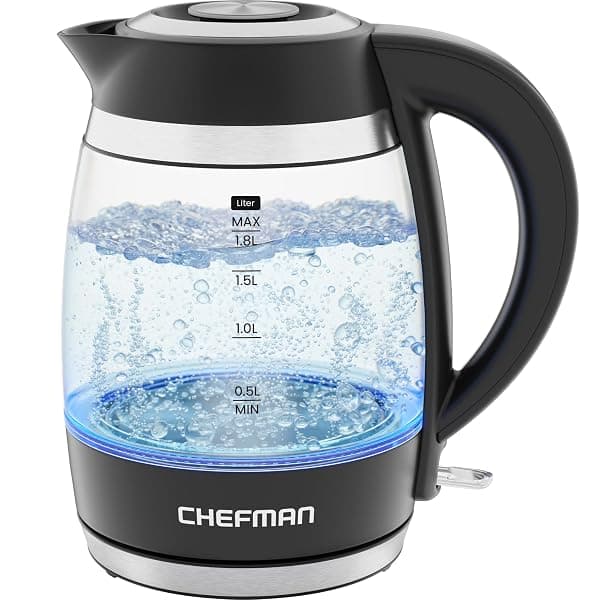
Best for the largest single boilChefman Glass Electric Kettle 1.8L 3000W
At 1.8L this holds the most water of any pick here, which is one full boil for seven or eight mugs with room to spare. The 3000W element gets that volume to boiling in about four minutes on UK mains. The glass body makes limescale visible early, so you descale on schedule rather than after the taste changes. Auto shut-off and boil-dry protection are both fitted.
Best for everyday family useRussell Hobbs Honeycomb White Cordless Electric
The 1.7L capacity and 3kW element are the family standard, and this is the version that does it without extras you will not use. The removable washable anti-scale filter sits in the spout, which is the part that matters in a hard-water area. A push-to-open lid means you can refill one-handed while holding a mug. The pour spout keeps the flow narrow enough to fill a cafetiere without splashing.
Best for a stainless steel jugMidea Electric Kettle 1.7L Stainless Steel
A 3000W element in a 1.7L stainless steel body, which is the combination that survives a family kitchen longest. Steel does not stain or hold odours the way plastic can after a year of daily boiling, and it takes knocks without cracking. The water contact surfaces are BPA-free. Expect a full jug to boil in around four minutes from cold, and expect the outer body to get hot, so keep it back from the worktop edge.
Best for households drinking different teasRussell Hobbs Variable Temperature Kettle
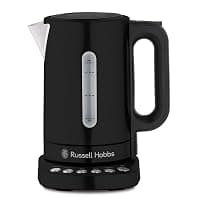
Five temperature pre-sets between 70°C and 100°C, which covers green tea at 80°C, oolong, and boiling water for a pot of standard tea. The 1.7L capacity stays at family scale rather than dropping to the 1L that most temperature-control kettles use. A keep-warm function holds the set temperature, useful across a slow weekend morning. The 360-degree base and LED display make it straightforward for anyone in the house to use.
Best for early mornings and thin wallsElectric Kettles
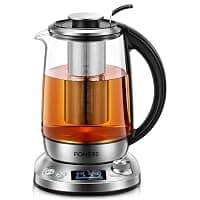
A 2200W element is quieter in use than a 3kW one, because a lower power density produces less violent boiling noise. The trade is about ninety seconds more on a full 1.7L fill. Temperature is variable from 40°C to 100°C and a two-hour keep-warm holds it there. The detachable filter comes out for cleaning, and both auto shut-off and boil-dry protection are fitted. Worth it if the kitchen sits below a bedroom.
Frequently asked
What size kettle do I need for a family of four?
A 1.7L kettle is the right size for a household of four. Allowing 250ml per mug once milk goes in, 1.7L gives you seven mugs from one boil, which covers four people with a second round for two of them. The practical floor is 1.5L; below that you will boil twice most mornings. Going above 1.7L is possible but uncommon in the UK, because larger jugs get heavy to pour: a full 1.7L already weighs about 2kg.
Does a 3kW kettle cost more to run than a 2200W one?
No. Boiling the same volume of water takes the same amount of energy whichever element you use, so the running cost is effectively identical. The 3kW model gets there faster, which means it draws more power for a shorter time. What does change your bill is how much water you boil. Filling a 1.7L jug when you only want one mug wastes roughly two thirds of the energy. Most kettles have a minimum fill line around 500ml, so single mugs are always slightly wasteful.
How often should I descale a family kettle in a hard-water area?
Monthly is a sensible interval if you are boiling five or six times a day in a hard-water postcode, which covers most of southern and eastern England. Citric acid powder or a proprietary descaler both work: fill to about half a litre, run a boil, leave it twenty minutes, then rinse twice. A removable spout filter should come out and go under the tap at the same time. Scale left in place makes the element run longer to reach the same temperature.
Is a glass or stainless steel kettle better for a busy kitchen?
Both outlast plastic in daily family use. Stainless steel takes knocks and will not crack if it goes over on the worktop, but the outer body gets hot unless it is double-walled. Glass shows limescale build-up early, which is genuinely useful in a hard-water area because you descale on sight rather than on a guess. Glass is heavier and more fragile. If children handle the kettle, a cool-touch double-wall body in either material is the safer choice.