
An 800W microwave draws roughly 0.8 kWh per hour on a standard UK 240V supply, costing around £0.20 at current rates — far less than your oven. With prices starting at £54.97, the four genuine microwave picks here are chosen for power efficiency, cavity size, and value over their lifetime.
What to look for
01Wattage and actual running cost
800W is the sweet spot for UK countertop microwaves. At the current Ofgem unit rate of roughly £0.245 per kWh, running an 800W microwave for 10 minutes costs about £0.03. Compare that with a 2.2 kW electric oven running for 30 minutes at around £0.27, and the efficiency case is clear. Both Toshiba models and both Russell Hobbs models in this guide are rated at 800W on a standard UK 240V supply. Higher wattage is not always better: a 1,000W model heats faster but can overcook edges while leaving centres cold. Five or more power levels let you dial down to 400W or 600W for gentler defrosting, which also cuts energy draw. Check the energy label if it is available — EU-derived ratings still appear on UK retail listings and give a useful like-for-like comparison.
02Cavity size and kitchen fit
Most UK kitchen worktops sit at 900mm height, and the space under wall-mounted cupboards is typically 450mm to 500mm. A 20-litre solo microwave is the most common size sold in the UK and fits comfortably in that gap, with a typical footprint of around 450mm wide by 350mm deep. Both the Russell Hobbs RHM2076S and RHM2076B offer a 20-litre cavity, as do both Toshiba models. That is enough room for a standard dinner plate or a 23cm (9-inch) pizza, which Toshiba specifically calls out. If your kitchen is compact, measure the recess before ordering: add at least 10cm clearance behind the unit for ventilation, or you will reduce efficiency and shorten the appliance's life.
03Auto-defrost and preset menus
Automatic defrost adjusts power level and time based on the weight you enter, which avoids the energy waste of running at full power and then having to reheat unevenly thawed food. All four microwave picks here include auto-defrost. Where they differ is in preset menus: the Russell Hobbs models offer 8 auto-cook programmes, while the Toshiba MM-EM20P steps up to 6 one-touch express-cook presets and 11 power levels, giving finer control. More presets mean the microwave does the thinking, reducing the chance of over-running the appliance and wasting energy. If you regularly reheat a variety of foods rather than just reheating leftovers, the extra presets on the digital Toshiba are worth the small price premium over the manual model.
04Price vs. long-term value
The cheapest microwave here is the Toshiba MM-MM20P at £54. 97, which has dropped as low as £45.00 in the past 90 days. The Russell Hobbs silver model sits at £79.00 but has hit a 90-day low of £40.00, suggesting it is worth watching for a deal. Running costs across all four models are essentially identical given the same 800W rating, so the upfront price difference is the main variable. A £25 saving at purchase, assuming a five-year lifespan and identical energy use, is worth more than any marginal efficiency difference between models at this wattage.
05Hard water and interior cleaning
If you live in a hard-water area — which covers most of the South East, East Anglia, and the Midlands — limescale builds up inside the cavity and on the turntable faster than you might expect. A scaled-up interior reflects microwave energy less efficiently, meaning longer cook times and higher energy use over time. Both Russell Hobbs models and both Toshiba models advertise an easy-clean interior coating. Wiping the cavity weekly with a damp cloth and running a bowl of water with lemon juice for two minutes every fortnight will keep the interior clear and maintain efficiency. Avoid abrasive pads, which scratch the coating and make future cleaning harder.
Our top picks
Best for budget buyers wanting low running costsTOSHIBA 20 Liter 800W Manual Control
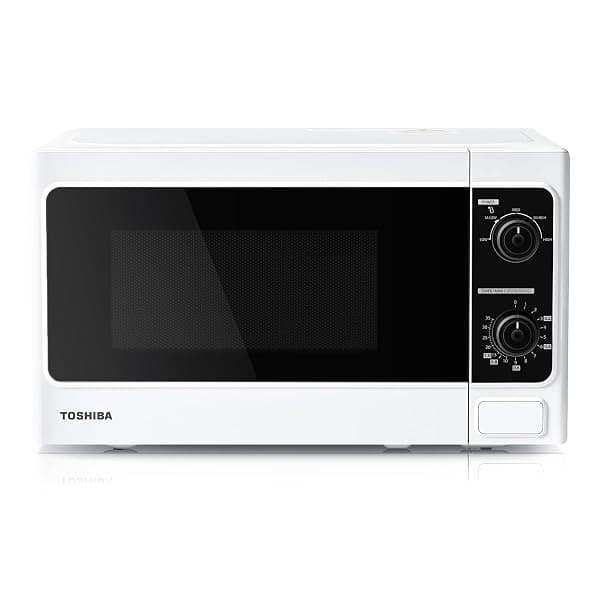
At £54.97 — and as low as £45.00 in the past 90 days — the Toshiba MM-MM20P is the most affordable 800W, 20-litre microwave here. It draws the same power as pricier rivals, so running costs are identical. Five power levels and automatic defrost cover everyday needs, and the manual dial suits anyone who finds digital interfaces fiddly. The easy-clean interior is a practical bonus for hard-water households.
Best for precise control and one-touch cookingTOSHIBA 20 Liter 800W Digital Solo
The Toshiba MM-EM20P offers 11 power levels — more than any other pick here — letting you fine-tune energy draw from a gentle defrost up to full 800W. Six one-touch express-cook presets reduce guesswork and the risk of over-running the appliance. Currently £67.96, it has traded as low as £37.00 in the past 90 days, making it excellent value when caught on offer. The digital display and clock add everyday convenience.
Best for reliability backed by a large review baseRussell Hobbs RHM2076S-AZ 20 Litre 800
Its 800W output on a 240V UK supply keeps running costs low, and 8 auto-cook menus handle everything from jacket potatoes to soup. At £79.00 it is the priciest pick, but its 90-day low of £40.00 means a patient buyer can grab it for less than the Toshiba models.
Best for matching a black kitchen aestheticRussell Hobbs RHM2076B 20 Litre 800
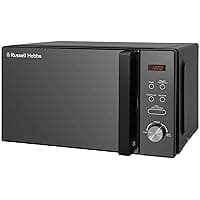
Functionally identical to the silver RHM2076S, the Russell Hobbs RHM2076B delivers 800W in a 20-litre cavity with 5 power levels, auto-defrost, and 8 auto-cook menus. The black finish suits darker kitchen schemes where a silver appliance would look out of place. Currently £83.99, it has dropped to £23.00 at its 90-day low, so it is worth adding to a price-watch list before buying at full price.
Frequently asked
How much does it cost to run a microwave in the UK?
An 800W microwave running for one hour uses 0.8 kWh. At the current Ofgem price cap rate of around £0.245 per kWh, that works out to roughly £0.20 per hour. In practice, most microwave sessions last 2 to 5 minutes, so a typical use costs between £0.01 and £0.02. Over a year of daily use at 5 minutes per day, total running costs come to around £3.00 to £4.00 — far cheaper than a conventional oven.
Is 800W enough for a microwave in the UK?
Yes, 800W is the standard output for most UK countertop microwaves and is sufficient for reheating, defrosting, and cooking everyday meals. Higher-wattage models (900W to 1,000W) heat food faster but can cook unevenly if you are not careful with power levels. For most households, 800W on a 240V UK supply strikes the right balance between speed, even cooking, and energy efficiency. All four microwave picks in this guide are rated at 800W.
What size microwave fits in a standard UK kitchen?
A 20-litre solo microwave is the most common size for UK kitchens and typically measures around 450mm wide by 350mm deep by 260mm tall. That fits comfortably under standard 500mm wall-cupboard clearance. Always add at least 100mm behind the unit for ventilation. A 20-litre cavity holds a standard dinner plate and a 23cm pizza, which covers the majority of everyday cooking tasks without taking up excessive worktop space.
Does limescale affect microwave efficiency?
Yes. In hard-water areas such as London, the South East, and the Midlands, limescale deposits build up on the cavity walls and turntable. A scaled interior reflects microwave energy less effectively, which can increase cook times and energy consumption over months of use. To prevent this, wipe the interior weekly and run a bowl of water with a squeeze of lemon juice for two minutes every fortnight. All four picks in this guide have easy-clean interior coatings that make this routine straightforward.
Are solo microwaves more energy-efficient than combination microwaves?
Generally, yes. A solo 800W microwave uses only microwave energy, whereas a combination microwave also runs a grill or convection element, which can add 1,000W to 2,000W of extra draw. If you only need to reheat and defrost, a solo model is the more energy-efficient choice. Combination models earn their higher running costs only if you regularly use the grill or oven function. For straightforward everyday use, the solo 800W models in this guide are the lower-cost option.