
Wattage is the single most useful number on a microwave's spec sheet. A 700W model takes roughly 40% longer to heat food than a 1000W one, and in a typical UK kitchen where worktop depth runs to 600mm, the difference in cavity size between compact models matters just as much as the power rating.

What to look for
01Wattage and cooking speed
UK microwaves sold for home use typically run between 700W and 1100W on a standard 240V mains supply. The higher the wattage, the faster the magnetron heats food. A 700W model is adequate for reheating leftovers and defrosting, but it will take noticeably longer on dense foods like jacket potatoes or frozen ready meals. An 800W machine hits a practical sweet spot for most households: fast enough for daily use, yet common enough that recipe timings on packaging (which usually assume 800W) apply directly. If you regularly cook from frozen or batch-cook, look for 900W or above. Inverter technology, found on the Hisense H20MOBP1HIUK, delivers continuous power at the selected level rather than cycling on and off, which means more even heating and fewer cold spots, particularly useful for dairy-based sauces that can split under pulsed heat.
02Capacity and kitchen fit
Most compact solo microwaves sold in the UK have a 20-litre cavity, which comfortably fits a standard dinner plate (typically 26cm diameter) and a 23cm casserole dish. The external footprint is what catches people out. The Hisense H20MOBP1HIUK measures 43.4cm wide and 32.9cm deep, so measure your worktop or alcove before ordering. Standard UK base units are 600mm deep, meaning a microwave sitting on the worktop in front of a wall unit needs to be under about 500mm deep to leave clearance. If you are fitting into a tight galley kitchen, prioritise external dimensions over cavity size. All four microwave models in this guide share the same 20-litre cavity, so the differentiator becomes wattage, control type, and physical footprint.
03Power levels and defrost accuracy
More power levels give you finer control. The Toshiba MM-EM20P offers 11 power levels compared to the 5 on the Russell Hobbs RHM2076B and the Hisense, which matters when you want to soften butter without melting it or warm chocolate without seizing it. Automatic defrost, present on all four microwaves here, uses weight-based or time-based programmes to cycle power down so the outside of meat does not start cooking while the centre is still frozen. In a hard-water area, limescale can build up on the interior walls over time; models with a smooth, easy-clean cavity coating (all four here claim this) are easier to wipe down. A dedicated defrost function is particularly useful if you buy in bulk and freeze portions, a common habit for households trying to reduce food waste.
04Digital vs manual controls
Digital controls, as on the Russell Hobbs RHM2076B and both Toshiba models, let you set precise times and power levels and often include a clock, which doubles as a kitchen timer. Manual dials, as on the Toshiba MM-MM20P, are faster to operate with wet or greasy hands and have fewer electronic components to fail. For households with older family members or anyone who finds touchpads fiddly, a manual-dial model is often the more practical choice. One-touch express cook buttons, a feature on the Toshiba MM-EM20P with its 6 preset recipes, speed up common tasks like heating a mug of soup or popping corn, but they are a convenience rather than a necessity. Consider how you actually use a microwave day to day before paying extra for presets you may never touch.
Our top picks
Best for even reheating on a tight budgetHisense 700 Watts 20 Litre Inverter

The Hisense H20MOBP1HIUK runs at 700W with inverter technology, meaning it delivers steady, continuous power rather than pulsing on and off. That makes it noticeably better at reheating soups and sauces without hot spots. At 43.4cm wide and 32.9cm deep, it fits most UK worktops, and its 20-litre cavity handles a standard dinner plate. Five power levels cover everyday tasks, and automatic defrost is included.
Best digital solo microwave for everyday family useRussell Hobbs RHM2076B 20 Litre 800
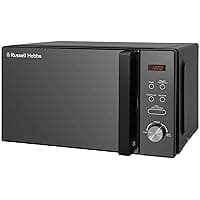
The Russell Hobbs RHM2076B delivers 800W across a 20-litre cavity, matching the wattage assumed by most UK ready-meal packaging. Its digital display includes a clock and timer, 5 power levels handle everything from defrost to full power, and 8 auto-cook menus cover common tasks without manual time-setting. The smooth interior wipes clean easily, a practical advantage in a busy kitchen.
Best manual-control microwave for simplicityTOSHIBA 20 Liter 800W Manual Control
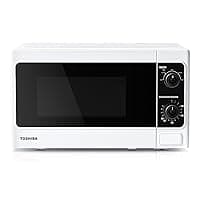
The Toshiba MM-MM20P pairs an 800W output with a straightforward dial interface, no touchpad, no presets to scroll through. Its 20-litre cavity fits a 23cm pizza or a standard bowl, and automatic defrost handles frozen portions without guesswork. If you want a microwave that anyone in the household can operate without consulting a manual, the physical controls here are hard to beat at this capacity and wattage.
Best for precise power control and preset cookingTOSHIBA 20 Liter 800W Digital Solo
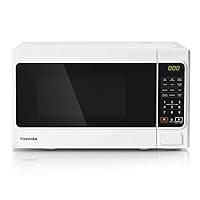
The Toshiba MM-EM20P stands out with 11 power levels, more than double the 5 offered by most rivals here, giving you genuinely fine-grained control for tasks like softening butter or melting chocolate. Six one-touch preset recipes speed up common jobs, and the 800W output means standard UK recipe timings apply directly. The 20-litre cavity and digital display round out a well-specified solo machine.
Frequently asked
What wattage microwave do I need for a UK home?
For most UK households, 800W is the practical standard. UK ready-meal packaging and recipe books typically base their timings on 800W, so you can follow instructions without adjusting. A 700W model works fine for reheating and defrosting but adds time on denser foods. If you regularly cook from frozen or want faster results, look for 900W or above. Inverter models at 700W, such as the Hisense H20MOBP1HIUK, can partially close the gap by heating more evenly.
Will a 20-litre microwave fit on a standard UK worktop?
Usually yes, but check the external width and depth before ordering. A typical UK base unit is 600mm deep, and the worktop in front of a wall-mounted cupboard may leave only 400-500mm of usable depth. The Hisense H20MOBP1HIUK, for example, is 43.4cm wide and 32.9cm deep, which fits most worktops but is worth measuring against your specific space. All four microwaves in this guide have a 20-litre cavity and broadly similar external footprints.
How many power levels do I actually need on a microwave?
Five power levels cover the vast majority of everyday tasks: full power for reheating, medium for cooking, low for defrosting, and a couple of steps in between for delicate jobs. If you melt chocolate, temper butter, or heat dairy-based sauces regularly, 11 levels, as on the Toshiba MM-EM20P, give you meaningfully finer control and reduce the risk of overheating. For straightforward reheating and defrosting, 5 levels is sufficient.
Is inverter technology worth paying extra for in a microwave?
Inverter microwaves deliver power continuously at the level you select, rather than cycling the magnetron on and off to simulate lower power. The practical result is more even heating, fewer cold spots, and better results on foods that are sensitive to temperature spikes, such as cream sauces, fish, or scrambled eggs. If you mostly reheat leftovers and defrost bread, a standard non-inverter model at 800W is perfectly adequate. For more varied cooking, inverter technology is a genuine improvement.
Can I use a microwave in a hard-water area without problems?
Yes, though limescale can build up on the interior walls over time, particularly if you heat water or steam vegetables regularly. Models with a smooth, non-textured cavity coating are easier to wipe down. A weekly wipe with a damp cloth and a monthly clean using a bowl of water with a tablespoon of white vinegar, heated until it steams, will dissolve most limescale deposits and keep the interior hygienic. All four microwaves in this guide claim an easy-clean interior finish.