
A good multi cooker replaces up to 14 separate appliances, which matters when your kitchen has 600mm-deep worktops and limited cupboard space. Prices in this guide run from £33.05 to £119.99, and the best choice depends on how many people you cook for, whether you live in a hard-water area, and which functions you will actually use.
What to look for
01Capacity: matching litres to household size
Capacity is the first number to check. A 5.7L pot, like the one in the Instant Pot Duo, comfortably feeds four to six people and fits neatly on most UK worktops. Step up to 6L or 8L if you batch-cook or have a larger family; the Nutricook Smart Pot 2 at 8L is one of the biggest in this price range. Go below 5L and you will struggle with a full Sunday roast or a large batch of soup. Bear in mind that pressure cookers should never be filled beyond two-thirds capacity with liquid, so a stated 6L pot gives you roughly 4L of usable space for soups and stews. Measure your cupboard shelf height before buying: most multi cookers stand 30–35cm tall with the lid closed, and some lids are not removable for storage.
02Wattage and cooking speed on UK 240V mains
On the UK's 240V mains supply, most electric multi cookers draw between 1,000W and 1,500W. The Quest Professional runs at 1,500W, which translates to faster pre-heating and searing. Pressure cookers work differently: once sealed, they cook at high pressure rather than raw wattage, so a 1,000W Instant Pot can still cut a beef stew from two hours to 35 minutes. Midea claims its 6L model cooks 70% faster than conventional methods. Higher wattage also means higher running costs: at current UK electricity rates, a 1,500W appliance running for one hour costs roughly 45p, compared to about 30p for a 1,000W model. For most households, 1,000–1,200W is the sweet spot between speed and economy.
03Number of functions: useful versus marketing padding
Multi cookers are sold on function counts, from 7-in-1 up to 14-in-1. The Instant Pot Duo covers seven modes including pressure cook, slow cook, sauté, steam, and yoghurt maker. The Drew&Cole CleverChef claims 14 functions, adding bread-making and baking. In practice, the functions you will use most are pressure cook, slow cook, sauté, and steam. Yoghurt-making is a genuine bonus if you eat a lot of it, but bread-baking in a round pot produces limited results. Focus on whether the machine has a proper sauté mode with a wide, flat base, since browning meat before pressure cooking makes a significant difference to flavour. A vented glass lid, as found on the Quest model, is useful for slow-cook and steam modes where you want to check progress without releasing heat.
04Cleaning and hard-water areas
If you live in a hard-water area, such as London, the South East, or the Midlands, limescale builds up quickly inside pressure cooker seals and on heating elements. Look for a removable, dishwasher-safe inner pot: both the Instant Pot Duo and the Midea 6L are listed as dishwasher safe, which makes weekly descaling far easier. Non-stick coatings speed up cleaning but can scratch if you use metal utensils; stainless steel inner pots are more durable but require a little more oil to prevent sticking. The silicone sealing ring on pressure cookers absorbs food odours over time and should be replaced every 12–18 months; replacement rings for popular brands like Instant Pot are widely available from UK retailers including Amazon.
05Size and worktop footprint for UK kitchens
Standard UK base units are 600mm deep, and most multi cookers sit comfortably within that depth. The Quest Professional has a 30cm x 30cm pan size, making it one of the more compact options and a reasonable fit for smaller kitchens or student flats. Larger oval or round pots in the 6–8L range typically measure 35–38cm in diameter including handles, so check your available worktop width before ordering. Height matters too: if you plan to store the unit under a wall cabinet, most multi cookers with a hinged lid need at least 45cm of clearance to open fully. Some models, including the Instant Pot range, have a lid that rests on the side rather than swinging back, which reduces the clearance needed.
Our top picks
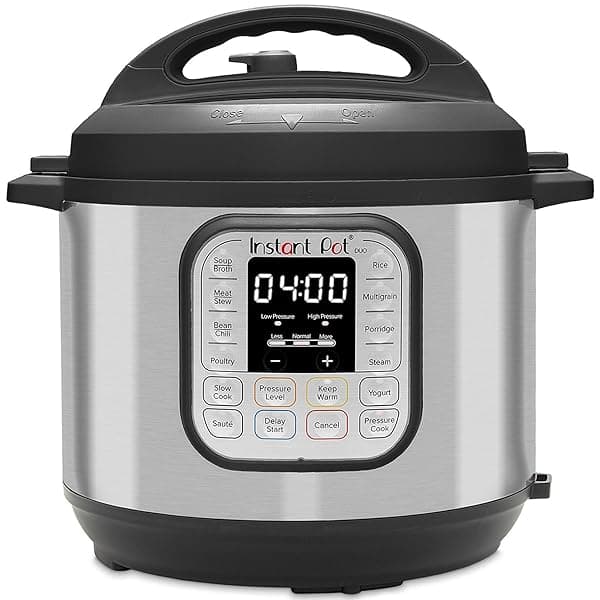
Best for everyday family cookingInstant Pot Duo 7-in-1 Electric Multi-Cooker
At £86.17, currently near its 90-day high of £89.49, the Instant Pot Duo 5.7L offers seven cooking modes including pressure cook, slow cook, sauté, and yoghurt maker in a dishwasher-safe package. The 5.7L capacity suits families of four to six, and replacement accessories are easy to find at UK retailers.
Best for batch cooking on a budgetDrew&Cole CleverChef 14-in-1 Multi Cooker
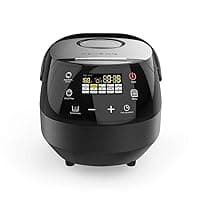
The Drew&Cole CleverChef 14-in-1 is currently £79.99, above its 90-day low but still competitive for a machine that includes bread-making, baking, and soup functions alongside standard pressure and slow cooking. It is sized for five portions, making it a practical choice for meal-preppers. The 14 preset modes reduce guesswork for less confident cooks.
Best budget pressure cooker for small householdsTower T80244 6L/22cm Pressure Cooker with
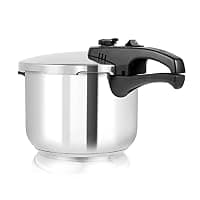
At £39.99, the Tower T80244 is the most affordable pressure cooker in this guide and has held that price at its 90-day high, meaning it rarely drops further. The 6L stainless steel pot and included steamer basket cover the core functions without the digital complexity of app-connected rivals. A solid, no-frills choice for one or two people who want faster weeknight cooking.
Best for large households and big batch cookingNutricook Smart Pot 2
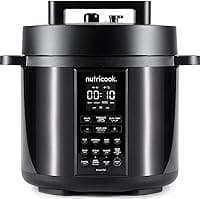
The Nutricook Smart Pot 2 is the largest capacity option here at 8L, priced at £119.99. Nine cooking modes include slow cook, pressure cook, sauté, steam, and yoghurt maker, plus a smart lid with 12 preset programmes. The two-year warranty is longer than most rivals offer, and the 8L pot is well suited to households of six or more or anyone who freezes meals in bulk.
Frequently asked
What is the difference between a multi cooker and a pressure cooker?
A pressure cooker uses sealed steam to raise the internal temperature above 100°C, cutting cooking times significantly. A multi cooker includes pressure cooking as one of several modes, alongside slow cooking, sautéing, steaming, and sometimes baking or yoghurt-making. All the pressure cookers in this guide are also multi cookers. If you only want faster cooking, a basic pressure cooker like the Tower T80244 at £39.99 is sufficient. If you want to replace multiple appliances, a 7-in-1 or 14-in-1 model makes more sense.
Are multi cookers energy efficient compared to an oven?
Yes, in most cases. A typical multi cooker draws 1,000–1,500W but cooks food significantly faster than a conventional oven, which typically runs at 2,000–3,500W for 60–90 minutes. A pressure cooker can reduce a two-hour stew to 30–40 minutes, cutting total energy use considerably. At current UK electricity rates, this can save 20–40p per meal compared to oven cooking. Slow-cook mode uses less power per hour but runs for 6–8 hours, so the overall saving is smaller.
What size multi cooker do I need for a family of four?
A 5–6L capacity is the standard recommendation for a family of four. The Instant Pot Duo at 5.7L and the Tower T80244 at 6L both sit in this range. Remember that pressure cookers should be filled no more than two-thirds full with liquid, so a 6L pot gives you roughly 4L of usable space for soups and casseroles. If you batch-cook and freeze meals, consider stepping up to the Nutricook Smart Pot 2 at 8L.
Can I use a multi cooker in a hard-water area?
Yes, but you will need to descale it regularly. Hard water, common across London, the South East, and the Midlands, causes limescale to build up on the heating element and inside the sealing ring. Run a descaling cycle every four to six weeks using a solution of white vinegar and water, or a proprietary descaler. Choose a model with a dishwasher-safe inner pot to make cleaning easier. The silicone sealing ring should be inspected for limescale deposits and replaced every 12–18 months.
Is the Instant Pot Duo worth the price compared to cheaper alternatives?
At £86.17, the Instant Pot Duo costs roughly twice as much as the Tower T80244 at £39.99. The Instant Pot adds yoghurt-making, a more polished digital interface, and a much larger user community, which means recipes and troubleshooting guides are easy to find. If you cook varied meals regularly, the extra cost is justified. For occasional pressure cooking, the Tower is a perfectly capable and far cheaper option.