
Choosing the right tableware transforms everyday meals into memorable dining experiences while standing up to the rigours of daily family life. Whether you're replacing worn dinner plates, setting up your first home, or investing in a complete entertaining set, the UK market offers everything from budget-friendly ceramics to heirloom-quality porcelain. The best tableware strikes a balance between aesthetic appeal and practical durability, surviving the dishwasher, microwave, and the inevitable bumps of busy kitchen life.
Today's tableware options extend far beyond basic white plates. Stoneware delivers rustic charm with impressive chip resistance, whilst fine porcelain offers timeless elegance for special occasions. Material choice affects not just appearance but longevity, weight, and maintenance requirements. Modern manufacturing techniques mean you needn't sacrifice style for affordability, many mid-range sets rival luxury brands in both design and durability. Understanding construction methods, material properties, and your specific needs helps you select tableware that will serve your household beautifully for years to come, making this guide essential reading before you invest in new pieces for your table.
What to look for
01Material Quality and Durability
The material determines how your tableware performs over time. Porcelain offers elegance and translucency, remaining chip-resistant despite its delicate appearance. It's fired at higher temperatures than standard ceramics, creating a denser, more durable finish. Stoneware provides excellent durability with a more rustic aesthetic, perfect for casual dining whilst withstanding daily dishwasher cycles. Bone china contains bone ash for exceptional strength combined with lightweight refinement, though premium prices reflect this quality. Ceramic represents the most affordable option, suitable for everyday use but potentially more prone to chipping. Consider stoneware or porcelain for families requiring robust tableware, whilst bone china suits those prioritising formal dining occasions. Check manufacturer specifications for thermal shock resistance if you frequently move dishes from fridge to oven, and verify dishwasher safety ratings to ensure your investment withstands your household's cleaning routine without crazing or discolouration.
02Set Configuration and Size
Tableware sets typically serve four, six, eight, or twelve people, with piece counts varying considerably. A basic twelve-piece set includes four each of dinner plates, side plates, and bowls, adequate for small households or those supplementing existing collections. Sixteen-piece sets add mugs, whilst comprehensive twenty-four or thirty-two-piece configurations provide complete table settings including serving pieces. Consider your household size plus regular guests when selecting capacity. Plate dimensions matter significantly: modern dinner plates range from twenty-six to twenty-eight centimetres, whilst traditional sizes measured slightly smaller. Oversized plates suit contemporary plating styles but require adequate cupboard space and larger table settings. Bowl depth affects versatility, shallow bowls suit pasta and salads, whilst deeper designs accommodate soups and cereals. Open-stock availability lets you replace broken pieces or expand your set, making this an important consideration for long-term value.
03Design Aesthetic and Versatility
Your tableware's visual style impacts both daily enjoyment and entertaining flexibility. Classic white or cream provides timeless versatility, complementing any table linen, accommodating diverse cuisines, and photographing beautifully for social sharing. Coloured or patterned designs inject personality but may limit coordination options or date more quickly. Embossed textures add visual interest without overwhelming food presentation, striking a balance between plain and heavily decorated styles. Consider whether you need one versatile set or prefer separate everyday and formal collections. Rim shape affects presentation, wide rims suit restaurant-style plating, whilst coupe designs maximise food space. Stackability influences storage efficiency, particularly important in smaller UK kitchens. Assess how designs complement your existing kitchenware, glassware, and dining aesthetic. Neutral foundations with interchangeable accent pieces offer flexibility for seasonal table styling without requiring complete set replacements.
04Practical Maintenance Requirements
Maintenance demands significantly impact long-term satisfaction with your tableware. Dishwasher safety represents the primary concern for most households, verify that sets withstand regular machine washing without fading, staining, or pattern deterioration. Some decorative finishes, particularly metallic trims, require hand washing to preserve their appearance. Microwave compatibility matters for reheating meals, though not all materials heat uniformly or safely. Staining resistance varies by material and glaze quality; lighter colours may show tea, coffee, or tomato stains over time, whilst quality glazing resists absorption. Cutlery marking occurs when metal utensils leave grey traces on glazed surfaces, higher-quality finishes minimise this issue. Consider oven safety if you serve dishes straight from cooker to table. Check manufacturer guidance on temperature ranges and thermal shock tolerance. Crazing, those fine cracks appearing in glazes over time, affects aesthetics but rarely compromises functionality. Understanding these maintenance factors ensures your tableware suits your lifestyle and cleaning preferences.
05Value and Long-Term Investment
Assessing tableware value requires looking beyond initial purchase consideration to long-term cost per use. Quality construction justifies higher upfront investment through extended lifespan and reduced replacement frequency. Sets with comprehensive warranties or guarantees indicate manufacturer confidence in durability. Open-stock availability provides insurance against breakages, allowing individual piece replacement rather than complete set repurchase. Consider the true cost of cheap tableware that chips or stains within months versus mid-range options lasting years. Price per place setting helps compare different set configurations fairly. British-made options, whilst potentially commanding premium pricing, often feature superior quality control and support local manufacturing. Seasonal sales offer opportunities for acquiring quality brands at reduced cost, though ensure this doesn't compromise your chosen aesthetic. Balance your budget against frequency of use and importance of dining presentation in your household. Investment in durable, versatile tableware ultimately proves more economical than repeatedly replacing inadequate pieces.
Our top picks
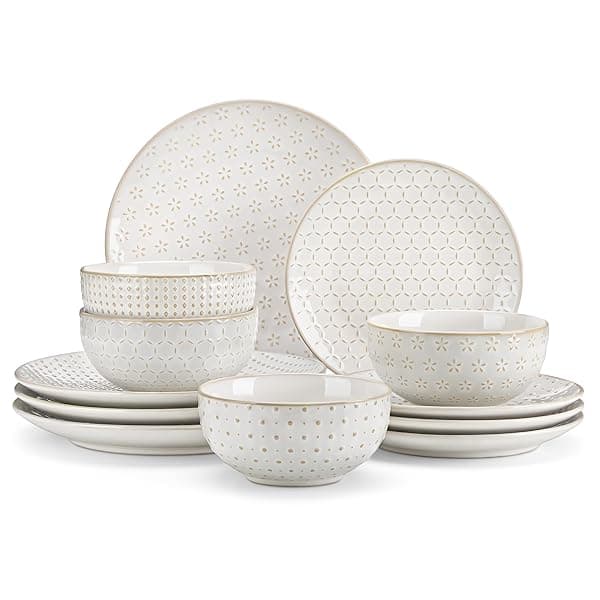
Best ValueMALACASA 12 Piece Dinner Set for
This embossed stoneware set delivers excellent durability with attractive texture detail, perfect for everyday family dining. The twelve-piece configuration provides complete place settings for four, whilst dishwasher-safe construction ensures easy maintenance. The stoneware material offers superior chip resistance compared to standard ceramic, making it ideal for busy households.
Style PickTOPZEA Set of 4 Stainless Steel
These professional-grade stainless steel pans excel for buffet serving, food preparation, and catering scenarios. The generous capacity and durable construction suit both home entertaining and small business use. They're particularly valuable for those who frequently host larger gatherings or prepare multiple dishes simultaneously.
Also greatvancasso Selene Plates and Bowls Set
A strong option in the tableware category. Links to our product detail page for full price history before you decide.
Frequently asked
What material is best for everyday tableware in the UK?
Stoneware offers the best balance for daily use, combining durability with affordability and style. It resists chips better than standard ceramic, tolerates dishwasher cycles reliably, and typically handles microwave and oven use safely. Porcelain represents an excellent alternative if you prefer lighter-weight pieces with a more refined finish, though it commands slightly higher investment.
How many place settings do I need for a family?
Purchase at least two place settings per family member to accommodate washing cycles and breakages. A family of four should consider sets for six to eight people, providing adequate pieces when some are in the dishwasher or if you regularly host guests. This approach ensures you're never short of clean plates during busy periods and allows for inevitable replacements over time.
Can you put stoneware tableware in the dishwasher?
Most modern stoneware is dishwasher safe, though always verify manufacturer specifications before purchasing. Quality stoneware withstands regular machine washing without glaze deterioration, colour fading, or structural damage. Avoid dishwashing pieces with metallic trim or delicate hand-painted details, which require gentler hand washing to preserve their decorative elements.
What's the difference between porcelain and bone china?
Bone china contains bone ash (typically 25-50%), making it lighter, stronger, and more translucent than standard porcelain despite its delicate appearance. Porcelain offers excellent durability without bone content, fired at high temperatures for density and strength. Both suit formal dining, though bone china commands premium pricing for its unique properties, whilst porcelain provides comparable elegance at more accessible cost.
How do I prevent cutlery marks on white plates?
Cutlery marking occurs when metal utensils scratch softer glazes, leaving grey traces that resemble dirt but won't wash away. Choose tableware with harder, better-quality glazes that resist marking, this typically correlates with higher firing temperatures and superior manufacturing. Remove existing marks using a specialist cream cleaner or gentle paste of baking soda and water, though prevention through quality selection proves most effective.