
A vacuum sealer draws roughly 80–120W on the UK's 240V mains, so each sealing cycle costs less than 1p in electricity — the real spend is the machine itself, which ranges from £10.50 for bag rolls to over £200 for a full countertop unit. This guide cuts through the specs to help you find the most energy-efficient option for your kitchen and cooking habits.
What to look for
01Wattage and energy draw per cycle
Most countertop vacuum sealers pull between 80W and 130W, but they run for only 10–30 seconds per seal. On the UK's 240V supply, that works out to roughly 0.0003–0.001 kWh per cycle — well under 1p at current unit rates. Handheld models are even lighter, typically running on a rechargeable battery rather than mains power, so their energy draw is negligible. Where wattage matters more is in continuous-use scenarios: if you're batch-sealing a full chest freezer's worth of meat after a bulk shop, a machine with a cooling system (such as Bonsenkitchen's Globefish technology) will handle repeated cycles without overheating, which indirectly saves energy by avoiding enforced cool-down pauses. For occasional home use, any model in this guide will cost you virtually nothing to run; the energy-efficiency argument is really about choosing a machine that doesn't waste your time or bags through failed seals.
02Suction pressure and seal reliability
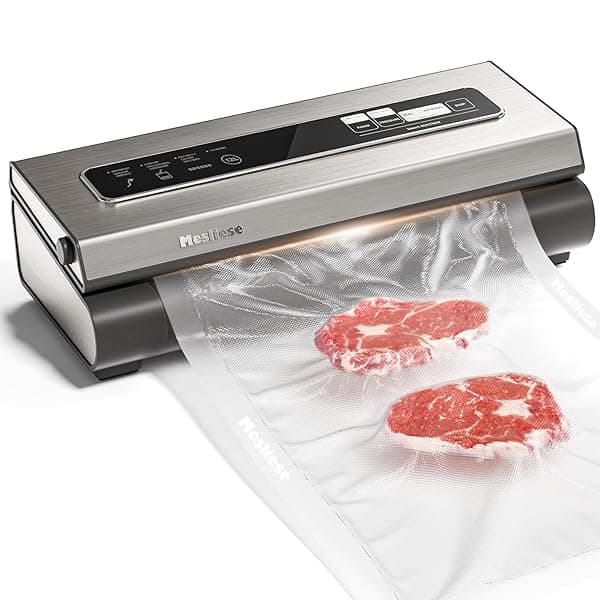
Suction pressure, measured in kPa, determines how completely air is removed from the bag. The Mesliese machine specifies 90 kPa, which is towards the upper end for home models and means fewer re-seals and wasted bags. A failed seal wastes both the bag and the electricity used in the attempt, so a higher-pressure machine can be more efficient overall. For sous vide cooking — increasingly popular in UK home kitchens — a firm, consistent seal is essential to prevent water ingress during long low-temperature cooks. Dry and moist food modes (present on several models here) also reduce failures: using the wrong mode on wet foods like marinated chicken is a common cause of poor seals and bag waste.
03Bag and roll costs: the ongoing expense
The machine's purchase price is a one-off, but bags are a recurring cost. A 28 cm x 6 m roll from Kitchen Festiva costs £10.50 and yields roughly 20 standard portions — about 52p per bag. The Anysea six-roll set at £13.28 works out cheaper per metre if you seal frequently. BPA-free, heavy-duty embossed bags are worth paying for: thinner bags are more prone to puncture and micro-leaks, meaning food spoils faster and you reseal (wasting energy and a bag). If you live in a hard-water area, avoid soaking reusable bags in limescale-heavy tap water, as mineral deposits can weaken the seams over time. Built-in cutters (present on the Mesliese, Bonsenkitchen, and FoodSaver models) let you cut rolls to the exact length needed, reducing waste significantly.
04Countertop footprint and storage
UK kitchens average around 8–10 sq m, and worktop space is precious. A full countertop sealer like the FoodSaver FFS005X is a substantial appliance — useful if you seal daily, but awkward to store in a 600 mm-deep cupboard if you use it only occasionally. Handheld models such as the Giraffy Co. and Geliking are compact enough to fit in a drawer, and their rechargeable design means no trailing mains cable on the worktop. The Bonsenkitchen VS3201 sits in the middle ground: a slim upright design with integrated roll storage that keeps bags tidy without dominating the counter. Consider how often you'll actually use the machine before committing to a larger footprint.
Our top picks
Best for frequent batch-sealing at homeMesliese Vacuum Sealer Machine Powerful 90Kpa
At £92.99 (its 90-day low was £84.93), the Mesliese delivers 90 kPa suction across six operating modes including separate dry and moist settings, which cuts down on failed seals and wasted bags. The built-in cutter and two included bag rolls mean you can start sealing straight out of the box.
Best budget countertop sealer for continuous useBonsenkitchen Vacuum Sealer Machine with 5
Currently £49.99 — down from a 90-day high of £59.99 — the Bonsenkitchen VS3201 uses Globefish technology to sustain high-speed continuous operation without overheating, making it the smartest choice if you batch-seal after a big supermarket shop. Five sealing modes, a built-in cutter, and integrated bag storage are all present at a price that undercuts most rivals by a significant margin.
Best full-featured sealer for serious meal preppersFoodsaver Food Vacuum Sealer Machine with
The FoodSaver FFS005X currently sits at £207.41, but its 90-day low of £65.00 shows it drops sharply in sales — worth setting a price alert. It includes integrated roll storage, a bag cutter, and a dedicated delicate food mode that prevents soft items like bread or pastry being crushed during sealing.
Best handheld sealer for small kitchensGIRAFFYCO Vacuum Sealer Machine with Visible
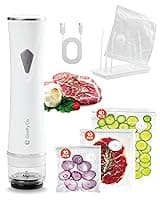
At £32.99 (90-day low: £20.24), the Giraffy Co. is a rechargeable handheld with a visible water tank that shows you when moisture is being extracted — a useful indicator for moist foods. It ships with 10 reusable bags in three sizes and a foldable drying rack, making it a genuinely self-contained kit. No mains cable means it stores in a drawer and keeps your 240V sockets free.
Frequently asked
How much electricity does a vacuum sealer use in the UK?
A typical countertop vacuum sealer draws 80–130W but runs for only 10–30 seconds per seal on the UK's 240V mains supply. That works out to roughly 0.0003–0.001 kWh per cycle — less than 1p at average UK unit rates. Even if you seal 20 bags in a batch session, the total electricity cost is a few pence. Running costs are not a meaningful factor in choosing a vacuum sealer; purchase price and bag costs are far more significant.
Are vacuum sealer bags reusable?
Many vacuum sealer bags can be washed and reused, particularly for dry foods. For raw meat or fish, most food-safety guidance recommends single use to avoid cross-contamination. Reusable bags from brands like Giraffy Co. and Geliking are designed with reuse in mind and can be turned inside out for washing. Avoid abrasive scrubbing, which can damage the embossed texture that allows air to be drawn out. In hard-water areas, rinse bags in filtered water to prevent limescale build-up on the seams.
What is the difference between dry and moist mode on a vacuum sealer?
Dry mode uses full suction speed and is suited to solid, low-moisture foods such as cheese, nuts, or cured meats. Moist mode slows the suction to prevent liquid from being drawn into the machine's pump, which can damage it and cause seal failures. Use moist mode for marinated meats, fresh fruit, or anything with surface moisture. Several machines in this guide, including the Mesliese and Bonsenkitchen, include both modes; using the correct one reduces failed seals and extends the machine's life.
Can I use any vacuum sealer bags with my machine?
Most external-suction countertop sealers (the type that heat-seal the open end of a bag) are compatible with any embossed, textured vacuum sealer roll or bag. Smooth bags do not work with these machines as they need the embossed channels to allow air to escape. Check the width: rolls come in 15 cm, 20 cm, and 28 cm widths, so match the roll to your machine's maximum bag width. The Anysea six-roll set includes three widths (15 cm, 20 cm, and 28 cm) to cover most machines.
Is a handheld vacuum sealer as good as a countertop model?
Handheld sealers are convenient and compact, but they generally produce lower suction pressure than countertop models and require compatible zip-lock style bags rather than heat-sealed rolls. They are well suited to short-term fridge storage and reducing freezer burn on smaller portions. For long-term freezing, sous vide cooking, or bulk batch-sealing, a countertop machine with a heat-seal bar and 80–90 kPa suction will give more reliable, airtight results. If worktop space is very limited, a handheld stored in a drawer is a practical compromise.