
A blender's wattage tells you more than just speed: it directly affects your electricity bill and how well the machine handles ice or frozen fruit. On the UK's 240V mains supply, models in this roundup run from 350W up to 800W, with prices starting at £19.98. Picking the right power level means you never overpay for performance you don't need.
What to look for
01Wattage and what it actually costs to run
Most countertop blenders sold in the UK sit between 350W and 800W. At current average UK electricity rates of around 24p per kWh, running an 800W blender for three minutes costs roughly 0.1p per use, so wattage alone will not break the bank. The real difference shows up in performance: a 350W motor like the one in the Breville Blend Active struggles with frozen fruit and ice cubes, while an 800W motor such as the Tefal Blendforce II or the Kitcanis 800W model powers through them cleanly. If you blend soft fruit smoothies daily, a 400W to 450W machine is perfectly adequate and draws less current. If you regularly crush ice or blend fibrous vegetables, 800W is worth the modest extra running cost. Always check that the blender's UK plug is a standard Type G three-pin, and that the cable reaches your worktop socket without strain.
02Jug material and capacity for UK kitchens
Standard UK base-cabinet depth is 600mm, so a tall blender jug can foul overhead cupboards. Glass jugs, such as the 1.5L glass jug on the NETTA 500W, are heavier but resist scratching and do not absorb odours, which matters if you blend garlic-heavy soups as well as smoothies. Plastic jugs, used on the Philips 3000 Series (1.9L total, 1L effective) and the Russell Hobbs Food Collection (1.5L), are lighter and less likely to shatter. Effective capacity is often lower than the stated maximum: the Philips lists a 1L effective capacity despite a 1.9L jar, so check both figures before buying. For a household of two, 600ml to 1L effective capacity is usually enough. Families making batch soups or large smoothies will want 1.25L or more.
03Speed settings, pulse, and hard-water limescale
More speed settings give you finer control, but for most blending tasks two speeds plus pulse is sufficient. The Russell Hobbs 24610 offers two speeds and pulse at 400W, which covers smoothies, soups, and sauces without complexity. The NETTA goes further with eight speed settings and pulse, useful if you want to coarsely chop as well as puree. If you live in a hard-water area (most of southern England and the Midlands), limescale build-up inside the blade assembly is a genuine concern. Look for removable stainless-steel blades, as found on the Russell Hobbs and NETTA models, so you can descale them separately. The Daewoo 2-in-1 Soup Maker adds an auto-stir function and an overspill spout, which is handy when blending hot liquids, though its 1.6L capacity limits batch size.
04Personal blenders versus full-size jug blenders
Personal blenders blend directly into a portable bottle you then drink from, cutting washing-up to a single container. The Breville Blend Active (350W, 600ml bottle) costs £19.98 and is the cheapest option here, but its lower motor power means it works best with soft, fresh fruit rather than frozen chunks or ice. Full-size jug blenders are better for families, batch cooking, or anyone who wants to crush ice. The Kitcanis 3-in-1 at 800W includes a 600ml portable bottle and a 300ml grinding cup alongside its main jar, giving you personal-blender convenience with more motor power. Consider how much worktop space you have: a personal blender stores in a drawer, while a 2L glass-jug model needs a permanent spot or a deep cupboard shelf.
Our top picks
Best for budget-conscious daily smoothiesPhilips Blender 3000 Series
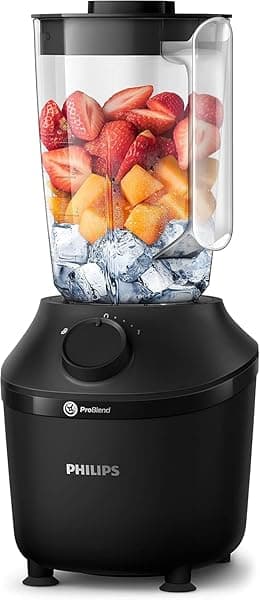
The ProBlend system handles soft fruit and leafy greens well within its 1L effective capacity. It draws modest power on the UK 240V supply, making it one of the cheaper models to run daily. The plastic jar is lightweight and dishwasher-safe.
Best for ice-crushing and serious blendingTefal Blendforce II Blender
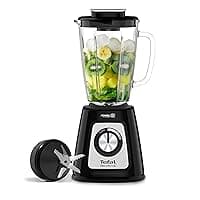
The Tefal Blendforce II runs at 800W and is currently £39.99, well below its 90-day high of £63.28, making this a strong moment to buy. Its 2L glass jug (1.25L effective capacity) and four removable Powelix blades handle ice and frozen fruit without stalling. The glass jug resists odours and scratches, a practical advantage in a busy UK kitchen.
Best for hot soups and batch cookingDaewoo 2-in-1 Soup Maker & Smoothie
The Daewoo 2-in-1 Soup Maker combines a blender with an auto-stir function and an overspill spout designed for hot liquids, at £34.99 with a 90-day low of £33.15 showing stable pricing. Its 1.6L capacity makes up to six portions of fresh soup in one go. The compact design suits smaller UK kitchens where a separate soup maker would take up too much worktop space.
Best portable blender for gym and commutingBreville Blend Active Personal Blender &
![Breville Blend Active Personal Blender & Smoothie Maker | 350W | 1 Portable Blend Active Bottle (600ml) | Leak Proof Lid | Black & Gold [VBL251] — Blenders deal](/_next/image?url=https%3A%2F%2Fm.media-amazon.com%2Fimages%2FI%2F61NFIfk2hbL._SL200_.jpg&w=256&q=75)
At £19.98, the Breville Blend Active is the most affordable pick here, sitting just above its 90-day low of £18.00. The 350W motor blends directly into a 600ml leak-proof bottle you can take out of the house, cutting washing-up to one item. It is best suited to soft fresh fruit rather than ice, but for a quick pre-work smoothie on the UK commute it is hard to beat at this price point.
Best glass-jug blender for hard-water areasNETTA Table Blender & Smoothie Maker
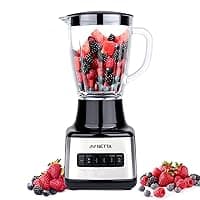
The NETTA 500W table blender pairs a 1.5L glass jug with removable stainless-steel four-blade assembly, making descaling straightforward if you live in a hard-water area such as London or the South East. Eight speed settings plus pulse give precise control from coarse chop to smooth puree. Currently £33.99, it hit a 90-day low of £14.00, so watch for a price drop.
Frequently asked
How much does it cost to run a blender in the UK?
At the UK average electricity rate of roughly 24p per kWh, a 800W blender running for three minutes uses about 0.04 kWh, costing under 1p per use. A 350W model costs around 0.4p for the same three minutes. Even daily use over a full year adds only £1 to £3 to your electricity bill depending on wattage, so running cost should not be your primary reason to choose a lower-wattage model. Performance on tough ingredients is a more meaningful factor.
What wattage blender do I need for smoothies in the UK?
For smoothies made with fresh or thawed soft fruit, 350W to 450W is sufficient. The Philips 3000 Series at 450W and the Breville Blend Active at 350W both handle this well. If you regularly use frozen fruit straight from the freezer, or want to crush ice, step up to at least 500W. For truly smooth results with fibrous vegetables or ice, 800W models such as the Tefal Blendforce II give noticeably better results and are less likely to strain the motor over time.
Is a glass jug blender better than a plastic one?
Glass jugs resist scratching, do not absorb food odours, and are easier to keep hygienic over time. They are heavier, which can be a consideration if you have limited strength or mobility, and they can shatter if dropped on a hard kitchen floor. Plastic jugs are lighter and shatter-resistant, but cheaper plastics can cloud and stain after repeated use. If you blend strongly flavoured ingredients such as garlic or chilli, a glass jug is the more practical long-term choice.
Can I blend hot soup directly in a blender?
Most standard jug blenders are not designed for hot liquids: steam pressure can force the lid off and cause burns. The Daewoo 2-in-1 Soup Maker is specifically designed for hot blending, with an overspill spout to manage steam safely. If you want to blend hot soup in a standard jug blender, let the liquid cool to below 70°C first, fill the jug no more than halfway, hold the lid down firmly with a folded tea towel, and start on the lowest speed setting.
Which blenders in this guide are dishwasher safe?
The Russell Hobbs Food Collection (24610) has a dishwasher-safe jug and lid, and removable blades for separate cleaning. The Philips 3000 Series plastic jar is also dishwasher safe. Always check the manufacturer's instructions before putting any blender component in the dishwasher, as high temperatures can warp plastic lids or degrade rubber seals over time. Blade assemblies with multiple small parts are often easier and safer to rinse by hand immediately after use.