
The real cost difference between a £19.99 personal blender and a £59 full-size jug model is the upfront price, not the electricity.
![Breville Blend Active Personal Blender & Smoothie Maker | 350W | 1 Portable Blend Active Bottle (600ml) | Leak Proof Lid | Black & Gold [VBL251] — Blenders deal](/_next/image?url=https%3A%2F%2Fm.media-amazon.com%2Fimages%2FI%2F61NFIfk2hbL._SL600_.jpg&w=1200&q=75)
What to look for
01Wattage and actual energy draw per blend
Wattage tells you the maximum power a blender can pull from your 240V mains socket, but it does not tell you how long you run it. A 350W Breville Blend Active running for 45 seconds uses roughly 0.004 kWh per cycle. An 800W Tefal Blendforce II running for 60 seconds uses around 0.013 kWh. At 24p per kWh, that is under 0.1p versus 0.3p per blend. Over a full year of daily use, the difference is less than £1. Higher wattage does matter for performance: 800W motors crush ice and frozen fruit far more effectively than 350W models, so you may run a lower-wattage blender for longer, partially closing the gap. For most UK households, wattage is a performance spec first and a running-cost spec a distant second.
02Blend duration and how it affects your bill
The single biggest variable in blender running cost is how long you run the machine. A 30-second pulse to blitz a soft-fruit smoothie uses half the energy of a 60-second cycle grinding nuts or crushing ice. The Kitcanis 800W model includes a 300ml grinding cup specifically for harder ingredients, which may encourage shorter, targeted runs rather than running the full jug. If you live in a hard-water area and descale your kettle regularly, you already know that appliance habits matter more than headline specs. The same logic applies here: a disciplined 30-second blend on a 550W Geepas costs around 0.001 kWh, or effectively nothing on a monthly bill. Longer blending sessions for soups in the Daewoo 2-in-1 (which heats as well as blends) will cost more, because the heating element runs for several minutes.
03Upfront price versus lifetime running cost
The products in this guide range from £19. 99 to £59.00. Even if you blend twice daily for five years, the total electricity cost of the most powerful 800W model is under £12. That means the upfront price gap between the cheapest and most expensive option here (roughly £39) will never be recovered through energy savings alone. Where cost matters most is the purchase price itself. The Philips 3000 Series at £29.99 has dropped as low as £14.00 in the past 90 days, and the Tefal Blendforce II has hit £29.72 against a current price of £59.00. Buying at the 90-day low can save you more in one transaction than years of careful blending habits. Check price-tracking tools before you buy from Amazon or Argos.
04Capacity and whether you run the blender more than once
A 600ml personal bottle blender like the Breville Blend Active is sized for one serving. If you are making smoothies for two people, you will run it twice, doubling the energy use and the wear on the motor. A 1.9L Philips or 2L Tefal jug handles two to four portions in a single cycle, which is more efficient per serving even if the motor is larger. For a UK household of three or four, a full-size jug blender almost always works out cheaper per serving in both time and electricity. The Daewoo 2-in-1 at 1.6L sits in the middle, and its soup-making function means the heating element (not just the motor) runs for extended periods, so factor that in if you plan to use it as a soup maker rather than purely as a blender.
Our top picks
Best for lowest daily running cost on a tight budgetBreville Blend Active Personal Blender &
![Breville Blend Active Personal Blender & Smoothie Maker | 350W | 1 Portable Blend Active Bottle (600ml) | Leak Proof Lid | Black & Gold [VBL251] — Blenders deal](/_next/image?url=https%3A%2F%2Fm.media-amazon.com%2Fimages%2FI%2F61NFIfk2hbL._SL200_.jpg&w=256&q=75)
At £19.99 (and as low as £13.93 in the past 90 days), the Breville Blend Active 350W draws the least power of any model here. The 600ml bottle doubles as a travel cup with a leak-proof lid, so there is no extra washing up.
Best mid-range jug blender for value per servingPhilips Blender 3000 Series
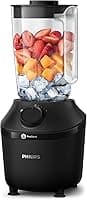
The Philips 3000 Series 450W has a 1.9L plastic jar, enough for three to four portions in one 60-second run. Its 90-day low of £14.00 against a current price of £29.99 makes it one of the sharpest value swings in this category. At 450W, it sits between personal blenders and high-power jug models, keeping energy draw modest while handling soft fruit and yoghurt-based smoothies without fuss.
Best for ice crushing and frozen ingredientsTefal Blendforce II Blender
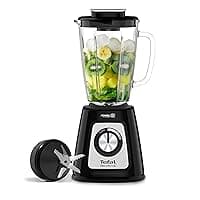
The Tefal Blendforce II runs at 800W with four removable Powelix blades and a 2L glass jug (1.25L effective capacity). At £59.00 it is the priciest option here, but its 90-day low of £29.72 shows it does go on sale. An 800W motor on UK 240V mains crushes ice in under 30 seconds, meaning shorter run times for frozen-fruit smoothies than a lower-wattage model struggling through the same task.
Best for soup and smoothies in one applianceDaewoo 2-in-1 Soup Maker & Smoothie
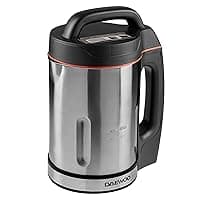
The Daewoo 2-in-1 Soup Maker at £31.83 (its 90-day low, down from £39.70) combines blending and heating in a 1.6L compact jug. It makes up to six portions of fresh soup, which means the heating element runs for several minutes per cycle rather than seconds. That is worth knowing for running-cost planning. For households that want one appliance to replace both a blender and a soup maker, the energy trade-off is reasonable and the saving on counter space in a typical UK kitchen is real.
Frequently asked
How much does it cost to run a blender every day in the UK?
A 350W personal blender running for 45 seconds uses roughly 0.004 kWh, costing under 0.1p. An 800W full-size blender running for 60 seconds uses around 0.013 kWh, costing about 0.3p. Over a full year of daily use, the difference between the cheapest and most powerful model here is less than £1 in electricity. Upfront purchase price is a far bigger cost factor than wattage.
Is a higher-wattage blender more expensive to run?
Technically yes, but the difference is negligible in practice. A 800W blender uses roughly three times the electricity of a 350W model per minute of operation. However, higher-wattage motors often complete the same task faster, so the actual energy per blend can be similar. For context, running an 800W blender twice daily for a year costs around £2.10 in electricity at 24p/kWh. The more important question is whether the motor is powerful enough to handle your ingredients without overworking itself.
Does a blender use a lot of electricity compared to a kettle?
No. A typical UK kettle runs at 2.4 kW to 3 kW and boils for two to three minutes, using around 0.1 kWh per boil. A blender at 800W running for 60 seconds uses around 0.013 kWh, roughly one-eighth as much. Personal blenders at 350W use even less. If you are looking to cut electricity costs in the kitchen, the kettle, oven, and fridge are far more significant appliances to focus on than the blender.
Should I buy a personal blender or a full-size jug blender?
It depends on how many people you are making smoothies for. A 600ml personal blender like the Breville Blend Active suits one person and costs under £20. For two or more people, a 1.5L to 2L jug blender such as the Philips 3000 Series or Tefal Blendforce II handles multiple portions in a single cycle, saving time and reducing motor wear. If your kitchen worktop space is limited, note that most jug blenders are around 40 cm tall and need clearance under standard 50 cm UK wall cupboards.
When is the best time to buy a blender to get the lowest price?
Price tracking data for these models shows significant swings over 90 days. The Philips 3000 Series dropped from £38.90 to £14.00, and the Tefal Blendforce II fell from £59.50 to £29.72. Black Friday in late November and January sales are historically strong periods for kitchen appliance discounts at UK retailers including Amazon, Argos, and Currys. Using a free price-history tool before you buy can reveal whether the current listing price is genuinely a deal or close to the 90-day high.