
Choosing between stainless steel and glass comes down to three things: durability, visibility, and how your water tastes. The UK's hard water means limescale is a real concern, and the material you pick affects how easy cleaning is. This guide covers eight kettles across both types so you can pick the right one for your worktop.
What to look for
01Wattage and boil time on UK 240V mains
Most full-size kettles in this group run at 3kW, which is the practical ceiling for a standard 13A UK plug on 240V mains. At 3kW, a full 1.7-litre kettle reaches boiling point in roughly three minutes; a half-full kettle takes closer to ninety seconds. The one exception here is the Russell Hobbs Travel Kettle at 1kW, which draws far less power and takes proportionally longer. For everyday use in a busy household, 3kW is the sensible choice. If your kitchen circuit is shared with other high-draw appliances, check that you are not running a 3kW kettle, a 2kW toaster, and a microwave simultaneously on the same ring main, as that combination can trip a standard 32A circuit breaker. The travel model's lower power draw makes it the only option in this group that works safely on most travel adapters designed for lower-amperage sockets abroad.
02Stainless steel vs glass: durability and limescale
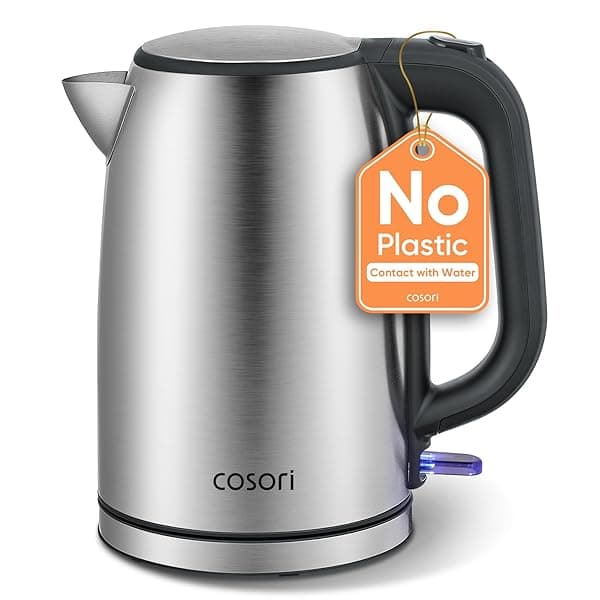
Stainless steel bodies handle knocks better than glass and are less likely to crack if placed on an uneven surface. The Cosori brushed stainless model goes further by ensuring no plastic touches the water at all, which matters if you are sensitive to plastic taste. Glass kettles, such as the Cosori 3kW glass model and the Chefman 1.8-litre glass kettle, let you see the water level and watch for limescale build-up without opening the lid. In a hard-water area such as London, the South East, or the East Midlands, limescale deposits are visible earlier on glass, which is a useful prompt to descale. Both materials respond well to a citric acid descale every four to six weeks in hard-water areas. Stainless interiors can hide scale longer, so set a calendar reminder rather than relying on visual cues. Plastic-bodied kettles like the Russell Hobbs Textures and Honeycomb models are lighter and cheaper to produce, but the interior plastic can absorb odours over time.
03Capacity: matching the kettle to your household
Standard UK kettles sit at 1. 7 litres, which fills roughly seven mugs and suits households of two to four people. The Chefman glass kettle steps up to 1.8 litres, adding one extra mug's worth per boil. The Russell Hobbs Travel Kettle drops to 0.85 litres, enough for two mugs, and its compact dimensions make it practical for a desk, a caravan, or a hotel room where worktop space is limited. Boiling only the water you need is the single most effective way to reduce kettle running costs: at roughly 24p per kWh, boiling a full 1.7-litre kettle costs around 1.7p, while boiling 500ml costs under 0.6p. Over a year of four boils a day, that difference adds up. All 1.7-litre models here fit comfortably on a standard 600mm kitchen worktop with room for the base unit cable.
04Safety features: auto shut-off and boil-dry protection
Every kettle in this group includes automatic shut-off, which cuts power the moment the water reaches 100°C. This is a legal requirement for UK market kettles and is enforced by the Electrical Equipment (Safety) Regulations 2016. Boil-dry protection, which cuts power if the element is exposed without water, is present on the Daewoo Essentials and Chefman models and is worth confirming on any kettle you buy. Removable, washable anti-scale filters are fitted to both Russell Hobbs Textures and Honeycomb models; these catch loose limescale flakes before they reach your mug. Glass and stainless steel kettles without a filter rely on you descaling regularly. A push-to-open lid, found on the Russell Hobbs Textures, makes filling under a low kitchen cupboard easier than a hinged lid that requires full clearance above.
Our top picks
Best for those who want no plastic touching their waterCosori Kettle
The Cosori brushed stainless steel kettle uses a fully stainless interior, so no plastic component contacts the water at any point. That design choice removes any risk of plastic taste or odour transfer, which matters in households using a filter jug or those sensitive to flavour changes. The brushed finish resists fingerprints better than a polished surface, keeping it presentable on a 600mm worktop without daily wiping.
Best glass kettle for fast boilingCosori Glass Kettle
Running at 3kW on UK 240V mains, this Cosori glass kettle brings water to the boil quickly and lets you watch the process through the transparent body. The BPA-free water contact zone means no plastic leaches into the water. The glass construction makes limescale deposits immediately visible, which is a practical advantage in hard-water areas across the South East and Midlands.
Best budget plastic kettle with anti-scale filterRussell Hobbs Textures Electric 1.7L Cordless
The Russell Hobbs Textures draws 3kW and holds 1.7 litres, matching the performance of pricier models. Its removable, washable anti-scale filter is the standout practical feature: it traps limescale flakes before they reach your cup, extending the time between full descales. The push-to-open lid is a genuine convenience if your wall cupboards sit low above the worktop.
Best compact kettle for travel or desk useRussell Hobbs Electric 0.85L Travel Kettle
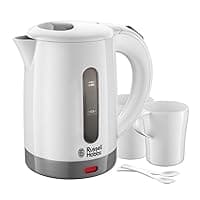
At 0.85-litre capacity and 1kW power draw, this Russell Hobbs Travel Kettle is the only model in this group designed for low-amperage sockets and travel adapters. Its compact dimensions make it practical for a caravan, a hotel room, or a desk setup where a full-size 1.7-litre kettle would be impractical. The reduced power draw also means lower electricity cost per boil for a single mug.
Best glass kettle for larger householdsChefman Glass Electric Kettle 1.8L 3000W
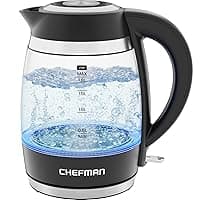
The Chefman glass kettle offers a 1.8-litre capacity at 3kW, giving you one extra mug per boil compared with standard 1.7-litre models. The BPA-free construction and auto shut-off with boil-dry protection cover the safety basics. The transparent glass body makes it easy to monitor water level and spot limescale build-up early, which is particularly useful in hard-water areas.
Best white kettle for a bright kitchenRussell Hobbs Honeycomb White Cordless Electric
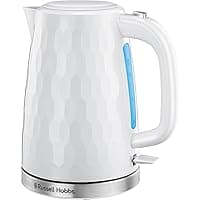
The Russell Hobbs Honeycomb White runs at 3kW with a 1.7-litre capacity and includes a removable washable anti-scale filter, the same practical feature found on the Textures model. The textured honeycomb body resists surface scratches better than a smooth finish. Its white colourway suits kitchens with white appliances or pale cabinetry without the fingerprint issue of gloss black.
Best grey kettle for a neutral kitchen schemeRussell Hobbs Honeycomb Electric 1.7L Cordless
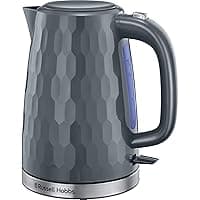
Identical in specification to the white Honeycomb, this grey version draws 3kW, holds 1.7 litres, and includes the removable anti-scale filter and push-button lid. The matt and high-gloss grey finish suits stainless steel appliances and grey or anthracite kitchen units, which are among the most popular kitchen colour schemes in the UK at present.
Best entry-level kettle for a first homeDaewoo Essentials 1.7L Fast Boil Electric
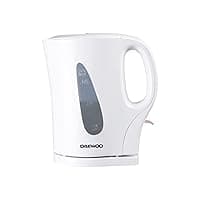
The Daewoo Essentials holds 1.7 litres and includes auto shut-off and boil-dry protection, covering the essential safety requirements for UK mains use. The white plastic body is lightweight and easy to handle. For a first flat or student accommodation where budget is the primary constraint, it delivers the core function without unnecessary features.
Frequently asked
Is a glass or stainless steel kettle better for hard water areas?
Glass kettles show limescale deposits sooner because the build-up is visible through the body, which prompts earlier descaling. Stainless steel interiors hide scale until it becomes significant. In hard-water areas such as London, Kent, or Lincolnshire, both materials need descaling every four to six weeks using citric acid or a proprietary descaler. Glass is more fragile but easier to monitor; stainless steel is more durable but requires a calendar reminder to descale on schedule.
What wattage kettle do I need for a UK kitchen?
For a standard UK kitchen with a 13A plug socket on 240V mains, a 3kW kettle is the fastest and most practical choice. It boils a full 1.7-litre load in around three minutes. A 1kW travel kettle takes roughly three times as long for the same volume but draws far less current, making it suitable for lower-amperage sockets or travel adapters. There is no benefit to choosing less than 3kW for home use unless you have a specific reason to limit power draw.
Can I use a UK kettle abroad?
UK kettles run on 240V and draw up to 13A at 3kW. Many countries use 110V or 120V supplies, which are incompatible without a voltage converter, not just a plug adapter. The Russell Hobbs Travel Kettle at 1kW is the most practical option for travel because its lower power draw is within the capacity of many travel adapters designed for 220-240V European sockets. Always check the adapter's maximum wattage before connecting any appliance.
Does a plastic-free kettle really make water taste better?
Plastic taste in kettle water is most noticeable when a kettle is new and the interior plastic has not been flushed through. Boiling and discarding two or three full loads usually resolves it. A kettle with no plastic water contact, such as the Cosori brushed stainless model, eliminates this issue entirely. If you use a water filter jug and are particular about taste, a fully stainless or glass interior is worth considering.
How much does it cost to boil a kettle in the UK?
At the current Ofgem default tariff of roughly 24p per kWh, boiling a full 1.7-litre kettle at 3kW costs approximately 1.7p. Boiling 500ml costs under 0.6p. Over a year at four boils per day, filling only what you need rather than a full load saves a meaningful amount. The 1kW travel kettle costs less per boil in absolute terms because it holds less water, not because it is more efficient per litre.