
Kitchen knives tracked in the UK currently range from £12.79 to £189.99, and that gap is not random. Steel grade, blade geometry, handle construction, and whether a built-in sharpener is included all push the price up in measurable ways. Understanding those factors means you spend only what your cooking actually demands.
What to look for
01Steel grade and blade hardness
The single biggest driver of price is the steel. Budget sets under £20 typically use basic stainless steel with a Rockwell hardness around 52–54 HRC. It resists rust well on UK tap water but dulls quickly, especially in hard-water areas where mineral deposits accelerate edge wear. Mid-range sets in the £40–£70 bracket usually specify German high-carbon stainless steel (often X50CrMoV15), which sits around 56–58 HRC. That extra hardness holds an edge noticeably longer between sharpenings. Above £100, you start seeing Japanese-style steels at 60+ HRC, which take a finer edge angle (typically 15° per side versus 20° on German blades) and stay sharper for longer, but they are more brittle and less forgiving if you scrape the blade across a chopping board. The average price across 35 tracked UK listings is £48.46, which lands squarely in the German-steel tier — generally the best balance of durability and value for everyday home cooking.
02Piece count and what is actually in the block
A 14-piece set sounds more impressive than a 6-piece set, but count carefully. Manufacturers pad piece counts with steak knives (often four or six identical blades), a pair of scissors, a honing steel, and a sharpener rod. The knives you will reach for daily are the chef's knife, a bread knife, a utility knife, and a paring knife — that is four blades. If a 16-piece set includes six steak knives and two sharpening tools, you are really buying an 8-blade working set. Higher-priced sets tend to invest in fewer, better blades rather than filling slots. A 6-piece set at £45.99 with full-tang German steel construction will outperform a 16-piece set at the same price that spreads its budget across more, thinner blades. Check the chef's knife blade length (20–25 cm is standard for UK home kitchens) and whether the block fits a 600 mm worktop depth.
03Handle construction and balance
Handle materials split broadly into three tiers. Injection-moulded plastic or ABS handles dominate sets under £35 — they are dishwasher-safe and hygienic, but the balance point sits further back, which tires your hand during extended prep. Composite or frosted polymer handles in the £35–£70 range add a non-slip texture that matters when your hands are wet. Wooden handles, including acacia blocks, appear across all price points but require hand-washing to prevent cracking in the damp UK kitchen environment. Full-tang construction — where the steel runs the full length of the handle — is the key structural detail to look for above £50. A full-tang blade is heavier and better balanced, reducing wrist strain when you are chopping a large batch of vegetables. Riveted full-tang handles are the standard on sets above £80.
04Built-in sharpeners and long-term value
A knife that stays sharp is worth more than a sharper knife that dulls in a month. Built-in block sharpeners add roughly £10–£30 to the retail price but remove the friction of finding a separate sharpening tool. The quality varies: ceramic rod sharpeners built into budget blocks remove more metal than necessary and shorten blade life over time, while pull-through tungsten carbide or diamond-coated sharpeners in mid-range sets are gentler. At the premium end, integrated sharpening systems (as seen on the Ninja Foodi StaySharp block) use a guided angle mechanism that maintains the factory edge geometry consistently. If you are buying a set without a built-in sharpener, budget an extra £10–£20 for a decent pull-through or whetstone, otherwise even a good blade will feel disappointing within six months of regular use.
05Current discounts and when to buy
Across the 35 UK kitchen knife listings currently tracked, the average discount off the 90-day high price is 16. 4%. That is a meaningful saving on a category where prices fluctuate regularly around Amazon sale events and seasonal promotions. The biggest current discount sits at 38.7% — a saving of £9.66 on the Cookerfy 6-inch Japanese-style chef's knife with a rosewood handle and genuine cowhide leather sheath. At the other end, the cheapest tracked listing is a kids' safe knife set at £12.79, which is a separate category entirely from adult kitchen knives. For adult sets, the practical floor for a usable chef's knife plus two or three supporting blades is around £35–£45. Waiting for a sale event can bring a £70 set into the £55–£60 range, which is where the German-steel mid-tier genuinely represents strong value.
Our top picks
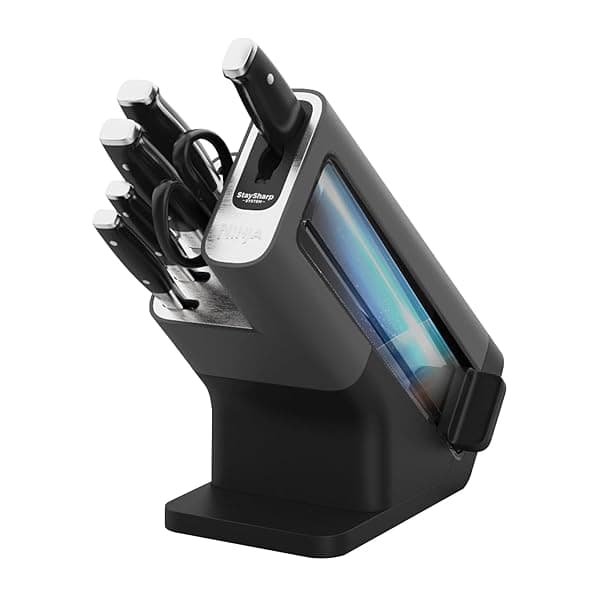
Best for keeping edges sharp long-termNinja Foodi StaySharp Knife Block with
Currently £169.00, down from a 90-day high of £179.99, and it has previously dropped to £100.00, so it is worth watching for a sale. The Ninja Foodi StaySharp block includes five knives plus scissors and uses an integrated guided sharpener that maintains the correct edge angle every time you draw the blade.
Best mid-range block set with steak knives includedD.Perlla Knife Set
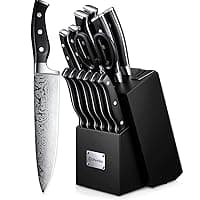
Perlla 14-piece set uses German stainless steel blades and a self-sharpening wooden block. The 14 pieces include steak knives, which makes it practical for households that entertain. The wooden block suits a standard 600 mm deep UK worktop and the German steel handles hard-water areas better than softer stainless alternatives.
Best value 16-piece set under £40Knife Set
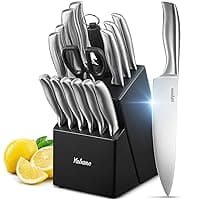
The Yabano 16-piece set sits at £39.99, at its 90-day high, but has previously sold for £33.99 — a 15% saving worth waiting for. It includes a German high-carbon stainless steel chef's knife, steak knives, meat scissors, and a sharpener rod, making it one of the most complete sets at this price.
Best budget set currently at its lowest priceKnife Set with Block
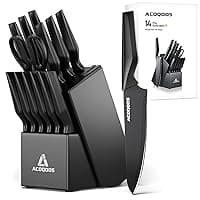
The ACOQOOS 14-piece set is currently at £34.97, which is also its 90-day low — down from a high of £49.99, a saving of £15.02. It includes a built-in sharpener in the block, which is unusual at this price point. The piece count includes a chef's knife, bread knife, utility knife, and paring knife alongside steak knives, covering all the everyday cuts a home cook needs.
Frequently asked
What is a good price to pay for a kitchen knife set in the UK?
Based on 35 tracked UK listings, the average price is £48.46 and the full range runs from £12.79 to £189.99. For most home cooks, spending £40–£70 gets you a German high-carbon stainless steel set with a wooden block and at least four core blades. Below £35 you are typically looking at softer steel that dulls faster. Above £100 you gain Japanese-style steel and better edge retention, but those blades require more careful maintenance and are less suited to everyday rough use.
Is German steel or Japanese steel better for a kitchen knife?
It depends on how you cook. German steel (typically X50CrMoV15, around 56–58 HRC) is tougher, more resistant to chipping, and tolerates the scraping and rocking cuts most UK home cooks use. Japanese steel (60+ HRC) takes a finer, sharper edge at a narrower 15° angle, which excels at precision slicing, but it is more brittle and chips if used on hard vegetables like butternut squash or if stored loose in a drawer. For general family cooking, German steel is the more practical choice.
Do I need a knife block with a built-in sharpener?
Not essential, but genuinely useful. A built-in sharpener removes the barrier of finding and using a separate tool, which means most people actually sharpen more regularly. The quality matters though: ceramic pull-through sharpeners in budget blocks can remove too much metal over time. If your set does not include one, budget £10–£20 for a separate pull-through sharpener or a basic whetstone. A sharp knife is safer and more efficient than a dull one, so sharpening access is worth factoring into your total spend.
How many knives do I actually need in a kitchen knife set?
Four blades cover almost everything: a chef's knife (20–25 cm) for general chopping and dicing, a bread knife (20 cm serrated) for loaves and tomatoes, a utility knife (12–15 cm) for mid-size tasks, and a paring knife (8–10 cm) for peeling and detail work. Steak knives are useful if you eat a lot of meat at the table but are not kitchen prep tools. Sets with 14 or 16 pieces often include six steak knives and two sharpening tools, so the actual prep-knife count may be the same as a 6-piece set.
Can kitchen knives go in the dishwasher?
Most manufacturers advise against it, even for knives labelled dishwasher-safe. The high heat and harsh detergents used in UK dishwashers (which often run at 65–70°C) accelerate corrosion on the blade, loosen handle rivets over time, and dull the edge faster. Wooden handles will crack and split after repeated dishwasher cycles. Hand-washing with warm soapy water and drying immediately is the standard recommendation for any knife set you want to last more than a couple of years.