
Dinner sets on Amazon UK vary widely in price, and four things explain most of the gap: the material, how many pieces come in the box, the brand and the finish. This guide is for anyone buying plates, bowls or cutlery who wants to know what a pricier set gives them. By the end you'll be able to tell whether a set costs more because it is better made or simply bigger, and which material suits the way you eat and wash up.
What to look for
01How does material affect the price of a dinner set?
Material is the biggest single driver of price. Porcelain and stoneware cost more than plastic or melamine because they are fired in a kiln, and some pieces are lost in firing. Porcelain is fired hotter, which gives a dense, thin and fairly light body that resists stains. Stoneware is thicker and heavier, with a more rustic look. Earthenware is cheaper to make but softer, so it chips more easily. Plastic, melamine and stainless steel sit at the lower end and suit gardens, camping and young children, since they don't smash. Choose the material for how you'll use the set before you compare anything else.
02Does a bigger set mean better value?
Only if you'll use every piece. More pieces raise the total cost but usually lower the cost of each piece, so a large set is good value for a family and poor value for a couple. A 12-piece set normally covers four people with a dinner plate, side plate and bowl each. A 16-piece set adds a mug per person, and a 24-piece set usually covers six, often with mugs. Picnic sets such as the CSYY 62-piece reach high counts by including every cup, fork and spoon, so the number grows without adding plates. Count the place settings, check what each person gets, and match that to your household and cupboard space.
03How does the finish change the price and the care a set needs?
Plain white glaze is the least expensive ceramic finish, and decorative finishes such as embossing, reactive glazes or coloured rims add cost because each piece takes more work. The finish also decides how a set copes with daily washing. A porcelain or stoneware set that the listing marks dishwasher and microwave safe will handle both without special care. Metallic trims and lustre glazes can spark in the microwave and often need hand washing. Cheap earthenware can craze, meaning fine cracks appear in the glaze, after repeated hot washes. If you reheat food or run the dishwasher daily, shortlist only sets whose listing states both.
04Why do branded sets cost more?
A known brand usually charges more for consistency: designs that stay in the range for years and pieces you can add or replace later. Lesser-known names on Amazon often sell similar white porcelain in a fixed set with nothing sold separately. If you expect to add bowls or replace broken plates over time, paying for an established range makes sense. If you're buying one complete set for a student flat, rental or second home, a plainer set from a smaller brand does the job. Check the material and piece count first, then decide how much the name matters to you.
05Weight and chip resistance: what to check for everyday use
For daily use, pick a set that is light enough to stack and lift comfortably, with rims that won't chip at the first knock. Porcelain is usually lighter than stoneware of the same size, which helps if your plates live in a high cupboard. Chips start at the rim, where plates touch in the dishwasher rack, so thicker or rolled rims last longer than thin, sharp edges. Some stoneware listings, including HaWare and Home VSS, state chip and scratch resistance in the title. In hard-water areas, rinse aid stops the glaze clouding, whatever the material.
Our top picks
Best porcelain set for a household of six24PC Dinnerware Porcelain White Set: 6
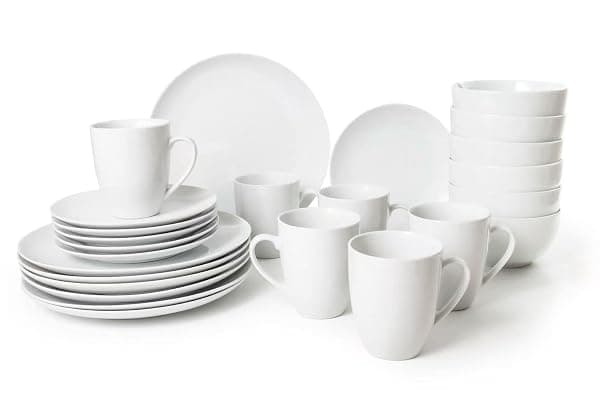
The simpa set gives six people a dinner plate, side plate, bowl and mug each in white porcelain. It's listed as dishwasher and microwave safe, so it handles everyday meals and reheated leftovers. Plain white is the simplest ceramic finish and easy to match if you add pieces later.
Best for a decorative stoneware finishMALACASA 12 Piece Dinner Set for
MALACASA's Lydia set is 12 pieces of embossed stoneware, with plates and bowls for four. The embossed pattern is the kind of finish that costs more than plain white, and stoneware feels heavier and more rustic on the table. It's listed as dishwasher safe; the title doesn't mention the microwave, so check before reheating in it.
Best for camping, picnics and outdoor meals62pcs Unbreakable Dinnerware Sets for 5
This 62-piece plastic set covers five people with plates, bowls, cups and cutlery, so one box equips a whole picnic or camping trip. It's unbreakable and lightweight, which suits the car boot, the garden and children better than ceramic. Much of the piece count is cutlery and cups, so compare it with ceramic sets by place settings.
Best for colourful cutlery for sixEXZACT 24pcs Stainless Steel Cutlery Gingham
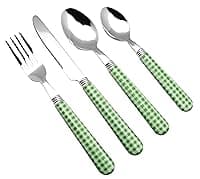
This EXZACT set has 24 stainless steel pieces with green gingham handles, enough for four pieces each for six people. It's an easy way to add colour to a plain white dinner set. The title doesn't say dishwasher safe, so check the care instructions for the handles before putting it in the machine.
Frequently asked
What makes one dinner set more expensive than another?
Four things account for most of the difference: material, piece count, brand and finish. Porcelain and stoneware cost more than plastic or melamine, bigger sets cost more in total but less per piece, and decorative glazes cost more than plain white. Decide on the material and the number of place settings first, then compare sets within that group.
Is porcelain or stoneware better for everyday use?
Both work for daily meals. Porcelain is thinner, lighter and fired hotter, so it stacks easily and resists stains. Stoneware is thicker and heavier, with a more rustic feel that suits casual dining. Whichever you choose, check that the listing says dishwasher and microwave safe if you'll use it that way.
Is it worth paying more for a branded dinner set?
It's worth it if you'll want to add or replace pieces later, since established ranges tend to stay available for years. For a one-off set in a student flat, rental or second home, a plain white set from a smaller brand is usually enough. Compare material and piece count before the brand name.
Are plastic dinner sets safe for children?
Plastic sold for food use in the UK must meet food contact rules, and many listings state BPA-free, including the Anbte and Mushie sets. Check each listing before microwaving: some plastic sets are marked microwave safe, but melamine should not go in the microwave. For toddlers and outdoor meals, unbreakable plastic is the practical choice.
What does a 12-piece dinner set include?
A 12-piece set usually covers four people with a dinner plate, side plate and bowl each, as the simpa 12-piece porcelain set does. A 16-piece set adds a mug per person, and a 24-piece set usually covers six, often with mugs. Cutlery and glasses are almost always sold separately, so allow for them if you're starting from scratch.