
Good food storage containers do one job: keep food fresh longer and make your fridge or cupboard easier to organise. This guide covers 8 options across plastic, glass, and airtight pantry sets, with prices ranging from under £10 to around £33, so there is a practical choice for every UK kitchen size and budget.
What to look for
01Material: plastic vs glass
Plastic containers are lighter, cheaper per unit, and less likely to shatter on a tile floor. Look for BPA-free food-grade plastic, which is now standard across most UK-sold sets. The trade-off is staining from tomato-based sauces and a shorter lifespan if you run them through a dishwasher daily. Glass containers, such as the 850 ml GOOD FOR YOU five-pack, resist staining and odour absorption, and they go straight from fridge to microwave without warping. The downside is weight and bulk: a 10-pack of glass boxes takes up considerably more cupboard space than an equivalent plastic set. For a standard 600 mm base cupboard, stackable plastic sets tend to fit more efficiently. If you batch-cook and reheat at work, glass is the more durable long-term choice; if you are packing school lunches or catering for a household of four, a large plastic set gives you more containers per pound spent.
02Capacity and intended use
Capacity determines what a container is actually useful for. The Zuvo and We Can Source It 500-650 ml boxes suit single portions of rice, pasta, or soup. The GUANFU 28 oz (roughly 830 ml) single-compartment boxes are a better fit for larger meal-prep portions. For dry pantry goods such as cereal, flour, or oats, you need something taller and wider: the nuovva four-piece set is designed specifically for that job, with a dispenser-style opening that keeps cornflakes from going stale. The Sistema KLIP IT PLUS at 2.2 L per container is the largest single unit here, suited to batch salads, leftovers from a roasting tin, or packed lunches that include a full sandwich plus snacks. Match capacity to your actual portion sizes before buying a large set, or you will end up with containers that are either half-empty or overfilled.
03Airtight seals and leak resistance
An airtight seal slows oxidation and keeps food fresh for longer, which matters most for dry goods and cut fruit. The Sistema KLIP IT PLUS uses a clip-and-seal mechanism that the brand markets as leakproof, making it a reasonable choice for packed lunches carried in a bag. The Vtopmart 24-piece set uses push-button lids designed to create an airtight closure for pantry staples. For liquid-heavy meals such as soups or curries, check whether the lid clips on all four sides rather than just snapping on top: a two-point closure is more likely to leak in a bag. If you live in a hard-water area, silicone gaskets on lids can accumulate limescale deposits over time; rinse them separately and check the seal remains intact every few months.
04Dishwasher and microwave compatibility
Most plastic containers in this guide are labelled microwave and dishwasher safe, but there are practical limits. Repeated high-temperature dishwasher cycles degrade plastic faster than hand-washing, and lids with silicone gaskets should go on the top rack only. Glass containers handle heat better and are generally safe on both racks. For microwave use, always remove the lid first unless the product explicitly states the lid is microwave safe: trapped steam can warp or crack a lid. The GUANFU and We Can Source It plastic sets both state microwave and freezer compatibility, which is useful if you cook in bulk and freeze portions. Freezer use requires leaving a small headspace in the container, as liquids expand when frozen and can crack a fully filled box.
05Value: cost per container
Buying in bulk almost always reduces the cost per unit. The We Can Source It 50-pack of 500 ml boxes works out to well under 20p per container at its current price, making it the most economical option here for catering, batch cooking, or situations where containers go missing. The Zuvo 50-pack of 650 ml boxes is similarly priced per unit. At the other end, the GOOD FOR YOU glass 10-pack costs more per container but offers a longer usable lifespan. The nuovva four-piece cereal set is a specialist purchase: the cost per container is higher, but you are paying for a specific design that keeps dry goods fresh and accessible. Think about how many containers you actually use in a week before committing to a large set you may not need.
Our top picks
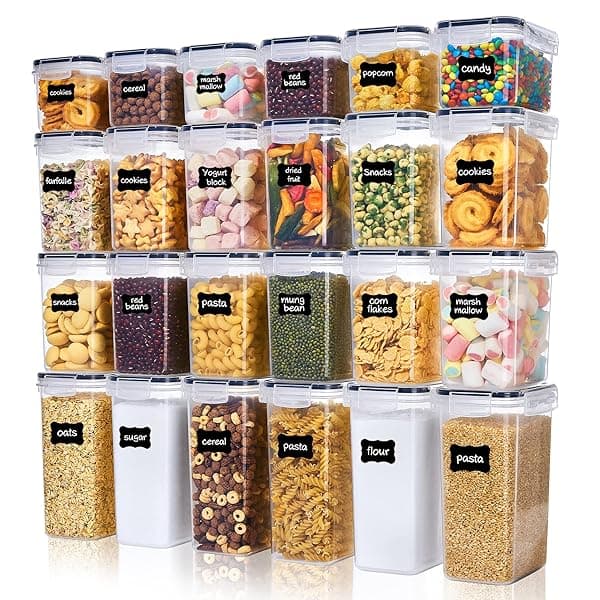
Best for organising a full pantryVtopmart 24 Pcs Airtight Food Storage
A 24-piece set gives you enough containers to cover cereals, pasta, rice, snacks, and baking ingredients in one purchase. The push-button airtight lids are designed to keep dry goods fresh, and the range of sizes means you can match container to ingredient rather than forcing everything into one format. A practical starting point if your cupboards currently rely on half-open bags and mismatched tubs.
Best bulk-buy plastic containers for batch cookingZuvo Plastic Food Containers 650 ml
Fifty 650 ml containers in one pack covers a full week of batch cooking with containers to spare. At a stable price point with no recorded fluctuation over 90 days, this is a consistent buy. The 650 ml capacity suits a standard single-portion meal, and the reusable design makes it more practical than disposable takeaway boxes for regular home use.
Best for storing cereal and dry pantry staplesnuovva Cereal Storage Containers
The nuovva four-piece set is built specifically for dry goods: the dispenser-style opening suits cornflakes, oats, and similar cereals, while the BPA-free food-grade plastic keeps contents fresh between uses. If you buy flour or sugar in large bags and want a tidier, more accessible way to store them on a worktop or in a cupboard, this set addresses that problem directly.
Frequently asked
Are plastic food storage containers safe to use in the microwave?
Most plastic containers sold in the UK for food use are labelled microwave safe, which means they are made from polypropylene that does not warp or release harmful compounds at normal microwave temperatures. Always remove the lid before microwaving unless the product states the lid is also microwave safe. Containers that are cracked, heavily scratched, or discoloured should be replaced, as damaged plastic is more likely to degrade under heat. BPA-free labelling, which is standard across the products in this guide, indicates the plastic does not contain bisphenol A.
What size food storage containers do I need for meal prep?
For a standard single-portion meal of protein, carbohydrate, and vegetables, a 650-850 ml container is the most practical size. Smaller 500 ml boxes suit soups, sauces, or side dishes. If you are storing dry pantry goods such as cereal or flour, you need a taller, wider container with a secure lid rather than a shallow meal-prep box. For batch cooking that covers a full week, aim for at least seven to ten containers of the right size so you are not washing and reusing the same two boxes every other day.
How do I stop food storage containers from smelling?
Odour absorption is more common in plastic than glass. To reduce it: rinse containers immediately after use rather than leaving food residue to dry; wash with warm soapy water or run through a dishwasher promptly; and store lids off rather than sealed when the container is empty, which prevents musty smells from building up. For persistent odours, fill the container with a mixture of bicarbonate of soda and water, leave for 24 hours, then rinse. If the smell does not clear, the plastic has likely absorbed it permanently and the container should be replaced.
Can I use food storage containers in the freezer?
Containers labelled freezer safe are made from plastic that remains flexible at low temperatures rather than becoming brittle and cracking. Leave a gap of roughly 10-15% at the top of any container you freeze, because liquids expand as they freeze and a completely full box can crack or force the lid off. Glass containers can also go in the freezer if they are labelled for it, but avoid moving them directly from freezer to a hot oven or microwave without allowing them to come to room temperature first, as rapid temperature change can cause glass to crack.
How many food storage containers do I actually need?
A practical starting number for a single person doing weekly meal prep is around eight to ten containers. For a household of two, twelve to fifteen covers most scenarios without constant washing. If you batch-cook and freeze, add another five to ten on top of your fridge rotation. Large sets of 24 or 50 are cost-effective per unit and useful if you cook in volume, run a small catering operation, or want a full pantry organisation system. Buying more than you will realistically use means containers stack up unused and take up cupboard space.